PIC Schematics
A PIC microcontroller (MCU) is a compact, powerful microcontroller that is widely used in a variety of applications, including automotive, industrial, and consumer electronics. PIC MCUs are known for their high performance, low power consumption, and ease of use. There are many different use cases for PIC MCUs, including control systems, data acquisition, and communication protocols. These microcontrollers are also commonly used in the development of Internet of Things (IoT) devices and other connected systems. Flux.ai has the world's largest community-driven public library of PIC MCUs, with footprints, symbols, datasheets, and simulation models available for use. This extensive library makes it easy for developers and engineers to find the information they need to work with PIC MCUs, and to find and test new solutions for their projects. Whether you're a seasoned professional or a beginner, Flux.ai's library is a valuable resource for anyone working with PIC microcontrollers.
Raspberry Pi Pico Shield Template
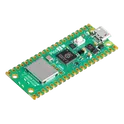
Explore the Raspberry Pi Pico Template Unleash the power of these flexible microcontroller boards, starting at just $4. The Raspberry Pi Pico series features a range of compact, high-performance boards powered by the RP2040 chip. #project-template #template #raspberry #pi #pico
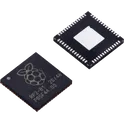
0 Uses13 StarsRP2040
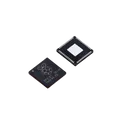
RP2040 chip for Raspberry Pi Pico - ARM® Cortex®-M0+ MCU 32-Bit The RP2040 is a high-performance, low-cost microcontroller built around two ARM Cortex-M0+ cores. It is optimized for flexibility, ease of use, and deterministic real-time performance. Unlike many microcontrollers, it includes a unique programmable I/O subsystem (PIO), allowing custom hardware interfaces without extra components. Key Features Processing Dual-core ARM Cortex-M0+ processors Up to 133 MHz clock speed Efficient integer performance with low power consumption Memory 264 KB on-chip SRAM External QSPI flash support (typically 2 MB–16 MB depending on board) Programmable I/O (PIO) 2 PIO blocks, each with 4 state machines Enables custom protocols (e.g., SPI, I2C, UART, WS2812, VGA, etc.) Offloads timing-critical tasks from CPU 🔗 Connectivity Interfaces 2× UART 2× SPI 2× I2C USB 1.1 controller (device or host support) 16× PWM channels Analog Features 12-bit ADC (up to 5 channels, including internal temperature sensor) Power & Voltage Operating voltage: 1.8V – 3.3V Low-power modes available Package Options QFN-56 (7×7 mm) Development Ecosystem Supports C/C++ SDK MicroPython and CircuitPython support Strong community and documentation Typical Applications Embedded systems and IoT devices Robotics and automation DIY electronics and prototyping USB devices (HID, MIDI, etc.) Custom communication interfaces using PIO #CommonPartsLibrary #IntegratedCircuit #Microcontroller
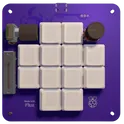
1.1k Uses12 StarsPico Macro Keyboard
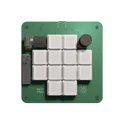
The Pico Macro Keyboard is a compact and powerful macro pad built using the latest Raspberry Pi Pico 2. Inspired by the Figma Creator Micro, this keyboard is designed for customizable control and enhanced productivity. It features mechanical switches with per-key RGB lighting, along with two rotary encoders for added functionality. With a modular 4-layer PCB and fully customizable keymaps, it seamlessly integrates with any software, making it perfect for designers, gamers, and power users alike.
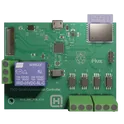
0 Uses7 StarsRaspberry Pi Pico Shield
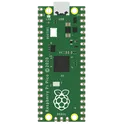
Powerful, flexible microcontroller boards, available from $4. The Raspberry Pi Pico series is a range of tiny, fast, and versatile boards built using RP2040 You may consider using the latest next-generation [Raspberry Pi Pico 2 shield](https://www.flux.ai/jharwinbarrozo/raspberry-pi-pico-2-shield) instead.
1.8k Uses7 StarsPICO Smart Automation Controller NextPCB 1-4 Layer Standard Constraints
Use this template if you plan to get your 1-4 layer boards manufactured with HQ NextPCB (nextpcb.com). This template is designed for generic designs to minimize unnecessary costs and complications where possible. https://www.nextpcb.com/pcb-capabilities #project-template #template #manufacturer-design-rules
0 Uses4 StarsPico Macro Keyboard
The Pico Macro Keyboard is a compact and powerful macro pad built using the latest Raspberry Pi Pico 2. Inspired by the Figma Creator Micro, this keyboard is designed for customizable control and enhanced productivity. It features mechanical switches with per-key RGB lighting, along with two rotary encoders for added functionality. With a modular 4-layer PCB and fully customizable keymaps, it seamlessly integrates with any software, making it perfect for designers, gamers, and power users alike.
0 Uses3 StarsRaspberry Pi Pico 2 Shield
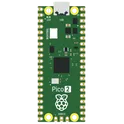
The Raspberry Pi Pico 2 is now equipped with the RP2350, a cutting-edge, high-performance microcontroller designed with enhanced security and versatility in mind. Every element of its design has been upgraded, from the advanced CPU cores to the innovative PIO (Programmable I/O) interfacing subsystem. #raspberrypi #newpico #pipico2 #pipico #rp2350 #shield
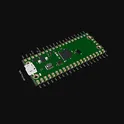
314 Uses3 StarsRaspberry pi pico PRANK
0 Uses3 StarsRaspberry Pi Pico 2 Shield Template
This is the project template for the Raspberry Pi Pico 2, the latest addition and update to Pi Pico line up. Raspberry pi pico 2 is equipped with the RP2350, a cutting-edge, high-performance microcontroller designed with enhanced security and versatility in mind. Every element of its design has been upgraded, from the advanced CPU cores to the innovative PIO (Programmable I/O) interfacing subsystem. The Raspberry Pi Foundation has integrated a robust security architecture centered around Arm TrustZone for Cortex-M, ensuring data protection and integrity. Additionally, new low-power states and expanded package options broaden the range of applications, making the Pico 2 an ideal choice for diverse, power-sensitive projects. To learn more about what's the key differences between the original Pi Pico and the new Pi Pico 2, read our blog https://www.flux.ai/p/blog/whats-new-in-the-raspberry-pi-pico-2-a-showdown-with-the-original-raspberry-pi-pico #project-template #template #raspberry #pi #pico2 #newpico
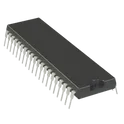
0 Uses2 StarsPIC16F877A-I/P
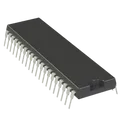
PIC PIC® 16F Microcontroller IC 8-Bit 20MHz 14KB (8K x 14) FLASH 40-PDIP The PIC16F877A-I/P is a high-performance 8-bit microcontroller from Microchip Technology, based on a Harvard architecture with separate program and data memory buses. It is designed for a wide range of embedded applications requiring reliable processing, multiple communication interfaces, and analog capability. The device integrates Flash program memory, EEPROM data storage, and numerous peripherals including ADC, timers, serial communication modules, and PWM functions. Packaged in a 40-pin PDIP form factor, it is widely used in industrial automation, consumer electronics, and educational development systems. Core Features 8-bit PIC microcontroller architecture Harvard architecture with RISC instruction set Operating frequency up to 20 MHz Single-cycle instruction execution (except branches) Memory Program Memory: 8K words (Flash) Data Memory (RAM): 368 bytes EEPROM Data Memory: 256 bytes I/O Features Up to 33 programmable I/O pins Multiple input/output ports (PORTA, PORTB, PORTC, PORTD, PORTE) High current sink/source capability on selected pins Analog Features 10-bit Analog-to-Digital Converter (ADC) Up to 8 analog input channels Programmable voltage reference Timers and Control Three timers (Timer0, Timer1, Timer2) Capture/Compare/PWM (CCP) modules Watchdog Timer (WDT) Power-on Reset (POR) and Brown-out Reset (BOR) Communication Interfaces USART (Universal Synchronous/Asynchronous Receiver/Transmitter) SPI (Serial Peripheral Interface) I²C (Inter-Integrated Circuit) via MSSP module Electrical Characteristics Operating Voltage: 4.0V to 5.5V Operating Temperature Range: -40°C to +85°C (Industrial grade) Low power consumption modes available Package Information Package Type: PDIP (Plastic Dual Inline Package) Pin Count: 40 pins Mounting Type: Through-hole Applications Industrial control systems Embedded automation Consumer electronics Sensor interfacing and data acquisition Educational and prototyping platforms #commonpartslibrary #integratedcircuit #microcontroller
869 Uses2 Stars





Page 1 of 59
Next