ESP32 Schematics
The ESP32 is a low-cost, low-power microcontroller with built-in Wi-Fi and Bluetooth capabilities. It is a highly integrated chip designed for the Internet of Things (IoT) and can be used for a variety of applications, including home automation, wearable technology, and industrial control. One of the key features of the ESP32 is its versatility and wide range of available peripherals, including sensors, displays, and communication modules. This makes it ideal for use in a variety of projects and applications, such as home security systems, smart home devices, and industrial automation systems. Flux.ai has the world's largest community-driven public library of ESP32 devices, with a range of footprints, symbols, datasheets, and simulation models available for users. This extensive library allows developers and designers to easily incorporate the ESP32 into their projects and take advantage of its powerful capabilities. Whether you are building a simple IoT device or a complex industrial control system, the ESP32 is an excellent choice due to its versatility and wide range of available resources.
ESP32 Robot Controller | AI Design Review Tutorial [Example]
Spot the mistake! Learn how to use AI to conduct a design review on an ESP32-based control board. This project is ideal for autonomous or radio-controller robots featuring inputs for sensors, encoders, and a Flysky RC receiver, plus an I2C display for configuration.
0 Uses0 StarsCERILUME Phase 1 LED Controller 0f3b
Low-voltage logic-only CERILUME Phase 1 LED controller using an Arduino Nano ESP32 plug-in module, 5V logic level shifting for WS2812/SK6812 data, microphone input header, and labeled test pads. LED power distribution and high-current switching are intentionally out of scope.
0 Uses0 StarsESP32 Robot Controller | AI Design Review Tutorial [Example]
Spot the mistake! Learn how to use AI to conduct a design review on an ESP32-based control board. This project is ideal for autonomous or radio-controller robots featuring inputs for sensors, encoders, and a Flysky RC receiver, plus an I2C display for configuration.
0 Uses0 StarsESPRSSO32 Smart Scale AI Auto Layout [Example]
Learn how to use AI Auto Layout on this ESP32 Espresso Smart Scale! In one click you’ll see AI Auto Layout perform magic. Pay close attention to how we recommend creating rulesets, zones, and fanouts. By copying the setup in this example on your own project, you’ll have a fully routed board in no time!
0 Uses0 StarsESPRSSO32 Smart Scale AI Auto Layout [Example]
Learn how to use AI Auto Layout on this ESP32 Espresso Smart Scale! In one click you’ll see AI Auto Layout perform magic. Pay close attention to how we recommend creating rulesets, zones, and fanouts. By copying the setup in this example on your own project, you’ll have a fully routed board in no time!
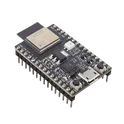
0 Uses0 StarsESP32-C3-DEVKITM-1
ESP32-C3-MINI-1 ESP32-C 802.11 b/g/n (WiFi/WLAN/Wi-Fi 4), Bluetooth® 5.x (BLE) Transceiver 2.4GHz Evaluation Board ESP32-C3-DevKitM-1 is a compact entry-level development board from Espressif Systems based on the ESP32-C3-MINI-1 module. It integrates a 32-bit RISC-V single-core microcontroller, 2.4 GHz Wi-Fi, and Bluetooth Low Energy (BLE) connectivity, making it suitable for IoT devices, embedded applications, smart sensors, and wireless control projects. The board exposes most GPIO pins through headers for easy prototyping and supports programming through USB. Key Features: 32-bit RISC-V Single-Core Processor Based on ESP32-C3 SoC architecture Clock frequency up to 160 MHz Wireless Connectivity Integrated 2.4 GHz Wi-Fi (802.11 b/g/n) Bluetooth 5 Low Energy (BLE) support Memory 4 MB embedded Flash memory inside the ESP32-C3-MINI-1 module GPIO and Peripheral Interfaces Multiple programmable GPIO pins Supports interfaces such as: SPI UART I²C I²S PWM ADC USB Serial/JTAG Development Board Features Built-in ESP32-C3-MINI-1 module with PCB antenna USB interface for programming and power 5 V to 3.3 V onboard voltage regulator Breadboard-friendly pin headers Applications IoT gateways Smart home devices Wireless sensors Industrial automation Wearable electronics Embedded control systems #ESP32C3 #ESP32 #DevKitM1 #Espressif #RISCVD #WiFiMCU #BluetoothLE #IoT #EmbeddedSystems #Microcontroller #WirelessModule #SmartDevices #ElectronicsDesign #Prototyping
18 Uses0 StarsESPRSSO32 Smart Scale AI Auto Layout [Example]
Learn how to use AI Auto Layout on this ESP32 Espresso Smart Scale! In one click you’ll see AI Auto Layout perform magic. Pay close attention to how we recommend creating rulesets, zones, and fanouts. By copying the setup in this example on your own project, you’ll have a fully routed board in no time!
0 Uses0 StarsESPRSSO32 Smart Scale AI Auto Layout [Example]
Learn how to use AI Auto Layout on this ESP32 Espresso Smart Scale! In one click you’ll see AI Auto Layout perform magic. Pay close attention to how we recommend creating rulesets, zones, and fanouts. By copying the setup in this example on your own project, you’ll have a fully routed board in no time!
0 Uses0 StarsESP32 Robot Controller | AI Design Review Tutorial [Example]
Spot the mistake! Learn how to use AI to conduct a design review on an ESP32-based control board. This project is ideal for autonomous or radio-controller robots featuring inputs for sensors, encoders, and a Flysky RC receiver, plus an I2C display for configuration.
0 Uses0 StarsESP32 Robot Controller | AI Design Review Tutorial [Example]
Spot the mistake! Learn how to use AI to conduct a design review on an ESP32-based control board. This project is ideal for autonomous or radio-controller robots featuring inputs for sensors, encoders, and a Flysky RC receiver, plus an I2C display for configuration.
0 Uses0 StarsESPRSSO32 Smart Scale AI Auto Layout [Example]
Learn how to use AI Auto Layout on this ESP32 Espresso Smart Scale! In one click you’ll see AI Auto Layout perform magic. Pay close attention to how we recommend creating rulesets, zones, and fanouts. By copying the setup in this example on your own project, you’ll have a fully routed board in no time!
0 Uses0 StarsESP32 Robot Controller | AI Design Review Tutorial [Example]
Spot the mistake! Learn how to use AI to conduct a design review on an ESP32-based control board. This project is ideal for autonomous or radio-controller robots featuring inputs for sensors, encoders, and a Flysky RC receiver, plus an I2C display for configuration.
0 Uses0 StarsESPRSSO32 Smart Scale AI Auto Layout [Example]
Learn how to use AI Auto Layout on this ESP32 Espresso Smart Scale! In one click you’ll see AI Auto Layout perform magic. Pay close attention to how we recommend creating rulesets, zones, and fanouts. By copying the setup in this example on your own project, you’ll have a fully routed board in no time!
0 Uses0 StarsESPRSSO32 Smart Scale AI Auto Layout [Example]
Learn how to use AI Auto Layout on this ESP32 Espresso Smart Scale! In one click you’ll see AI Auto Layout perform magic. Pay close attention to how we recommend creating rulesets, zones, and fanouts. By copying the setup in this example on your own project, you’ll have a fully routed board in no time!
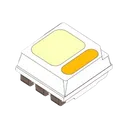
0 Uses0 StarsSK6812MINIRGBW-NW-P6-A
OPSCO SK6812MINI RGBW is an intelligent addressable RGBW LED with an integrated control IC inside a compact 3.7 mm × 3.7 mm surface-mount package. It combines red, green, blue, and dedicated white LEDs with a built-in constant-current driver, allowing individual pixel control through a single-wire serial data interface. Each LED contains an internal data latch, PWM controller, signal reshaping circuit, and cascade output, enabling long chains of individually addressable LEDs without additional external components. Compatible with SK6812 and similar NeoPixel-style protocols, it is widely used in LED displays, decorative lighting, wearable electronics, smart home devices, gaming peripherals, indicators, keyboards, and embedded lighting applications. Features include serial data input/output (DIN/DOUT), integrated PWM dimming, high color consistency, and easy daisy-chain connectivity. Search Keywords: SK6812MINI, SK6812 MINI, RGBW LED, addressable RGBW LED, intelligent LED, NeoPixel compatible LED, smart RGB LED, serial controlled LED, individually addressable LED, DIN DOUT LED, programmable LED, LED pixel, embedded lighting LED, digital RGBW LED, SMD RGBW LED, LED strip pixel, SK6812 LED driver Hashtags: #SK6812MINI #SK6812 #RGBW #AddressableLED #SmartLED #NeoPixel #DigitalLED #LEDPixel #EmbeddedLighting #LEDDisplay #Arduino #ESP32 #IoT #WearableElectronics #PCBDesign #LightingControl #SMDLED #ElectronicComponents #LEDDriver #RGBLEDProgrammable LED; RGBW; SMD; 3535,PLCC4; 3.75.5VDC; 3800-4200K
106 Uses0 StarsESP32 Robot Controller | AI Design Review Tutorial [Example]
Spot the mistake! Learn how to use AI to conduct a design review on an ESP32-based control board. This project is ideal for autonomous or radio-controller robots featuring inputs for sensors, encoders, and a Flysky RC receiver, plus an I2C display for configuration.
0 Uses0 StarsESPRSSO32 Smart Scale AI Auto Layout [Example]
Learn how to use AI Auto Layout on this ESP32 Espresso Smart Scale! In one click you’ll see AI Auto Layout perform magic. Pay close attention to how we recommend creating rulesets, zones, and fanouts. By copying the setup in this example on your own project, you’ll have a fully routed board in no time!
0 Uses0 StarsESPRSSO32 Smart Scale AI Auto Layout [Example]
Learn how to use AI Auto Layout on this ESP32 Espresso Smart Scale! In one click you’ll see AI Auto Layout perform magic. Pay close attention to how we recommend creating rulesets, zones, and fanouts. By copying the setup in this example on your own project, you’ll have a fully routed board in no time!
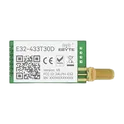
0 Uses0 StarsE32-433T30D
8km UART Through Hole RF Transceiver Modules and Modems RoHS,3.3V~5.2V,-40 ~ 80C The E32-433T30D is based on the Semtech SX1278 LoRa chipset and uses LoRa spread-spectrum modulation to achieve long-distance, highly reliable wireless communication even in noisy environments. It communicates with a microcontroller via UART (serial interface), making it easy to integrate with Arduino, ESP32, STM32, and similar systems. It is commonly used for IoT telemetry, remote control systems, sensor networks, and industrial monitoring, especially where GSM/Wi-Fi is unavailable or impractical. Key Features Frequency range: 410–441 MHz (433 MHz default) RF output power: 21–30 dBm (up to 1 W high-power version) LoRa modulation: High sensitivity and strong anti-interference Communication distance: up to ~8 km (open area, ideal conditions) Interface: UART TTL serial (3.3 V logic level) Sensitivity: around -147 dBm for long-range reception Low data rate support: ~0.3 kbps to 19.2 kbps Half-duplex communication (TX/RX not simultaneous) Configurable modes: normal / wake-up / power-saving / sleep via M0 & M1 pins Compact module size with SMA antenna connector Wide operating temperature: -40 °C to +85 °C Important Notes Requires external microcontroller (MCU) for operation (not standalone). Must not leave M0 and M1 pins floating (must be defined HIGH/LOW or GND). Works best with proper 433 MHz antenna (2–5 dBi recommended). Power supply must be stable (typically 5V with sufficient current capability). For maximum range, line-of-sight + correct antenna height matters more than raw power. Applications Smart agriculture monitoring Remote sensor networks Utility meter reading (water/gas) Industrial telemetry systems Drone/robot communication links Remote control & automation systems #E32_433T30D #Ebyte #LoRa #SX1278 #WirelessModule #IoT #Telemetry #LongRangeCommunication #UART #433MHzLoRa #EmbeddedSystems
3 Uses0 StarsESPRSSO32 Smart Scale AI Auto Layout [Example]
Learn how to use AI Auto Layout on this ESP32 Espresso Smart Scale! In one click you’ll see AI Auto Layout perform magic. Pay close attention to how we recommend creating rulesets, zones, and fanouts. By copying the setup in this example on your own project, you’ll have a fully routed board in no time!
0 Uses0 Stars
![ESP32 Robot Controller | AI Design Review Tutorial [Example]](https://img-cdn.flux.ai/eyJidWNrZXQiOiJncmF2aXRvbi1lbGVjdHJpYy1zeW1ib2xzIiwia2V5IjoiZG9jdW1lbnRfYXNzZXRzL1RodW1ibmFpbC1FU1AzMi0tMS0tZTNjNjM0OGEtYjEzMy00YjliLWEyYTItMzY1MGNiMjgyYWJiLnBuZyIsImVkaXRzIjp7InJlc2l6ZSI6eyJ3aWR0aCI6MTI0LCJoZWlnaHQiOjEyNCwiZml0IjoiY29udGFpbiIsImJhY2tncm91bmQiOnsiciI6MCwiZyI6MCwiYiI6MCwiYWxwaGEiOjB9fX0sIm91dHB1dEZvcm1hdCI6IndlYnAifQ==)
![ESPRSSO32 Smart Scale AI Auto Layout [Example]](https://img-cdn.flux.ai/eyJidWNrZXQiOiJncmF2aXRvbi1lbGVjdHJpYy1zeW1ib2xzIiwia2V5IjoiZG9jdW1lbnRfYXNzZXRzL0VTUFJFU1NPMzJfU21hcnRfU2NhbGVfM0RfVGh1bW5haWwtY2QxNTI2NjItNjdjMi00MTk4LWJmNjUtNDJiZDk5N2E0ODYyLnBuZyIsImVkaXRzIjp7InJlc2l6ZSI6eyJ3aWR0aCI6MTI0LCJoZWlnaHQiOjEyNCwiZml0IjoiY29udGFpbiIsImJhY2tncm91bmQiOnsiciI6MCwiZyI6MCwiYiI6MCwiYWxwaGEiOjB9fX0sIm91dHB1dEZvcm1hdCI6IndlYnAifQ==)