ATtiny Schematics
An ATtiny microcontroller (MCU) is a small, low-power integrated circuit designed for use in embedded systems. These MCUs are commonly used in a variety of applications, including control systems, sensors, and data processing. They are known for their low power consumption and high performance, making them an ideal choice for battery-powered devices and other applications where power efficiency is a key concern. One of the key features of ATtiny MCUs is their ability to be programmed with a wide range of firmware, allowing them to be customized for a variety of different tasks. They are also highly versatile, with a range of input/output (I/O) options and support for a variety of communication protocols. Flux.ai has the world's largest community-driven public library of ATtiny MCUs, with a wide range of footprints, symbols, datasheets, and simulation models available. Whether you are designing a new system or looking to upgrade an existing one, Flux.ai's library can provide the resources you need to get started. So, if you are working with ATtiny MCUs, be sure to check out Flux.ai's library for all the latest information and resources.
Aquatimer
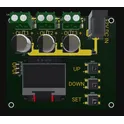
AquaTimer is a programmable timer for 12V devices such as lighting, solenoid valves or pumps not only for aquariums. It has three switchable channels for currents up to 2A each and up to 5A in total. Connected lighting can be dimmed if desired and slowly faded in and out to simulate sunrises and sunsets. The internal RTC of the ATtiny is used as a clockwork in conjunction with a 32.768kHz crystal. A backup battery keeps the clock running even if the external power supply is interrupted. Settings are made using three buttons and the OLED display.
0 Uses2 StarsQwiic PC Fan Controller
The Qwiic PC Fan Controller allows you easily control almost any PC fan over the Qwiic bus using the on board ATtiny microcontroller and control firmware. The control firmware monitors the tachometer output of the fan in order to implement PI Control over the fan speed, allowing you to set your desired speed in real units.
0 Uses1 StarsATTINY85-20MU
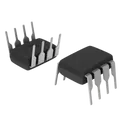
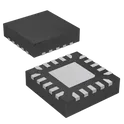
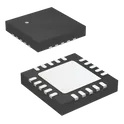
AVR AVR® ATtiny, Functional Safety (FuSa) Microcontroller IC 8-Bit 20MHz 8KB (4K x 16) FLASH 20-QFN-EP (4x4) The ATTINY85-20MU is a high-performance, low-power 8-bit AVR microcontroller from Microchip (formerly Atmel), designed for compact embedded systems that require efficient control, small footprint, and low energy consumption. It runs at up to 20 MHz and is based on the AVR RISC architecture, enabling most instructions to execute in a single clock cycle for fast and efficient processing. This MCU is widely used in space-constrained applications such as IoT nodes, small automation systems, sensors, and consumer electronics due to its balance of performance, peripherals, and ultra-compact QFN package. Key Features 8-bit AVR RISC CPU core Operating speed: up to 20 MHz Memory 8 KB In-System Programmable Flash 512 B SRAM 512 B EEPROM Low-power operation modes (Idle, ADC noise reduction, Power-down) 6 programmable I/O pins Peripherals 10-bit ADC (4 channels) 2 x 8-bit timers/counters PWM outputs Watchdog Timer (WDT) Analog comparator USI (Universal Serial Interface: SPI/I²C-like communication) Internal calibrated oscillator (no external crystal required in many designs) Brown-out detection (BOD) + Power-on reset (POR) DebugWIRE on-chip debugging support In-System Programming (ISP via SPI) Operating voltage: 2.7 V to 5.5 V Industrial temperature range: -40°C to +85°C Package: 20-pad QFN/MLF (20MU = QFN surface-mount package) #ATTINY85 #AVR #Microcontroller #8BitMCU #Microchip #EmbeddedSystems #IoT #LowPowerMCU #QFNPackage #ArduinoCompatible #CommonPartsLibrary
38 Uses0 StarsATTINY1616-MFR
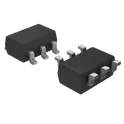
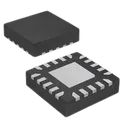
ATTINY1616-MFR QFN-20_L3.0-W3.0-P0.40-TL-EP1.7 LCSC Part Number: C1338523 JLCPCB Part Class: Extended Part Manufactured by MICROCHIP(美国微芯) Microchip ATtiny1614/1616/1617 tinyAVR 1-series 8-bit microcontroller, AVR CPU running up to 20MHz, up to 16KB self-programmable Flash memory, 256B EEPROM and 2KB SRAM, 1.8V to 5.5V operating voltage range, single-pin UPDI programming and debug interface, power-on reset and brown-out detector, internal 16/20MHz oscillator, timers, watchdog, USART, SPI, I2C/TWI, 10-bit ADC, DAC, analog comparators, event system, configurable custom logic and peripheral touch controller, available in 14-pin, 20-pin and 24-pin packages depending on variant. Search Keywords: ATtiny1614, ATtiny1616, ATtiny1617, Microchip ATtiny1614, Microchip ATtiny1616, Microchip ATtiny1617, tinyAVR 1-series, AVR 8-bit microcontroller, ATtiny 16KB Flash, ATtiny UPDI, ATtiny1616 microcontroller, ATtiny1617 MCU, ATtiny1614 MCU, 20MHz AVR microcontroller, ATtiny I2C SPI USART, ATtiny1616 datasheet, ATtiny1614 datasheet, ATtiny1617 datasheet Hashtags: #ATtiny1614 #ATtiny1616 #ATtiny1617 #MicrochipATtiny #MicrochipMCU #tinyAVR #tinyAVR1Series #AVRMicrocontroller #8bitMicrocontroller #ATtinyMCU #UPDI #16KBFlashMCU #20MHzMCU #I2CMCU #SPIMCU #USARTMCU #ADCmicrocontroller #TouchControllerMCU
43 Uses0 StarsBright Tan Flubber
Etapa 1: Recolección y Almacenamiento de Energía Entrada: tus cactus en serie (ej. 15 cactus × 0.5 V = 7.5 V). Componente clave: Supercapacitor o batería recargable de baja capacidad (Li-ion o LiFePO4, 3.7V-7.4V). Diodo Schottky entre los cactus y el capacitor para evitar descarga inversa. 🛠 Ejemplo de componentes: Supercapacitor de 5–10 F, 5.5 V o batería de 3.7 V (tipo 18650). Diodo Schottky 1N5819. Módulo cargador TP4056 (si usas batería). Etapa 2: Aumento de Voltaje (Boost Converter) Conversión de 3.7 V / 7.5 V DC a 110 V AC. Necesitas: Boost Converter (DC-DC Step-up) de hasta 300 V DC. Inversor DC-AC (pequeño, tipo mini inverter para LEDs) que convierta ese voltaje a 110 V AC. NOTA: Algunos focos LED pueden funcionar con 110 V DC directamente, si quieres evitar el inversor. Etapa 3: Detección de Noche Sensor LDR (resistor dependiente de luz) conectado a un comparador (ej. LM393) o a un microcontrolador (como un ATtiny o ESP8266 si quieres funciones extra). Al bajar la luz solar: El comparador activa un MOSFET o un relé que conecta la energía almacenada al foco.
0 Uses0 Stars



Page 1 of 8
Next