Arduino Schematics
Arduino is an open-source electronics platform based on easy-to-use hardware and software. It is designed for anyone to use, regardless of their level of expertise in electronics. Arduino boards are commonly used for a wide range of projects, including building DIY devices, controlling home appliances, creating interactive art installations, and more. One of the key benefits of Arduino is its community-driven nature. There are a plethora of resources available online for those looking to learn more about Arduino or troubleshoot problems they may encounter while working on a project. Flux.ai has the world's largest community-driven public library of Arduino footprints, symbols, datasheets, and simulation models. This makes it an invaluable resource for those looking to take their Arduino projects to the next level. Whether you're a beginner or a seasoned pro, Flux.ai has something to offer.
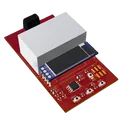
Energy Meter Module
This is an Energy Meter project leveraging an ATTiny85 microcontroller (U1) to sense current through an ACS712 module (U2). It displays the data in real-time on an OLED display (OLED1) and interacts with three buttons (NEXT, MENU, OK). This compact energy meter is suitable for edge computing and low-power Internet of Things (IoT) applications #project #keypad #arduino #attiny85 #ISP #reusable #module #edge-computing #edgeComputing #microchip #sublayout
38 Uses1 Stars
Nodemcu-12E ESP8266
NodeMCU V3 ESP8266 ESP-12E is WiFi development board that helps you to prototype your IoT product with few Lua script lines, or through Arduino IDE. The board is based on ESP8266 ESP-12E variant, unlike other ESP-12E, you won’t need to buy a separate breakout board, usb to serial adapter, or even solder it to a PCB to get started, you will only need a usb cable (Micro USB).
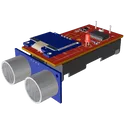
0 Uses1 StarsUltrasonic Distance Meter Module
This circuit is an ultrasonic distance meter based on an ATTiny2313 microcontroller. It uses an HC-SR04 ultrasonic sensor to measure distance and displays the results on an OLED display. The power supply is constructed using a Boost converter (TPS613222A) and a 2-cell AA battery. Additionally, it also includes ISP for programming, RESET and START switches, and LED indicators. #project #Template #projectTemplate #ultrasonic #OLED #arduino #attiny2313 #TPS613222A #ISP #reusable #module #simple-embedded #microchip #sublayout
112 Uses1 StarsIR remote control Module
This is a schematic of an IR (infrared) remote control system. It's built around a Microchip ATTINY2313 microcontroller (U1) and boasts five push-button switches, an indicator RED LED and an electret buzzer for user interaction. An ISP header provides programming capabilities. The project is battery-powered and implements boost converter TPS613222AD (IC1) for stable power supply. #project #Template #projectTemplate #lock #keypad #attiny2313 #TPS613222A #ISP #buzzer #reusable #module #simple-embedded #microchip #arduino #sublayout
121 Uses1 StarsNodemcu-12E ESP8266 8nww
NodeMCU V3 ESP8266 ESP-12E is WiFi development board that helps you to prototype your IoT product with few Lua script lines, or through Arduino IDE. The board is based on ESP8266 ESP-12E variant, unlike other ESP-12E, you won’t need to buy a separate breakout board, usb to serial adapter, or even solder it to a PCB to get started, you will only need a usb cable (Micro USB).
0 Uses1 StarsNodemcu-12E ESP8266 vuik
NodeMCU V3 ESP8266 ESP-12E is WiFi development board that helps you to prototype your IoT product with few Lua script lines, or through Arduino IDE. The board is based on ESP8266 ESP-12E variant, unlike other ESP-12E, you won’t need to buy a separate breakout board, usb to serial adapter, or even solder it to a PCB to get started, you will only need a usb cable (Micro USB).
0 Uses1 StarsNodemcu-12E ESP8266
NodeMCU V3 ESP8266 ESP-12E is WiFi development board that helps you to prototype your IoT product with few Lua script lines, or through Arduino IDE. The board is based on ESP8266 ESP-12E variant, unlike other ESP-12E, you won’t need to buy a separate breakout board, usb to serial adapter, or even solder it to a PCB to get started, you will only need a usb cable (Micro USB).
0 Uses1 StarsBlues - Swan Feather 3.0
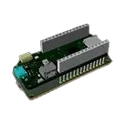
Feather-compatible dev board, powered by an STM32L4+ @ 120 MHz with 2MB of Flash and 640KB of RAM Expandable to 55 pins for access to additional I/O and buses Plenty of Flash and RAM for edge ML workloads or complex applications Support for C/C++, Arduino, and CircuitPython CORTEX Debug connector, enabling the use of Visual Studio Code, IAR, and STM32CubeIDE with optional SWD programmer #blues
34 Uses1 StarsArduino Nano Barebones - SMD No Header
Important Note: You must connect your own SPI/ICSP programming header if you want to burn the Arduino bootloader to the MCU. In this version, you must also provide your own UART interface. SMD Manufacturing: Need a hotplate and solderpaste Good to haves: - Oscillator Decoupling Caps Expose UART via connector Programming Button Onboard LED Reset Button You don't have to populate everything! Only these are mandatory: Reset Button Find the reference schematic here: https://www.arduino.cc/en/uploads/Main/ArduinoNano30Schematic.pdf
78 Uses1 Stars
ARD-NANO30NP
ARDNANO30NP http://www.mouser.com/datasheet/2/595/Arduino_Nano3_0-220057.pdf Development Boards & Kits - AVR Arduino Nano 3.1 W/ATMEGA328 NO-PIN 5 Gravitech ARD-NANO30NP 992-ARD-NANO30NP https://www.mouser.co.uk/ProductDetail/Gravitech/ARD-NANO30NP?qs=Vxac6xGyzPlh7in3DWNTbQ%3D%3D
71 Uses1 Stars
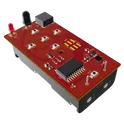
![[Example] Arduino MKR Shield Template](https://img-cdn.flux.ai/eyJidWNrZXQiOiJncmF2aXRvbi1lbGVjdHJpYy1zeW1ib2xzIiwia2V5IjoiZG9jdW1lbnRfYXNzZXRzL2FyZHVpbm8tbWtyLXplcm8tN2YwZjE0YzQtNGE0My00ZjJkLWE1MzUtNWE2Y2RlZmY2NDYxLnBuZyIsImVkaXRzIjp7InJlc2l6ZSI6eyJ3aWR0aCI6MTI0LCJoZWlnaHQiOjEyNCwiZml0IjoiY29udGFpbiIsImJhY2tncm91bmQiOnsiciI6MCwiZyI6MCwiYiI6MCwiYWxwaGEiOjB9fX0sIm91dHB1dEZvcm1hdCI6IndlYnAifQ==)

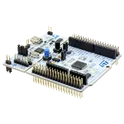
![[Example] Arduino MKR Memory Shield](https://cdn.flux.ai/document_assets/top-d5430452-56aa-46e4-a4bd-856444e17257.svg)