Raspberry Pi Projects
A Raspberry Pi is a small, affordable, and versatile computer that can be used for a variety of purposes. It has a range of use cases, including: 1. Home media center: The Raspberry Pi can be used to build a home media center, allowing you to stream movies, music, and TV shows to your TV. 2. Desktop computer: With the right accessories, the Raspberry Pi can be used as a desktop computer for everyday tasks such as browsing the internet, creating documents, and playing games. 3. Learning to code: The Raspberry Pi is a great tool for learning to code, with a range of free resources and tutorials available online. 4. Internet of Things (IoT) projects: The Raspberry Pi can be used to build Internet of Things (IoT) projects, such as a smart home system or a weather station. If you're interested in using a Raspberry Pi for your next project, be sure to check out flux.ai, the world's largest community-driven public library of Raspberry Pi footprints, symbols, datasheets, and simulation models. With such a wide range of resources available, you'll have everything you need to get started on your next project.
RP2040
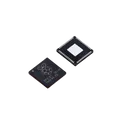
RP2040 chip for Raspberry Pi Pico - ARM® Cortex®-M0+ MCU 32-Bit The RP2040 is a high-performance, low-cost microcontroller built around two ARM Cortex-M0+ cores. It is optimized for flexibility, ease of use, and deterministic real-time performance. Unlike many microcontrollers, it includes a unique programmable I/O subsystem (PIO), allowing custom hardware interfaces without extra components. Key Features Processing Dual-core ARM Cortex-M0+ processors Up to 133 MHz clock speed Efficient integer performance with low power consumption Memory 264 KB on-chip SRAM External QSPI flash support (typically 2 MB–16 MB depending on board) Programmable I/O (PIO) 2 PIO blocks, each with 4 state machines Enables custom protocols (e.g., SPI, I2C, UART, WS2812, VGA, etc.) Offloads timing-critical tasks from CPU 🔗 Connectivity Interfaces 2× UART 2× SPI 2× I2C USB 1.1 controller (device or host support) 16× PWM channels Analog Features 12-bit ADC (up to 5 channels, including internal temperature sensor) Power & Voltage Operating voltage: 1.8V – 3.3V Low-power modes available Package Options QFN-56 (7×7 mm) Development Ecosystem Supports C/C++ SDK MicroPython and CircuitPython support Strong community and documentation Typical Applications Embedded systems and IoT devices Robotics and automation DIY electronics and prototyping USB devices (HID, MIDI, etc.) Custom communication interfaces using PIO #CommonPartsLibrary #IntegratedCircuit #Microcontroller
1.1k Uses12 Stars
Page 1 of 3
Next