PIC Projects
A PIC microcontroller (MCU) is a compact, powerful microcontroller that is widely used in a variety of applications, including automotive, industrial, and consumer electronics. PIC MCUs are known for their high performance, low power consumption, and ease of use. There are many different use cases for PIC MCUs, including control systems, data acquisition, and communication protocols. These microcontrollers are also commonly used in the development of Internet of Things (IoT) devices and other connected systems. Flux.ai has the world's largest community-driven public library of PIC MCUs, with footprints, symbols, datasheets, and simulation models available for use. This extensive library makes it easy for developers and engineers to find the information they need to work with PIC MCUs, and to find and test new solutions for their projects. Whether you're a seasoned professional or a beginner, Flux.ai's library is a valuable resource for anyone working with PIC microcontrollers.
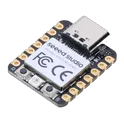
Seeed Studio XIAO RP2040
The Seeed Studio XIAO RP2040 is as small as the Seeed Studio XIAO SAMD21 but it's more powerful. On one hand, it carries the powerful Dual-core RP2040 processor that can flexible clock running up to 133 MHz which is a low-power microcontrollers. On the Seeed Studio XIAO RP2040 there is also 264KB of SRAM, and 2MB of on-board Flash memory which can provide more program to save and run. On the other hand, this little board has good performance in processing but needs less power. All in all, it is designed in a tiny size as small as a thumb(20x17.5mm) and can be used for wearable devices and small projects. #RP2040 #PICO #XIAO #SeedStudio
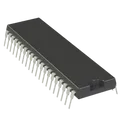
526 Uses12 StarsPIC16F877A-I/P
PIC PIC® 16F Microcontroller IC 8-Bit 20MHz 14KB (8K x 14) FLASH 40-PDIP The PIC16F877A-I/P is a high-performance 8-bit microcontroller from Microchip Technology, based on a Harvard architecture with separate program and data memory buses. It is designed for a wide range of embedded applications requiring reliable processing, multiple communication interfaces, and analog capability. The device integrates Flash program memory, EEPROM data storage, and numerous peripherals including ADC, timers, serial communication modules, and PWM functions. Packaged in a 40-pin PDIP form factor, it is widely used in industrial automation, consumer electronics, and educational development systems. Core Features 8-bit PIC microcontroller architecture Harvard architecture with RISC instruction set Operating frequency up to 20 MHz Single-cycle instruction execution (except branches) Memory Program Memory: 8K words (Flash) Data Memory (RAM): 368 bytes EEPROM Data Memory: 256 bytes I/O Features Up to 33 programmable I/O pins Multiple input/output ports (PORTA, PORTB, PORTC, PORTD, PORTE) High current sink/source capability on selected pins Analog Features 10-bit Analog-to-Digital Converter (ADC) Up to 8 analog input channels Programmable voltage reference Timers and Control Three timers (Timer0, Timer1, Timer2) Capture/Compare/PWM (CCP) modules Watchdog Timer (WDT) Power-on Reset (POR) and Brown-out Reset (BOR) Communication Interfaces USART (Universal Synchronous/Asynchronous Receiver/Transmitter) SPI (Serial Peripheral Interface) I²C (Inter-Integrated Circuit) via MSSP module Electrical Characteristics Operating Voltage: 4.0V to 5.5V Operating Temperature Range: -40°C to +85°C (Industrial grade) Low power consumption modes available Package Information Package Type: PDIP (Plastic Dual Inline Package) Pin Count: 40 pins Mounting Type: Through-hole Applications Industrial control systems Embedded automation Consumer electronics Sensor interfacing and data acquisition Educational and prototyping platforms #commonpartslibrary #integratedcircuit #microcontroller
870 Uses2 Stars
Page 1 of 23
Next