Timers and RTCs
Timers and Real-Time Clocks (RTCs) are electronic devices that are used to measure time or keep track of the current time. They can be found in a wide range of applications, including computers, phones, and appliances. Timers are used to trigger an action after a specific period of time has elapsed. They can be used to control the duration of an event, or to schedule tasks to be performed at a later time. RTCs, on the other hand, are used to maintain accurate time even when the device is powered off. They are often used in devices that need to keep track of the current time and date, such as alarm clocks and smart thermostats. If you're looking for high-quality timers and RTCs for your electronic projects, you should check out Flux.ai. They have the world's largest community-driven public library of timers and RTCs, with footprints, symbols, datasheets, and simulation models. This makes it easy for you to find the components you need for your project, and ensures that you have access to accurate and up-to-date information about each component. Whether you're a professional engineer or a hobbyist, Flux.ai has the resources you need to get your project off the ground.
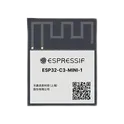
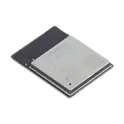
ESP32-C3-MINI-1-N4
The ESP32-C3-MINI-1-N4 is a compact, low-power wireless module from Espressif Systems built around the ESP32-C3 SoC. It integrates a 32-bit RISC-V single-core processor, 2.4 GHz Wi-Fi, Bluetooth 5 Low Energy (BLE), onboard flash memory, crystal oscillator, RF circuitry, and PCB antenna in a small surface-mount package. The module is designed for IoT devices, smart home products, industrial automation, sensor nodes, wearable devices, and other wireless embedded applications. Key Features 32-bit RISC-V Single-Core CPU Up to 160 MHz operating frequency Optimized for low-power IoT applications Integrated Memory 4 MB embedded Flash (N4 version) 400 KB SRAM 384 KB ROM 8 KB RTC SRAM Wireless Connectivity IEEE 802.11 b/g/n Wi-Fi (2.4 GHz) Data rates up to 150 Mbps Bluetooth 5 LE support Bluetooth Mesh capability Simultaneous Wi-Fi and Bluetooth operation using a shared antenna Security Features Secure Boot Flash Encryption Hardware cryptographic acceleration RSA, AES, HMAC, and Digital Signature support Rich Peripheral Set Up to 15 GPIOs UART SPI I²C I²S USB Serial/JTAG PWM TWAI (CAN 2.0 compatible) SAR ADC Timers and Watchdog timers Temperature sensor Integrated Components On-board PCB antenna 40 MHz crystal oscillator RF matching circuitry No external RF design required Power Supply Operating voltage: 3.0 V to 3.6 V Designed for low-power applications Environmental Specifications Operating temperature: −40°C to +85°C (N4 variant) RoHS and REACH compliant #module #RF-Transceiver #ESP32-C3
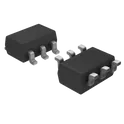
153 Uses0 StarsDW01A
The DW01A is a compact single-cell lithium-ion/lithium-polymer battery protection IC designed to safeguard rechargeable batteries from unsafe operating conditions such as overcharge, overdischarge, overcurrent, and short circuits. It is widely used in battery packs, power banks, TP4056 charging modules, portable electronics, and IoT devices because of its low power consumption and minimal external component requirements. Key Features Single-cell Li-ion/Li-Po battery protection Overcharge protection (typically 4.3V) Overdischarge protection (typically 2.4V) Overcurrent and short-circuit protection Ultra-low quiescent current (~3µA typical) Very low standby/discharge current Drives external dual MOSFETs for charge/discharge control Internal delay timers for noise immunity No external timing capacitors required Compact SOT-23-6 package Wide operating voltage range Automatic recovery after fault removal Typical Applications 18650 battery protection boards Power banks Bluetooth devices Wearables Portable consumer electronics DIY battery-powered projects TP4056 charging modules with protection circuitry #CommonPartsLibrary #IntegratedCircuit #PowerManagement
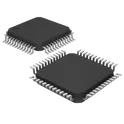
913 Uses0 StarsSTM32G0B1CBT6
ARM-MSeries LQFP-48(7x7) Microcontrollers (MCU/MPU/SOC) ROHS ST Microelectronics STM32G0B1CBT6 LQFP-48_L7.0-W7.0-P0.50-LS9.0-BL LCSC Part Number: C2847904 JLCPCB Part Class: Extended Part Manufactured by ST(意法半导体) STMicroelectronics STM32G0B1 series 32-bit Arm Cortex-M0+ microcontroller, up to 64MHz CPU frequency, 1.7V to 3.6V operating voltage, up to 512KB Flash memory and 144KB SRAM, USB 2.0 full-speed device/host support, USB Type-C Power Delivery controller, FDCAN, I2C, USART, SPI, HDMI CEC, 12-bit ADC, 12-bit DACs, timers, RTC, DMA, CRC unit, SWD debug interface, 96-bit unique ID, operating temperature options up to -40°C to +125°C, available in LQFP, UFQFPN, UFBGA and WLCSP packages. Search Keywords: STM32G0B1, STM32G0B1xB, STM32G0B1xC, STM32G0B1xE, STMicroelectronics STM32G0B1, STM32G0B1 MCU, STM32G0B1 microcontroller, Arm Cortex-M0+ microcontroller, STM32G0 64MHz MCU, STM32G0B1 USB Type-C PD, STM32G0B1 USB FS, STM32G0B1 FDCAN, STM32G0B1 512KB Flash, STM32G0B1 144KB SRAM, STM32G0B1 LQFP, STM32G0B1 UFQFPN, STM32G0B1 UFBGA, STM32G0B1 WLCSP, STM32G0B1 datasheet Hashtags: #STM32G0B1 #STM32G0B1xB #STM32G0B1xC #STM32G0B1xE #STMicroelectronics #STM32MCU #STM32G0 #ArmCortexM0Plus #32bitMicrocontroller #64MHzMCU #512KBFlashMCU #144KBSRAM #USBTypeCPD #USBFS #FDCAN #I2CMCU #SPIMCU #USARTMCU #ADCmicrocontroller #DACmicrocontroller #LQFP #UFQFPN #UFBGA #WLCSP
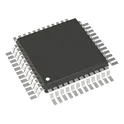
157 Uses0 StarsSTM32L031K6T6TR
ST Microelectronics STM32L031K6T6TR LQFP-32_L7.0-W7.0-P0.80-LS9.0-BL LCSC Part Number: C2054289 JLCPCB Part Class: Extended Part Manufactured by ST(意法半导体) STMicroelectronics STM32L031x4/6 ultra-low-power 32-bit ARM Cortex-M0+ microcontroller family, operating up to 32MHz, with up to 32KB Flash memory, 1KB EEPROM and 8KB SRAM. Features 12-bit ADC with hardware oversampling, ultra-low-power comparators, timers, RTC, watchdogs, SysTick, I2C, SPI, USART and low-power UART interfaces. Supports multiple internal/external clock sources, low-power modes, backup registers and operation from 1.8V to 3.6V supply, with power-down operation down to 1.65V. Suitable for low-power embedded, battery-powered, sensor, industrial and portable applications. Search Keywords: STM32L031x4, STM32L031x6, STM32L031, STMicroelectronics STM32L031, STM32L031 MCU, STM32L0 microcontroller, ARM Cortex-M0+ MCU, ultra low power STM32, 32MHz microcontroller, STM32 32KB Flash, STM32 EEPROM MCU, STM32L031 I2C SPI USART, STM32L031 low power UART, STM32L031 ADC, STM32L031 datasheet Hashtags: #STM32L031 #STM32L031x4 #STM32L031x6 #STMicroelectronics #STM32L0 #CortexM0Plus #ARMMicrocontroller #UltraLowPowerMCU #32MHzMCU #32KBFlash #EEPROMMCU #I2CMCU #SPIMCU #USARTMCU #LowPowerUART #ADC12bit
52 Uses0 StarsESP32-S3-MINI-1-N8
ESP32-S3-MINI-1-N8 is a compact, low-power Wi-Fi and Bluetooth module from Espressif Systems based on the ESP32-S3 SoC. It integrates a dual-core Xtensa LX7 processor, 8 MB flash memory, crystal oscillator, RF matching circuitry, and a PCB antenna in a small SMD package, making it ideal for IoT devices, smart home products, industrial automation, HMI applications, AIoT edge devices, and USB-connected embedded systems. Key Features Dual-core 32-bit Xtensa LX7 CPU Up to 240 MHz operating frequency Includes single-precision floating-point unit (FPU) for enhanced processing performance. Integrated Memory 8 MB Quad SPI Flash (N8 variant) 512 KB SRAM 384 KB ROM 16 KB RTC SRAM. Wireless Connectivity 2.4 GHz Wi-Fi 4 (802.11 b/g/n) Data rates up to 150 Mbps Bluetooth 5 LE with Bluetooth Mesh support Simultaneous Wi-Fi and Bluetooth operation through an integrated coexistence mechanism. Rich Peripheral Set Up to 39 GPIOs USB 2.0 OTG USB Serial/JTAG SPI, I²C, I²S, UART PWM, MCPWM SDIO Host ADC Touch sensing Temperature sensor TWAI® (CAN 2.0 compatible) Timers and watchdogs. Integrated Components On-board 40 MHz crystal oscillator PCB antenna RF matching network Compact certified module design. Operating Conditions Supply voltage: 3.0 V to 3.6 V Operating temperature: −40°C to +85°C. Compliance RoHS and REACH compliant RF-certified module for simplified product development. #RF_transceiver #Module #Esp32
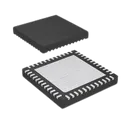
748 Uses0 StarsNRF52832-QFAA-R7
IC RF TxRx + MCU Bluetooth Bluetooth v5.3 2.4GHz 48-VFQFN Exposed Pad NRF52832-QFAA-R7 is an ultra-low-power wireless System-on-Chip (SoC) from Nordic Semiconductor, designed for Bluetooth Low Energy (BLE), ANT, NFC, and proprietary 2.4 GHz wireless applications. It integrates a high-performance ARM Cortex-M4F processor, memory, peripherals, and a 2.4 GHz radio into a single chip, making it ideal for IoT devices, wearables, wireless sensors, beacons, and smart peripherals. GHz protocols • 2.4 GHz transceiver • -96 dBm sensitivity in Bluetooth® low energy mode • Supported data rates: 1 Mbps, 2 Mbps Bluetooth® low energy mode • -20 to +4 dBm TX power, configurable in 4 dB steps • On-chip balun (single-ended RF) • 5.3 mA peak current in TX (0 dBm) • 5.4 mA peak current in RX • RSSI (1 dB resolution) • ARM® Cortex®-M4 32-bit processor with FPU, 64 MHz • 215 EEMBC CoreMark® score running from flash memory • 58 μA/MHz running from flash memory • 51.6 μA/MHz running from RAM • Data watchpoint and trace (DWT), embedded trace macrocell (ETM), and instrumentation trace macrocell (ITM) • Serial wire debug (SWD) • Trace port • Flexible power management • 1.7 V–3.6 V supply voltage range • Fully automatic LDO and DC/DC regulator system • Fast wake-up using 64 MHz internal oscillator • 0.3 μA at 3 V in System OFF mode • 0.7 μA at 3 V in System OFF mode with full 64 kB RAM retention • 1.9 μA at 3 V in System ON mode, no RAM retention, wake on RTC • Memory • 512 kB flash/64 kB RAM • 256 kB flash/32 kB RAM • Nordic SoftDevice ready • Support for concurrent multi-protocol • Type 2 near field communication (NFC-A) tag with wakeup-on-field and touchto-pair capabilities • 12-bit, 200 ksps ADC - 8 configurable channels with programmable gain • 64 level comparator • 15 level low power comparator with wakeup from System OFF mode • Temperature sensor • 32 general purpose I/O pins • 3x 4-channel pulse width modulator (PWM) unit with EasyDMA • Digital microphone interface (PDM) • 5x 32-bit timer with counter mode • Up to 3x SPI master/slave with EasyDMA • Up to 2x I2C compatible 2-wire master/slave • I2S with EasyDMA • UART (CTS/RTS) with EasyDMA • Programmable peripheral interconnect (PPI) • Quadrature decoder (QDEC) • AES HW encryption with EasyDMA • Autonomous peripheral operation without CPU intervention using PPI and EasyDMA • 3x real-time counter (RTC) • Single crystal operation • Package variants • QFN48 package, 6 × 6 mm • WLCSP package, 3.0 × 3.2 mm #CommonPartsLibrary #IntegratedCircuit
52 Uses0 Stars