Interface ICs
An interface IC is a type of integrated circuit that is designed to facilitate communication between two devices or systems. These devices are commonly used in electronic systems to enable the transfer of data and control signals between different components or subsystems. Some common use cases for interface ICs include connecting microcontrollers to peripherals such as sensors or displays, linking multiple processors together in a network, and enabling communication between devices using different communication protocols. Flux.ai has the world's largest community-driven public library of interface ICs, with footprints, symbols, datasheets, and simulation models. This library is a valuable resource for engineers and designers who need access to accurate and up-to-date information on these important components. Whether you are working on a new design project or simply looking to learn more about interface ICs, Flux.ai is an excellent resource to help you find the information you need.
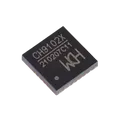
CH9102X
The CH9102X is a high-speed USB-to-UART bridge IC developed by WCH (Jiangsu Qinheng Microelectronics). It enables seamless communication between a USB host and UART-based embedded systems, making it ideal for programming, debugging, firmware updates, and serial data communication. The device integrates a USB 2.0 Full-Speed interface, an internal clock, power-on reset, and firmware, eliminating the need for an external crystal oscillator. The CH9102X variant supports 3.3 V UART I/O and is widely used on development boards such as ESP32 and other MCU-based designs. Key Features USB 2.0 Full-Speed (12 Mbps) compliant device interface USB-to-UART bridge supporting baud rates from 50 bps to 4 Mbps 3.3 V UART I/O (CH9102X variant) Integrated clock oscillator (no external crystal required) Built-in power-on reset circuit Hardware full-duplex UART with independent TX/RX buffers Supports 5, 6, 7, or 8 data bits Supports None, Odd, Even, Mark, and Space parity Supports RTS/CTS hardware flow control Supports MODEM signals: RTS, CTS, DTR, DSR, DCD, and RI TNOW output for automatic RS-485 transmit/receive control Compatible with built-in CDC drivers and vendor VCP drivers on major operating systems Available in compact RoHS-compliant QFN packages #CH9102X #USBtoUART #USBBridge #UART #SerialConverter #WCH #USB20 #EmbeddedSystems #ESP32 #MCU #RS485 #FirmwareUpdate #Debugging #IoT #PCBDesign
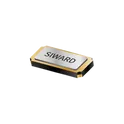
17 Uses0 StarsXTL721-S999-301
32.768 kHz ±20ppm Crystal 9pF 70 kOhms 2-SMD, No Lead The XTL721-S999-301 specification defines the engineering requirements for a crystal oscillator component intended to provide a stable and accurate timing reference for electronic systems. This specification establishes the functional, electrical, mechanical, environmental, and quality requirements necessary to ensure precise frequency generation, reliable operation, and long-term stability in embedded, industrial, communication, and consumer electronic applications. The component is intended for use in applications requiring accurate clock generation and synchronization, including microcontroller-based systems, communication interfaces, digital signal processing, and timing circuits. It provides a highly stable frequency reference with low phase noise and excellent frequency stability to support reliable system operation under varying environmental conditions. Engineering Requirements The crystal component shall be manufactured using high-purity quartz material and precision fabrication processes to ensure consistent resonant frequency characteristics, low aging effects, and dependable long-term performance. The construction shall provide stable oscillation characteristics throughout the specified operating temperature and environmental conditions. Electrical characteristics shall ensure accurate frequency stability, low equivalent series resistance, and reliable oscillation startup when used with compatible oscillator circuits. The component shall maintain stable timing performance under normal supply variations, temperature fluctuations, and continuous operating conditions. Mechanical construction shall be suitable for automated surface-mount assembly and compatible with standard solder reflow manufacturing processes. The package shall provide mechanical robustness and resistance to vibration, mechanical shock, thermal cycling, and handling without degradation of electrical performance or structural integrity. Workmanship shall be free from defects including contamination, package cracking, seal failure, lead deformation, or structural inconsistencies that could adversely affect frequency accuracy or operational reliability. Inspection, validation, and testing shall be performed using calibrated equipment and controlled quality procedures to verify compliance with engineering and manufacturing requirements. Any deviation from this specification shall require formal engineering evaluation, documented technical justification, and approval through the established engineering change control process before implementation. Documentation Supporting documentation shall include engineering drawings, frequency performance specifications, electrical characterization reports, qualification records, inspection reports, reliability data, material declarations, and revision-controlled manufacturing documentation. All documentation shall be maintained under formal configuration management and quality assurance systems to ensure complete product traceability. Revision Control Any modification to this specification shall be managed through the formal engineering change management process. All revisions shall undergo technical review, validation, and approval before release to ensure continued compliance with design intent and applicable engineering standards. #EngineeringSpecification #CrystalOscillator #QuartzCrystal #TimingDevice #ClockGenerator #EmbeddedSystems #IndustrialElectronics #FrequencyControl #QualityAssurance #EngineeringDocumentation
0 Uses0 StarsPCM1822IRTER
ADC, Audio 32 b 8k ~ 192k I2S 20-WQFN (3x3) The PCM1822 is a high-performance, Burr-Brown™ audio analog-to-digital converter (ADC) that supports simultaneous sampling of up to two analog channels. The device supports single-ended and differential line and microphone inputs with a 1-VRMS full-scale signal. The device integrates a phase-locked loop (PLL), a DC removal high-pass filter (HPF), and supports sample rates up to 192 kHz. The device supports time-division multiplexing (TDM) or I2S audio formats, selectable with the hardware pin level. Additionally, the PCM1822 supports master and slave mode selection for the audio bus interface operation. These integrated high-performance features, along with the ability to be powered from a single supply of 3.3 V, make the device an excellent choice for costsensitive, space-constrained audio systems in far-field microphone recording applications. The PCM1822 is specified from –40°C to +125°C, and is offered in a 20-pin WQFN package. Features • Stereo high-performance ADC: – 2-channel analog microphones or line-in • ADC line and microphone differential and singleended input performance: – PCM1822 dynamic range: • 117-dB, dynamic range enhancer enabled • 111-dB, dynamic range enhancer disabled – THD+N: –95 dB • 1-VRMS full-scale input • ADC sample rate (fS) = 8 kHz to 192 kHz • Hardware pin control configurations • Linear-phase or low-latency filter selection • Flexible audio serial data interface: – Master or slave interface selection – 32-bits, 2-channel TDM – 32-bits, 2-channel I2S • Automatic power-down upon loss of audio clocks • Integrated high-performance audio PLL • Single-supply operation: 3.3 V • I/O-supply operation: 3.3 V or 1.8 V • Power consumption for 3.3-V AVDD supply: – 19.6 mW/channel at 16-kHz sample rate – 21.3 mW/channel at 48-kHz sample rate #CommonPartsLibrary #IntegratedCircuit #PCM1822IRTER #TexasInstruments #AudioADC #StereoADC #BurrBrown #I2S #TDM #AudioElectronics #EmbeddedAudio #SmartSpeaker #AVReceiver #HighResolutionAudio #PCBDesign #ElectronicsDesign #SignalProcessing
2 Uses0 StarsAHT30
Fully calibrated temperature and humidity sensor with digital output and I²C interface The AHT30 is a high-precision digital temperature and humidity sensor developed by AOSONG Electronics. It integrates a capacitive humidity sensing element, a temperature sensor, and a dedicated ASIC in a compact DFN package. The device provides fully calibrated digital output through an I²C interface, offering low power consumption, excellent long-term stability, and reliable performance in demanding environmental conditions. It is widely used in smart home devices, HVAC systems, industrial controls, weather monitoring equipment, IoT devices, and consumer electronics. Key Features Fully calibrated digital temperature and humidity sensor I²C digital communication interface Relative humidity measurement range: 0% to 100% RH Temperature measurement range: -40°C to +85°C High accuracy: up to ±2% RH and ±0.3°C (typical) Wide operating voltage: 2.2 V to 5.5 V Low power consumption Fast response time Excellent long-term stability Strong anti-interference capability Compact DFN package suitable for reflow soldering Optimized ASIC with improved MEMS sensing technology Applications Smart home and IoT devices HVAC and air quality monitoring Weather stations Consumer electronics Medical equipment Industrial monitoring and control systems Refrigerators, dehumidifiers, and air conditioners Hashtags #AHT30 #AOSONG #TemperatureSensor #HumiditySensor #EnvironmentalSensor #I2C #MEMS #SmartHome #IoT #HVAC #IndustrialAutomation #WeatherMonitoring #EmbeddedSystems #ElectronicsDesign #PCBDesign
0 Uses0 StarsESP32-POE
ESP32-WROOM32 ESP32 802.11 b/g/n (WiFi/WLAN/Wi-Fi 4), Bluetooth® Smart 4.x Low Energy (BLE) Transceiver 2.4GHz Evaluation Board ESP32-POE is an ESP32-based IoT development board that combines Wi-Fi, Bluetooth, Ethernet connectivity, and Power over Ethernet (PoE) in a single platform. It is designed for industrial automation, smart home systems, remote monitoring, and other network-connected embedded applications where both power and data can be delivered through a single Ethernet cable. The board supports the ESP32 dual-core processor and provides expansion interfaces for sensors, storage, and peripherals. FEATURES • ESP32-WROOM-32 WiFi/BLE module • Ethernet 100Mb interface with IEEE 802.3 PoE support • LiPo battery charger • LiPo battery connector • UEXT connector • User button • Reset button • Micro USB with programmer for ESP32 programming • MicroSD card • Two extension connectors 0.1" step spaced at 1" • PCB dimensions: (75 x 28)mm ~ (3 x 1)" #ESP32 #ESP32POE #IoT #Ethernet #PoE #WiFi #Bluetooth #EmbeddedSystems #IndustrialIoT #SmartHome #OpenSourceHardware #Microcontroller #EdgeComputing #Automation #MakerProjects
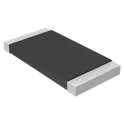
5 Uses0 StarsCRM2512-FX-1R00ELF
1 Ohms ±1% 2W Chip Resistor 2512 (6332 Metric) Current Sense Thick Film The CRM2512-FX-1R00ELF specification defines the engineering requirements for a surface-mount current sense resistor designed for precision current measurement and power management applications. This specification establishes the functional, electrical, mechanical, thermal, environmental, and quality requirements necessary to ensure accurate resistance performance, efficient power dissipation, and long-term operational reliability in electronic systems. The component is intended for use in power supplies, battery management systems, motor control circuits, industrial automation equipment, and embedded electronic applications requiring precise current monitoring. The resistor provides a low-resistance element for current sensing while maintaining high measurement accuracy, thermal stability, and compatibility with automated surface-mount manufacturing processes. Engineering Requirements The resistor shall be manufactured using high-quality resistive materials and controlled fabrication processes to ensure stable resistance characteristics, low temperature coefficient, and reliable long-term performance. The construction shall provide consistent electrical behavior throughout the specified operating conditions without significant drift or degradation. Electrical characteristics shall ensure accurate resistance value, stable current sensing performance, and low inductance suitable for high-frequency switching environments. The component shall maintain its specified tolerance and thermal performance under continuous rated power and transient load conditions. Thermal performance shall support efficient heat dissipation through the package structure and printed circuit board interface. The resistor shall withstand normal solder reflow processes and maintain structural integrity during thermal cycling, vibration, and mechanical handling. Mechanical construction shall be compatible with standard surface-mount assembly processes and shall provide reliable solder joint formation. Workmanship shall be free from defects including cracks, delamination, contamination, plating irregularities, or structural inconsistencies that could adversely affect electrical or mechanical performance. Inspection, validation, and testing shall be conducted using calibrated equipment and controlled quality procedures to verify compliance with all applicable engineering and manufacturing requirements. Any deviation from this specification shall require formal engineering evaluation, documented technical justification, and approval through the established engineering change control process. Documentation Supporting documentation shall include engineering drawings, electrical performance specifications, thermal characterization data, qualification reports, inspection records, material declarations, and revision-controlled manufacturing documentation. All documentation shall be maintained under formal configuration management and quality assurance systems to ensure complete product traceability. Revision Control Any modification to this specification shall be managed through the formal engineering change management process. All revisions shall undergo technical review, validation, and approval before implementation to ensure continued compliance with design intent and applicable engineering standards. #EngineeringSpecification #CurrentSenseResistor #PowerElectronics #SurfaceMount #PrecisionResistor #IndustrialElectronics #PowerManagement #QualityAssurance #EngineeringDocumentation #ElectronicComponents
0 Uses0 StarsF12-090-C2
Laminated Core 1.1VA Power Transformer 115V Primary Parallel 6.3V, Series 12.6V Secondary Parallel 180mA, Series 90mA Through Hole The F12-090-C2 specification defines the engineering requirements for an electronic connector component intended to provide reliable electrical interconnection between printed circuit boards, cable assemblies, or electronic subsystems. This specification establishes the functional, mechanical, electrical, environmental, and quality requirements necessary to ensure dependable signal transmission, secure mechanical engagement, and long-term operational reliability. The component is intended for use in embedded, industrial, communication, and electronic control systems where compact interconnect solutions and consistent electrical performance are required. The connector is designed to support repeated mating cycles while maintaining low contact resistance, stable mechanical retention, and compatibility with standard electronic assembly processes. Engineering Requirements The connector shall be manufactured using precision-formed conductive contacts and high-strength insulating materials to ensure consistent electrical conductivity, mechanical durability, and long service life. The construction shall support reliable mating and unmating operations without degradation of contact performance. Electrical characteristics shall provide low contact resistance, stable signal integrity, and reliable current-carrying capability within the specified operating conditions. The connector shall maintain electrical continuity under vibration, thermal cycling, and environmental exposure encountered during normal operation. Mechanical construction shall ensure accurate alignment of mating interfaces, secure retention, and resistance to mechanical wear resulting from repeated insertion and removal. The housing and contact system shall withstand normal handling and assembly processes without deformation or structural damage. Workmanship shall be free from defects including contamination, cracks, corrosion, plating irregularities, or mechanical deformation that could adversely affect electrical or mechanical performance. Inspection, validation, and testing shall be conducted using calibrated equipment and controlled quality procedures to verify compliance with engineering requirements. Any deviation from this specification shall require formal engineering evaluation, documented technical justification, and approval through the established engineering change control process prior to implementation. Documentation Supporting documentation shall include engineering drawings, material specifications, electrical performance data, inspection records, qualification reports, and revision-controlled manufacturing documentation. All documentation shall be maintained under formal configuration management and quality assurance systems to ensure complete product traceability. Revision Control Any modification to this specification shall be processed through the formal engineering change management system. All revisions shall undergo technical review, validation, and approval before release to ensure continued compliance with design intent and applicable industry standards. #EngineeringSpecification #Connector #ElectronicInterconnect #SignalIntegrity #EmbeddedSystems #IndustrialElectronics #ElectricalEngineering #Manufacturing #QualityAssurance #EngineeringDocumentation
0 Uses0 Stars