Interface ICs
An interface IC is a type of integrated circuit that is designed to facilitate communication between two devices or systems. These devices are commonly used in electronic systems to enable the transfer of data and control signals between different components or subsystems. Some common use cases for interface ICs include connecting microcontrollers to peripherals such as sensors or displays, linking multiple processors together in a network, and enabling communication between devices using different communication protocols. Flux.ai has the world's largest community-driven public library of interface ICs, with footprints, symbols, datasheets, and simulation models. This library is a valuable resource for engineers and designers who need access to accurate and up-to-date information on these important components. Whether you are working on a new design project or simply looking to learn more about interface ICs, Flux.ai is an excellent resource to help you find the information you need.
PCA9632DP1,118
40 power reduction compared to PCA9633 4 LED drivers. Each output programmable at: Off On Programmable LED brightness Programmable group dimming/blinking mixed with individual LED brightness 1 MHz Fast-mode Plus I2C-bus interface with 30 mA high drive capability on SDA output for driving high capacitive buses 256-step (8-bit) linear programmable brightness per LED output varying from fully off (default) to maximum brightness using a 1.5625 kHz PWM signal in Individual brightness m
4 Uses0 StarsKTD2027BEWE-TR
LED Lighting Driver ICs LED Lighting Drivers 4-Channel RGBW Driver, I2C, 1.5x1.5mm TDFN The KTD2027BEWE-TR is a highly integrated, low-power RGB LED driver designed for portable and battery-powered applications. It features a compact WLCSP package and provides precise current control for up to three LED channels. The device includes an I²C-compatible interface, enabling flexible control of brightness, color mixing, and lighting effects. Integrated features such as programmable current sinks, dimming control, and built-in protection mechanisms make it suitable for indicators, backlighting, and decorative lighting in consumer electronics. Key Features Triple-channel constant current LED driver (RGB support) I²C-compatible digital interface Independent brightness control per channel Programmable current up to ~24 mA per channel Built-in PWM dimming and pattern generation Low quiescent current for power-sensitive applications Wide input voltage range Thermal shutdown and overcurrent protection Small WLCSP package (suitable for compact designs) Applications Mobile devices and wearables Status indicators and notification LEDs Backlighting and decorative lighting IoT and portable electronics Absolute Maximum Ratings Supply Voltage (VDD): −0.3 V to +6.0 V Logic Input Voltage: −0.3 V to VDD + 0.3 V Operating Temperature Range: −40°C to +85°C Storage Temperature Range: −55°C to +150°C Recommended Operating Conditions Supply Voltage (VDD): 1.8 V to 5.5 V LED Forward Voltage: Dependent on external LEDs Ambient Temperature: −40°C to +85°C Electrical Characteristics (Typical) Supply Current (Idle): < 1 µA (shutdown mode) Channel Current Accuracy: ±5% (typical) Maximum Output Current: ~24 mA per channel I²C Clock Frequency: Up to 400 kHz (Fast Mode) Functional Description The KTD2027BEWE-TR operates as a constant-current sink driver for RGB LEDs. Each channel can be independently programmed via the I²C interface to control brightness and enable dynamic lighting effects. Internal PWM generators allow smooth dimming without requiring continuous microcontroller intervention. The device also integrates protection features such as thermal shutdown and current limiting to ensure reliable operation. Pin Configuration (Typical WLCSP) VDD – Power supply GND – Ground SDA – I²C data line SCL – I²C clock line LED1 – Current sink output (Red) LED2 – Current sink output (Green) LED3 – Current sink output (Blue) Package Information Package Type: WLCSP (Wafer-Level Chip Scale Package) Mounting: Surface mount Tape & Reel: Yes (TR suffix) Ordering Information KTD2027BEWE-TR: Tape and reel packaging for automated assembly #commonpartslibrary #integratedcircuit #leddriver
3 Uses0 Stars218-6LPSTJ
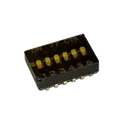
Dip Switch SPST 6 Position Surface Mount Slide (Standard) Actuator 25mA 24VDC The 218-6LPSTJ is a through-hole terminal block connector designed for secure wire-to-board connections. It features a multi-position configuration with a compact footprint and robust clamping mechanism, making it suitable for industrial and general-purpose electronic applications. The component ensures reliable electrical contact and ease of installation for power and signal wiring. Key Features Multi-position terminal block (6 positions) Through-hole mounting for strong mechanical stability Screw clamp or spring clamp termination (depending on variant) მაღალი reliability for power and signal connections مقاومة عالية للاهتزاز (vibration-resistant design) Standard pitch for compatibility with common PCB layouts Electrical Characteristics Rated Voltage: Typically up to 300 V (application dependent) Rated Current: Typically up to 10–15 A per contact (depends on wire gauge) Contact Resistance: Low contact resistance for efficient conduction Insulation Resistance: High insulation resistance Mechanical Characteristics Number of Positions: 6 Pitch: Typically 5.08 mm (verify exact datasheet) Mounting Type: Through-hole PCB mount Wire Size Range: عادةً 24–12 AWG (depends on design) Actuation Type: Screw or spring clamp Material Properties Housing Material: Flame-retardant thermoplastic (UL94 V-0 rated) Contact Material: Copper alloy Plating: Tin-plated contacts for corrosion resistance Environmental Specifications Operating Temperature Range: -40°C to +105°C (typical) مقاومة للبيئات الصناعية القياسية RoHS compliant Applications Power distribution modules Industrial control systems PCB-based wiring interfaces Automation and instrumentation systems Compliance and Standards UL recognized (model dependent) IEC compliance for terminal blocks RoHS compliant #commonpartslibrary #switch #dip #spst
19 Uses0 StarsSDP33-1500Pa-TR-250pcs
Pressure Sensor +/-0.22PSI (+/-1.5kPa) Differential Male - 0.08\" (2.00mm) Tube, Dual 16 b 16-SMD Module, Dual Top Ports The SDP33-1500Pa-TR-250PCS is a digital differential pressure sensor module from Sensirion AG, designed for high-precision measurement of low-pressure differences up to ±1500 Pa (±1.5 kPa). It belongs to the SDP3x series, which uses Sensirion’s CMOSens® technology for compact, accurate, and stable sensing performance. It is widely used in HVAC systems, airflow measurement, medical devices, and industrial control applications where precise air or gas flow monitoring is required. Key Features Differential Pressure Measurement Range: ±1500 Pa (±1.5 kPa) Digital Output Interface I²C communication for easy MCU integration High Resolution 16-bit digital output Accurate & Stable Performance Factory-calibrated and temperature compensated No zero-point drift Low Power Consumption Designed for battery-powered and embedded systems Compact SMD Module Small footprint, surface-mount package (easy PCB integration) Fast Response Time Suitable for real-time airflow and pressure monitoring Wide Operating Conditions Supply voltage: ~3.3V Operating temperature: -40°C to +85°C Reflow Solderable Compatible with standard SMT manufacturing processes Reliable Long-Term Stability Built for high-volume industrial and commercial applications Typical Applications HVAC airflow and filter monitoring Ventilation and air quality systems Medical respiratory devices Industrial automation and process control Drones and airspeed (pitot tube systems) IoT environmental sensing #CommonPartsLibrary #Sensor
5 Uses0 StarsSSW-120-01-T-S
20 Position Receptacle Connector 0.100" (2.54mm) Through Hole Tin The SSW-120-01-T-S is a single-row, 20-position female (receptacle) socket strip with a 2.54 mm (0.1") pitch, intended for through-hole PCB mounting. It uses Samtec’s Tiger Buy™ contact system, providing reliable electrical performance and durability for repeated mating cycles. It is commonly used in embedded systems, development boards, and general PCB interconnections, especially where standard 0.1" headers are required. Female header 1x20 2.54mm Key Features Standard 2.54 mm Pitch Industry-standard spacing compatible with most pin headers and prototyping systems 20 Positions, Single Row Ideal for compact signal connections and header interfaces Tiger Buy™ Contact System Provides low insertion force and reliable electrical contact Available in standard or low insertion force variants Through-Hole Mounting Ensures strong mechanical retention and durability on PCBs Tin-Plated Contacts (T option) Cost-effective plating suitable for general-purpose applications High-Speed Capability Supports signals up to ~8 Gbps, depending on application and layout Wide Operating Temperature Range Typically −55 °C to +105 °C, suitable for industrial environments Material Construction Contacts: Phosphor bronze Insulator: High-temperature plastic (e.g., LCP) Versatile Mating Compatibility Mates with common Samtec header series (TSW, MTSW, etc.) and standard 0.025" square posts #CommonPartsLibrary #Connector #SSW-120
150 Uses0 StarsTSW-103-07-G-D
Connector Header Through Hole 6 position 0.100" (2.54mm) The TSW-103-07-G-D is a through-hole, dual-row (2×3) male pin header from the TSW series of Samtec. It is designed for board-to-board or cable-to-board interconnections, using a standard 2.54 mm (0.1″) pitch, making it widely compatible with common PCB layouts and prototyping systems. This connector features gold-plated square posts for reliable electrical contact and durability, and is commonly used in embedded systems, development boards, and general electronics applications. Key Features Connector Type: Male pin header (unshrouded) Number of Positions: 6 pins (2 rows × 3 pins) Pitch: 2.54 mm (0.100″) standard spacing Mounting Type: Through-hole soldering Contact System: 0.025″ (0.635 mm) square post Contact Material: Phosphor bronze with gold plating Orientation: Vertical (straight) Row Spacing: 2.54 mm Operating Temperature: −55 °C to +125 °C Insulator Material: PBT (UL94 V-0 rated) Typical Use: Board-to-board or cable interface AVR ISP 2x3 2.54mm header #commonpartslibrary #connector #header
493 Uses0 StarsPPPC082LJBN-RC
16 Position Header Connector 0.100" (2.54mm) Through Hole, Right Angle Gold The PPPC082LJBN-RC is a dual-row, right-angle pin header connector intended for through-hole PCB mounting. It uses a standard 2.54 mm pitch with a 2×8 pin configuration and is commonly used for board-to-board or board-to-cable connections. The connector provides stable mechanical support and reliable electrical performance, making it suitable for prototyping, embedded systems, and general-purpose electronic designs. Mechanical Specifications Connector Type: Pin Header Mounting Type: Through-Hole, Right Angle Number of Positions: 16 (2×8) Pitch: 2.54 mm Row Spacing: 2.54 mm Contact Orientation: Right Angle Termination Style: Solder Housing Material: Thermoplastic (UL94V-0 rated) Contact Material: Brass Electrical Specifications Current Rating: Typically up to 3 A per contact Voltage Rating: Typically 250 V Contact Resistance: ≤ 20 mΩ Insulation Resistance: ≥ 1000 MΩ Dielectric Withstanding Voltage: ~500 VAC Environmental Specifications Operating Temperature Range: -40°C to +105°C Flammability Rating: UL94V-0 RoHS Compliance: Yes Plating Contact Plating: Gold flash over nickel (typical) Tail Plating: Tin over nickel Applications PCB interconnections Embedded systems and microcontroller boards Industrial control interfaces Consumer electronics prototyping Signal and low-power connections Mating Compatibility Compatible with standard 2.54 mm pitch female headers and IDC connectors #commonpartslibrary #connector #header
15 Uses0 Stars218-2LPSTJ
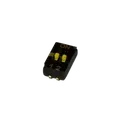
Dip Switch SPST 2 Position Surface Mount Slide (Standard) Actuator 25mA 24VDC The 218-2LPSTJ is a two-position pluggable terminal block connector designed for secure wire-to-board connections in industrial and commercial electronic applications. It features a screw-clamp termination mechanism, allowing reliable and reusable connections for solid or stranded wires. The connector is typically used in power distribution, control systems, and signal wiring where ease of maintenance and field wiring is required. Key Features Pluggable terminal block, two positions Screw-clamp wire termination for secure connection Standard pitch suitable for common PCB layouts Removable plug for easy installation and maintenance Designed for solid and stranded wire compatibility High reliability for industrial environments Mechanical Specifications Number of Positions: 2 Pitch: 5.08 mm Mounting Type: Through-hole (header) with mating plug Wire Entry: Side entry Wire Gauge Range: Typically 24 AWG to 12 AWG (manufacturer dependent) Housing Material: High-temperature thermoplastic Color: Typically green Electrical Specifications Rated Voltage: Up to 300 V (UL rating typical) Rated Current: Up to 10–15 A (depending on wire size and conditions) Contact Resistance: Low resistance, suitable for power and signal transmission Insulation Resistance: High insulation resistance under standard conditions Environmental Specifications Operating Temperature Range: −40°C to +105°C (typical) Flammability Rating: UL94 V-0 RoHS Compliant: Yes Applications Power supply connections Industrial control systems HVAC equipment Automation and instrumentation PCB-based terminal interfaces Mating / Compatibility Compatible with corresponding 2-position pluggable terminal block headers with 5.08 mm pitch Designed for repeated mating cycles without degradation #commonpartslibrary #switch #dip #spst
13 Uses0 StarsLTR-559ALS-01
Optical Sensor Ambient I2C 8-SMD, No Lead The LTR-559ALS-01 is a combined ambient light sensor and proximity sensor module designed for low-power and space-constrained applications. It integrates a photodiode array for ambient light detection and an infrared emitter with a photodiode for proximity sensing. The device provides digital output via an I²C interface and includes programmable interrupt functionality for system-level event handling. It is commonly used in mobile devices, wearable electronics, and industrial applications requiring automatic brightness control and object detection. Key Features: Integrated ambient light and proximity sensing functions High sensitivity with wide dynamic range for light measurement Infrared LED driver for proximity detection I²C digital interface for communication Programmable interrupt output Low power consumption with multiple operating modes Built-in noise cancellation and sunlight rejection Compact surface-mount package Electrical Characteristics: Supply voltage range: compatible with typical low-voltage logic systems Low standby current for power-sensitive applications Programmable gain and integration time for ambient light sensing Adjustable LED drive current for proximity sensing Optical Characteristics: Ambient light sensing with human-eye spectral response approximation Proximity detection using infrared light with high immunity to ambient light interference Interface: Communication protocol: I²C-compatible interface Supports configurable registers for threshold, timing, and interrupt control Package Information: Small form factor surface-mount package suitable for compact PCB layouts Integrated optical window for both ALS and proximity sensing Applications: Display brightness control in smartphones and tablets Proximity detection for touchless interfaces Wearable devices and IoT sensors Industrial automation and control systems Environmental and Compliance: Designed for standard commercial temperature ranges RoHS compliant and suitable for lead-free assembly processes Notes for Design Integration: Requires proper optical isolation between emitter and receiver for accurate proximity sensing PCB layout should minimize interference from external light sources Calibration may be required depending on enclosure and application conditions #commonpartslibrary #sensor #ambient
5 Uses0 Stars