Oscillators
An oscillator is an electronic circuit that generates a periodic, oscillating signal, often a sine wave or a square wave. Oscillators are used in a wide range of applications, including clocks, radios, and sound synthesis. Flux.ai has the world's largest community-driven public library of oscillators, with footprints, symbols, datasheets, and simulation models. This comprehensive resource allows engineers and designers to easily find the oscillator they need for their specific application and use it with confidence. Whether you are working on a simple clock circuit or a complex radio transmitter, Flux.ai's oscillator library has you covered. So, if you are in need of an oscillator for your next project, be sure to check out Flux.ai's extensive collection.
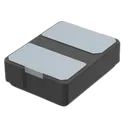
NX3225GD-8MHZ-STD-CRA-3
CRYSTAL 8MHz 8pF SMD The NX3225GD-8MHZ-STD-CRA-3 is an automotive-grade surface-mount quartz crystal unit from NDK designed to provide a stable 8 MHz clock reference for microcontrollers, automotive ECUs, and embedded systems. It belongs to the NX3225GD series and is optimized for high reliability under harsh environmental conditions. Key Features 8 MHz fundamental-mode crystal Compact 3.2 mm × 2.5 mm × 1.0 mm SMD package 8 pF load capacitance ±50 ppm frequency tolerance ±150 ppm frequency stability over temperature Automotive-qualified with AEC-Q200 compliance Wide operating temperature range: −40°C to +150°C Excellent resistance to heat, vibration, shock, and solder cracking Stable startup characteristics in severe environments RoHS compliant Typical Applications Automotive engine control units (ECUs) MCU and CPU clock generation Industrial embedded systems Communication equipment Consumer electronics and IoT devices #CommonPartsLibrary #crystal oscillator #resonator
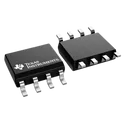
264 Uses0 StarsTLC555IDR
555 Type, Timer/Oscillator (Single) IC 2.1MHz 8-SOIC The TLC555IDR is a low-power CMOS timer device designed as a functional replacement for the standard bipolar 555 timer while providing significantly reduced supply current and improved operating efficiency. The device supports both astable and monostable operating modes and is commonly used for timing generation, pulse shaping, oscillation, PWM generation, delay circuits, and frequency generation applications. The CMOS architecture enables low power consumption, rail-to-rail output capability, and stable timing performance over a wide operating voltage range. The device is suitable for battery-powered systems, portable electronics, industrial controls, instrumentation, consumer products, and embedded electronic designs. The TLC555IDR is supplied in a compact SOIC surface-mount package intended for automated PCB assembly and space-constrained applications. Electrical Characteristics CMOS low-power timer architecture Functional equivalent to standard 555 timer devices Wide operating supply voltage range Low quiescent supply current High input impedance Rail-to-rail output swing capability Stable threshold and trigger levels Compatible with TTL and CMOS logic levels Capable of astable and monostable operation Adjustable duty cycle and frequency operation High output drive capability for direct interfacing Low noise and improved switching performance compared to bipolar 555 timers Functional Features Precision timing generation Oscillator and clock generation Pulse-width modulation support One-shot pulse generation Delay timer implementation Missing pulse detection Frequency divider implementation Sequential timing control LED flashing and tone generation PWM motor and power control applications Package Information Surface-mount SOIC package Standard tape-and-reel packaging format Compact footprint for automated assembly RoHS compliant device construction Environmental and Operating Conditions Industrial operating temperature range ESD protection handling required Suitable for commercial and industrial embedded systems Designed for low-power electronic applications Typical Applications Timer circuits Pulse generators Oscillators PWM controllers LED flashers Alarm and tone generators Frequency generators Power management timing Embedded control systems Portable battery-powered electronics #commonpartslibrary #integratedcircuit #timer #oscillator
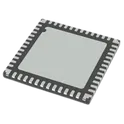
62 Uses0 StarsdsPIC33CK256MP205-I/M4
dsPIC dsPIC™ 33CK, Functional Safety (FuSa) Microcontroller IC 16-Bit 100MHz 256KB (256K x 8) FLASH 48-UQFN (6x6) 28/36/48/64/80-Pin Digital Signal Controllers with High-Resolution PWM and CAN Flexible Data (CAN FD) Operating Conditions • 3.0V to 3.6V, -40°C to +125°C, DC to 100 MIPS • 3.0V to 3.6V, -40°C to +150°C, DC to 70 MIPS Core: 16-Bit dsPIC33CK CPU • 32-256 Kbytes of Program Flash with ECC and 8-24K RAM • Fast 6-Cycle Divide • LiveUpdate • Code Efficient (C and Assembly) Architecture • 40-Bit Wide Accumulators • Single-Cycle (MAC/MPY) with Dual Data Fetch • Single-Cycle, Mixed-Sign MUL Plus Hardware Divide • 32-Bit Multiply Support • Four Sets of Interrupt Context Saving Registers which Include Accumulator and STATUS for Fast Interrupt Handling • Zero Overhead Looping • RAM Memory Built-In Self-Test (MBIST) Clock Management • Internal Oscillator • Programmable PLLs and Oscillator Clock Sources • Reference Clock Output • Fail-Safe Clock Monitor (FSCM) • Fast Wake-up and Start-up • Backup Internal Oscillator Power Management • Low-Power Management Modes (Sleep, Idle, Doze) • Integrated Power-on Reset and Brown-out Reset High-Speed PWM • Eight PWM Pairs • Up to 250 ps PWM Resolution • Dead Time for Rising and Falling Edges • Dead-Time Compensation • Clock Chopping for High-Frequency Operation • PWM Support for: - DC/DC, AC/DC, inverters, PFC, lighting - BLDC, PMSM, ACIM, SRM motors • Fault and Current Limit Inputs • Flexible Trigger Configuration for ADC Triggering Timers/Output Compare/Input Capture • One General Purpose Timer • Peripheral Trigger Generator (PTG): - Up to 15 trigger sources to other peripheral modules - CPU independent state machine-based instruction sequencer • Nine MCCP/SCCP modules which Include Timer, Capture/Compare and PWM: - One MCCP - Eight SCCPs - 16 or 32-bit time base - 16 or 32-bit capture - 4-deep capture buffer • Fully Asynchronous Operation, Available in Sleep Modes #CommonPartsLibrary #IntegratedCircuit #Microcontroller #DSPIC33CK256MP
8 Uses0 StarsLM393N
Comparator Standard (General Purpose) Open-Collector, Rail-to-Rail 8-PDIP The LM393N is a dual independent voltage comparator designed for operation from a single power supply over a wide range of voltages. It can also operate from split power supplies, allowing flexible integration into analog and mixed-signal systems. Each comparator features high gain and low input offset voltage, enabling precise comparison between two input signals. The device is optimized for low power consumption and supports open-collector outputs, making it suitable for interfacing with a variety of logic families and external circuits. Its robust design allows reliable performance across a broad temperature range, making it appropriate for industrial, automotive, and consumer applications. Functional Overview The device contains two separate comparators sharing a common power supply. Each comparator compares the voltage at its inverting and non-inverting inputs and drives the output transistor accordingly. The open-collector output stage allows wired-OR configurations and easy level shifting using an external pull-up resistor. When the non-inverting input voltage exceeds the inverting input voltage, the output transistor turns off, allowing the output to be pulled high externally. When the inverting input is higher, the transistor conducts and pulls the output low. Electrical Characteristics The LM393N operates over a wide supply voltage range and exhibits low input bias current and low input offset voltage, contributing to stable and accurate performance. The input common-mode voltage range includes ground, enabling ground-referenced sensing. The output stage is capable of sinking current sufficient to drive loads such as LEDs, relays (with appropriate buffering), or logic inputs. The device is designed for low supply current, supporting energy-efficient designs. Input and Output Behavior Inputs are high impedance and suitable for direct connection to sensors, reference voltages, or signal conditioning networks. The output requires an external pull-up resistor to define the high logic level. This configuration allows flexibility in selecting output voltage levels independent of the supply voltage, within device limits. The open-collector structure also supports multiple outputs connected together for logical operations. Thermal and Environmental Conditions The device is specified for operation across a wide temperature range, ensuring stable functionality under varying environmental conditions. Proper thermal management and adherence to recommended operating conditions ensure long-term reliability. Packaging and Pin Configuration The LM393N is typically provided in a dual in-line package suitable for through-hole mounting. The pin configuration supports two independent comparator channels, each with inverting input, non-inverting input, and output, along with shared power supply and ground connections. Applications The LM393N is suitable for voltage level detection, threshold sensing, zero-crossing detection, oscillator circuits, pulse generation, and analog-to-digital interfacing. It is commonly used in power management systems, battery monitoring, signal conditioning, and embedded control systems. Design Considerations External components such as pull-up resistors, input filtering networks, and hysteresis feedback may be required depending on the application. Careful layout and noise considerations improve performance in high-sensitivity circuits. The open-collector output requires proper configuration to ensure correct logic levels and switching behavior. #commonpartslibrary #integratedcircuit #comparator
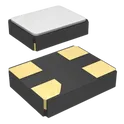
27 Uses0 StarsCX3225SB16000D0GZJC1
16 MHz ±15ppm Crystal 8pF 60 Ohms 4-SMD, No Lead The CX3225SB16000D0GZJC1, manufactured by Kyocera AVX, is a 16.000 MHz crystal oscillator element designed to provide precise frequency reference for microcontrollers, communication ICs, and digital systems. It belongs to the CX3225SB series, known for compact size and stable frequency performance. Key Characteristics Type: Quartz crystal (passive frequency component) Frequency: 16 MHz Load Capacitance: 8 pF Frequency Stability: ±15 ppm Frequency Tolerance: ±15 ppm Operating Mode: Fundamental ESR (Equivalent Series Resistance): ~60–80 Ω Mechanical Details Package: 4-SMD, no-lead (surface mount) Size: 3.2 mm × 2.5 mm (3225 package) Height: ~0.6 mm (low profile) Operating Conditions Temperature Range: −25°C to +85°C Mounting Type: Surface mount (SMT) Function (Simple Explanation) This component: Generates a stable clock signal (16 MHz) Acts as the timing reference for MCUs, processors, or RF modules Works together with internal oscillator circuits inside ICs Microcontroller clock sources (e.g., ESP32, STM32, AVR) Communication modules Embedded systems Consumer electronics IoT devices #CommonPartsLibrary #Crystal #Oscillator #resonator
28 Uses0 Stars