Oscillators
An oscillator is an electronic circuit that generates a periodic, oscillating signal, often a sine wave or a square wave. Oscillators are used in a wide range of applications, including clocks, radios, and sound synthesis. Flux.ai has the world's largest community-driven public library of oscillators, with footprints, symbols, datasheets, and simulation models. This comprehensive resource allows engineers and designers to easily find the oscillator they need for their specific application and use it with confidence. Whether you are working on a simple clock circuit or a complex radio transmitter, Flux.ai's oscillator library has you covered. So, if you are in need of an oscillator for your next project, be sure to check out Flux.ai's extensive collection.
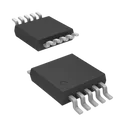
INA228AIDGSR
Power Supply Controller Digital Power Monitor 10-VSSOP The INA228 is an ultra-precise digital power monitor with a 20-bit delta-sigma ADC specifically designed for current-sensing applications. The device can measure a full-scale differential input of ±163.84 mV or ±40.96 mV across a resistive shunt sense element with common-mode voltage support from –0.3 V to +85 V. The INA228 reports current, bus voltage, temperature, power, energy and charge accumulation while employing a precision ±0.5% integrated oscillator, all while performing the needed calculations in the background. The integrated temperature sensor is ±1°C accurate for die temperature measurement and is useful in monitoring the system ambient temperature. The low offset and gain drift design of the INA228 allows the device to be used in precise systems that do not undergo multi-temperature calibration during manufacturing. Further, the very low offset voltage and noise allow for use in mA to kA sensing applications and provide a wide dynamic range without significant power dissipation losses on the sensing shunt element. The low input bias current of the device permits the use of larger currentsense resistors, thus providing accurate current measurements in the micro-amp range. The device allows for selectable ADC conversion times from 50 µs to 4.12 ms as well as sample averaging from 1x to 1024x, which further helps reduce the noise of the measured data. • High-resolution, 20-bit delta-sigma ADC • Current monitoring accuracy: – Offset voltage: ±1 µV (maximum) – Offset drift: ±0.01 µV/°C (maximum) – Gain error: ±0.05% (maximum) – Gain error drift: ±20 ppm/°C (maximum) – Common mode rejection: 154 dB (minimum) • Power monitoring accuracy: – 0.5% full scale, –40°C to +125°C (maximum) • Energy and charge accuracy: – 1.0% full scale (maximum) • Fast alert response: 75 μs • Wide common-mode range: –0.3 V to +85 V • Bus voltage sense input: 0 V to 85 V • Shunt full-scale differential range: ±163.84 mV / ±40.96 mV • Input bias current: 2.5 nA (maximum) • Temperature sensor: ±1°C (maximum at 25°C) • Programmable resistor temperature compensation • Programmable conversion time and averaging • 2.94-MHz high-speed I2C interface with 16 pinselectable addresses • Operates from a 2.7-V to 5.5-V supply: – Operational current: 640 µA (typical) – Shutdown current: 5 µA (maximum) #CommonPartsLibrary #IntegratedCircuit #PowerManagement
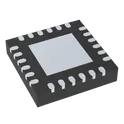
157 Uses0 StarsCP2102N-A02-GQFN24
USB-to-UART Bridge CP2102N-A02-GQFN24 is a highly integrated USB-to-UART bridge controller from Silicon Labs. It provides a simple and cost-effective way to add USB connectivity to embedded systems by converting USB 2.0 Full-Speed communication into a standard UART interface. The device integrates the USB transceiver, oscillator, voltage regulator, and UART controller, minimizing external components and eliminating the need for USB firmware development. It is commonly used in microcontroller programming interfaces, industrial equipment, POS terminals, data loggers, and USB-to-serial adapters. Key Features USB 2.0 Full-Speed compliant (12 Mbps) interface. USB-to-UART bridge with data rates up to 3 Mbaud. Integrated USB transceiver; no external USB resistors required. Integrated oscillator; no external crystal required. On-chip 3.3 V voltage regulator. USB Battery Charger Detection (BC 1.2) support. Remote wakeup capability from USB suspend state. Low operating current of approximately 9.5 mA. Hardware and software flow control support. Internal configurable ROM for Vendor ID, Product ID, serial number, and USB descriptors. Royalty-free Virtual COM Port (VCP) drivers available for major operating systems. Operating temperature range: −40°C to +85°C. Compact 24-pin QFN (4 mm × 4 mm) package. Typical Applications USB-to-Serial adapters Microcontroller programming and debugging interfaces Industrial automation equipment Point-of-sale (POS) terminals Medical instruments Data acquisition and logging systems Embedded systems requiring USB connectivity #commonpartslibrary #integratedcircuit
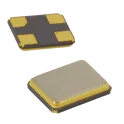
189 Uses0 StarsNX3225SA-26MHz-STD-CSR-6
The NX3225SA-26MHz-STD-CSR-6 is a surface-mount quartz crystal resonator designed to provide a stable frequency reference for microcontrollers, wireless communication modules, embedded systems, consumer electronics, industrial controls, and timing applications. Manufactured in a compact ceramic package, this crystal offers excellent frequency stability, low power consumption, and reliable long-term performance. Its standard frequency tolerance and stability characteristics make it suitable for clock generation, frequency synthesis, and synchronization functions in a wide range of electronic designs requiring precise timing accuracy. Features Surface-mount quartz crystal resonator Fundamental mode operation Compact ceramic package suitable for high-density PCB layouts Stable frequency reference for digital and RF applications Low equivalent series resistance for reliable oscillator startup Compatible with automated assembly processes Excellent aging characteristics and long-term reliability Suitable for low-power and battery-operated devices RoHS-compliant and lead-free construction Applications Microcontroller clock generation Wireless communication modules Bluetooth and Wi-Fi devices Industrial automation equipment IoT and smart devices Consumer electronics Measurement and instrumentation systems Embedded control platforms Timing and synchronization circuits Electrical Characteristics Nominal frequency centered at twenty-six megahertz Standard frequency tolerance classification Standard operating temperature stability Fundamental crystal oscillation mode Specified load capacitance configuration Low equivalent series resistance High insulation resistance Low drive level operation Reliable startup characteristics Long operational lifetime with minimal frequency drift Mechanical Characteristics Ceramic surface-mount package Compact footprint suitable for space-constrained designs Metal lid sealed construction Designed for reflow soldering processes Tape-and-reel packaging compatibility Environmental Characteristics Industrial-grade reliability Resistance to mechanical shock and vibration within specification limits Moisture-resistant sealed package construction Suitable for standard electronic manufacturing environments Compliant with environmental and hazardous substance regulations #commonpartslibrary #crystal #quartzcrystal #frequencyreference #timingdevice #oscillator #clocksource #smtcomponent #passivecomponent #embeddedsystems #wirelesscommunication #industrialelectronics #consumerelectronics #iotdevices #electronicsdesign
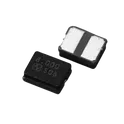
31 Uses0 StarsNX3225GD 8.000MHZ STD-CRA-3
The NX3225GD 8.000MHz STD-CRA-3 is a surface-mount quartz crystal resonator designed to provide a stable and accurate clock reference for electronic circuits. It is housed in a compact ceramic package suitable for space-constrained applications and is optimized for low power consumption and reliable frequency generation. This crystal is commonly used in microcontrollers, wireless communication modules, industrial control systems, consumer electronics, IoT devices, and embedded systems requiring precise timing and frequency control. Features Fundamental mode quartz crystal resonator Nominal frequency of 8.000 MHz Compact surface-mount ceramic package High frequency stability and accuracy Low equivalent series resistance Suitable for low-power oscillator circuits Excellent aging characteristics RoHS-compliant construction Designed for automated SMT assembly processes Reliable operation across industrial temperature environments Electrical Characteristics Crystal type: Quartz Crystal Resonator Frequency: 8.000 MHz Oscillation mode: Fundamental Load capacitance: Standard load capacitance configuration Frequency tolerance: Standard precision grade Frequency stability: Industrial-grade stability performance Equivalent series resistance optimized for MCU and RF oscillator circuits Low drive level operation High insulation resistance Mechanical Characteristics Surface-mount package Ceramic hermetic enclosure Compact footprint suitable for high-density PCB layouts Compatible with standard reflow soldering processes Designed for automated pick-and-place assembly Applications Microcontroller clock generation Wireless communication devices Bluetooth and RF modules IoT and smart devices Industrial automation equipment Embedded control systems Consumer electronics Timing and synchronization circuits Sensor interface modules Portable battery-powered products Compliance RoHS compliant Lead-free package Environmentally friendly manufacturing standards Suitable for commercial and industrial electronic applications #commonpartslibrary #crystal #quartzcrystal #frequencycontrol #timingdevice #clocksource #oscillator #smtcomponent #embeddedsystems #wirelesscommunication #industrialelectronics #consumerelectronics #iotdevices #passivecomponents #electroniccomponents
29 Uses0 StarsCC1101RGP
The CC1101RGP is a low-power sub-gigahertz RF transceiver designed for wireless communication applications requiring reliable long-range data transmission and high receiver sensitivity. It integrates a complete radio frequency front-end, packet handling engine, modulation and demodulation circuitry, frequency synthesizer, and advanced power management features within a compact package. The device supports multiple modulation formats and is optimized for industrial, scientific, medical, smart metering, home automation, remote control, wireless sensor networks, and Internet of Things applications. Its flexible configuration options enable designers to achieve an optimal balance between communication range, data throughput, power consumption, and system robustness. Features Sub-gigahertz RF transceiver for license-free ISM frequency bands High receiver sensitivity for extended communication range Programmable output power for optimized power consumption Multiple modulation schemes including FSK, GFSK, ASK, OOK, and MSK Integrated packet handling and error detection functions Fast frequency synthesizer settling time Low current consumption in transmit, receive, and sleep modes Hardware support for address filtering and data buffering Programmable channel spacing and data rate configuration Integrated RSSI, LQI, and clear channel assessment functions SPI interface for configuration and data communication Suitable for battery-powered wireless devices Applications Smart metering systems Wireless sensor networks Industrial monitoring and control Home and building automation Remote keyless entry systems Alarm and security systems Asset tracking devices Telemetry and data acquisition systems IoT communication nodes Proprietary wireless communication networks Electrical Characteristics Wide operating supply voltage range Low-power transmit and receive operation Programmable RF output power levels High-performance frequency synthesizer Low standby and sleep current consumption Integrated crystal oscillator support Robust RF performance across supported frequency bands Interface and Connectivity Serial Peripheral Interface communication Digital control and status signals Configurable interrupt outputs Integrated FIFO buffers for transmit and receive data External antenna connection through matching network Package Information Surface-mount package suitable for automated assembly Compact footprint for space-constrained applications RoHS-compliant device construction #commonpartslibrary #integratedcircuit #wirelesscommunication #rftransceiver #subghz #iot #embeddedsystems #industrialautomation #smartmetering #wirelesssensornetwork #lowpowerdesign #telemetry #homeautomation #remotecontrol #texasinstruments
78 Uses0 StarsPCA9685PW,118
LED Driver IC 16 Output Linear PWM Dimming 25mA 28-TSSOP The PCA9685 is an I2C-bus controlled 16-channel LED controller optimized for Red/Green/Blue/Amber (RGBA) color backlighting applications. Each LED output has its own 12-bit resolution (4096 steps) fixed frequency individual PWM controller that operates at a programmable frequency from a typical of 24 Hz to 1526 Hz with a duty cycle that is adjustable from 0 % to 100 % to allow the LED to be set to a specific brightness value. All outputs are set to the same PWM frequency. Each LED output can be off or on (no PWM control), or set at its individual PWM controller value. The LED output driver is programmed to be either open-drain with a 25 mA current sink capability at 5 V or totem pole with a 25 mA sink, 10 mA source capability at 5 V. The PCA9685 operates with a supply voltage range of 2.3 V to 5.5 V and the inputs and outputs are 5.5 V tolerant. LEDs can be directly connected to the LED output (up to 25 mA, 5.5 V) or controlled with external drivers and a minimum amount of discrete components for larger current or higher voltage LEDs. The PCA9685 is in the new Fast-mode Plus (Fm+) family. Fm+ devices offer higher frequency (up to 1 MHz) and more densely populated bus operation (up to 4000 pF). Although the PCA9635 and PCA9685 have many similar features, the PCA9685 has some unique features that make it more suitable for applications such as LCD or LED backlighting and Ambilight: • The PCA9685 allows staggered LED output on and off times to minimize current surges. The on and off time delay is independently programmable for each of the 16 channels. This feature is not available in PCA9635. • The PCA9685 has 4096 steps (12-bit PWM) of individual LED brightness control. The PCA9635 has only 256 steps (8-bit PWM). • When multiple LED controllers are incorporated in a system, the PWM pulse widths between multiple devices may differ if PCA9635s are used. The PCA9685 has a programmable prescaler to adjust the PWM pulse widths of multiple devices. • The PCA9685 has an external clock input pin that will accept user-supplied clock (50 MHz max.) in place of the internal 25 MHz oscillator. This feature allows synchronization of multiple devices. The PCA9635 does not have external clock input feature. • Like the PCA9635, PCA9685 also has a built-in oscillator for the PWM control. However, the frequency used for PWM control in the PCA9685 is adjustable from about 24 Hz to 1526 Hz as compared to the typical 97.6 kHz frequency of the PCA9635. This allows the use of PCA9685 with external power supply controllers. All bits are set at the same frequency. • The Power-On Reset (POR) default state of LEDn output pins is LOW in the case of PCA9685. It is HIGH for PCA9635. #CommonPartsLibrary #IntegratedCircuit #PowerManagement
184 Uses0 Stars