Memory
A memory IC, or integrated circuit, is a type of electronic device that stores and retrieves data. It is used in a wide range of electronic devices, including computers, smartphones, and other electronic devices. Memory ICs come in a variety of types, including DRAM, SRAM, and Flash memory, and are used for different purposes depending on the device and application. One of the primary use cases for memory ICs is in computer systems, where they are used to store data and instructions that are accessed by the processor. Memory ICs are also used in a variety of other electronic devices, such as digital cameras, MP3 players, and mobile phones, to store data and enable various functions. Flux.ai has the world's largest community-driven public library of memory ICs, with a wide variety of footprints, symbols, datasheets, and simulation models available. This extensive library allows users to easily access and use memory ICs in their projects, making it an invaluable resource for engineers and developers.
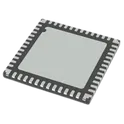
dsPIC33CK256MP205-I/M4
dsPIC dsPIC™ 33CK, Functional Safety (FuSa) Microcontroller IC 16-Bit 100MHz 256KB (256K x 8) FLASH 48-UQFN (6x6) 28/36/48/64/80-Pin Digital Signal Controllers with High-Resolution PWM and CAN Flexible Data (CAN FD) Operating Conditions • 3.0V to 3.6V, -40°C to +125°C, DC to 100 MIPS • 3.0V to 3.6V, -40°C to +150°C, DC to 70 MIPS Core: 16-Bit dsPIC33CK CPU • 32-256 Kbytes of Program Flash with ECC and 8-24K RAM • Fast 6-Cycle Divide • LiveUpdate • Code Efficient (C and Assembly) Architecture • 40-Bit Wide Accumulators • Single-Cycle (MAC/MPY) with Dual Data Fetch • Single-Cycle, Mixed-Sign MUL Plus Hardware Divide • 32-Bit Multiply Support • Four Sets of Interrupt Context Saving Registers which Include Accumulator and STATUS for Fast Interrupt Handling • Zero Overhead Looping • RAM Memory Built-In Self-Test (MBIST) Clock Management • Internal Oscillator • Programmable PLLs and Oscillator Clock Sources • Reference Clock Output • Fail-Safe Clock Monitor (FSCM) • Fast Wake-up and Start-up • Backup Internal Oscillator Power Management • Low-Power Management Modes (Sleep, Idle, Doze) • Integrated Power-on Reset and Brown-out Reset High-Speed PWM • Eight PWM Pairs • Up to 250 ps PWM Resolution • Dead Time for Rising and Falling Edges • Dead-Time Compensation • Clock Chopping for High-Frequency Operation • PWM Support for: - DC/DC, AC/DC, inverters, PFC, lighting - BLDC, PMSM, ACIM, SRM motors • Fault and Current Limit Inputs • Flexible Trigger Configuration for ADC Triggering Timers/Output Compare/Input Capture • One General Purpose Timer • Peripheral Trigger Generator (PTG): - Up to 15 trigger sources to other peripheral modules - CPU independent state machine-based instruction sequencer • Nine MCCP/SCCP modules which Include Timer, Capture/Compare and PWM: - One MCCP - Eight SCCPs - 16 or 32-bit time base - 16 or 32-bit capture - 4-deep capture buffer • Fully Asynchronous Operation, Available in Sleep Modes #CommonPartsLibrary #IntegratedCircuit #Microcontroller #DSPIC33CK256MP
8 Uses0 StarsESP32-S3-WROOM-1-N8R2
WiFi 802.11a/b/g/n, Bluetooth v5.0 Transceiver Module 2.4GHz PCB Trace The ESP32-S3-WROOM-1-N8R2 is a compact, low-power Wi-Fi and Bluetooth® Low Energy (BLE) module developed by Espressif Systems. It is based on the ESP32-S3 system-on-chip (SoC), which integrates a dual-core Xtensa® LX7 processor optimized for high performance and edge AI processing. This module includes 8 MB of external SPI flash memory and 2 MB of PSRAM, enabling efficient handling of memory-intensive applications such as graphical interfaces, buffering, and embedded machine learning workloads. Designed for flexibility and scalability, the module integrates RF components, power management, and a wide range of peripherals into a surface-mount package suitable for IoT, industrial, and consumer electronics applications. Key Features Dual-core Xtensa® LX7 processor operating up to 240 MHz Integrated 2.4 GHz Wi-Fi (802.11 b/g/n) Bluetooth 5 Low Energy support Embedded 8 MB SPI flash memory Integrated 2 MB PSRAM AI acceleration through vector instruction support USB OTG (full-speed) capability Multiple low-power operating modes Built-in hardware security features Extensive peripheral interface support Functional Overview The module consists of several integrated subsystems, including a dual-core processing unit, memory subsystem (flash and PSRAM), RF subsystem for wireless communication, peripheral interface controllers, power management circuitry, and a hardware-based security engine. Electrical Characteristics Operating voltage range: 3.0 V to 3.6 V (typical 3.3 V) Operating temperature range: -40°C to +85°C RF operating frequency: 2.4 GHz Current consumption varies depending on operating mode, ranging from microamp levels in deep sleep to hundreds of milliamps during active transmission Processor and Memory The module features a dual-core Xtensa® LX7 CPU capable of running at frequencies up to 240 MHz. It includes approximately 512 KB of internal SRAM, supplemented by 8 MB of external flash memory and 2 MB of PSRAM for extended data storage and processing. Wireless Connectivity The ESP32-S3-WROOM-1-N8R2 supports Wi-Fi communication compliant with 802.11 b/g/n standards in the 2.4 GHz band. It also supports Bluetooth 5 Low Energy for short-range wireless communication. The module includes an integrated PCB antenna and supports RF output power up to approximately +20 dBm. Peripheral Interfaces The module provides a wide range of interfaces, including general-purpose input/output (GPIO) pins, SPI, I2C, UART, and I2S for audio applications. It also supports PWM for LED control, a 12-bit analog-to-digital converter (ADC), and USB OTG functionality. Pin functions are multiplexed to maximize flexibility. Power Management Power efficiency is achieved through multiple operating modes, including active mode, modem sleep, light sleep, and deep sleep. The module includes an RTC subsystem for low-power timekeeping and supports dynamic frequency scaling to optimize performance and energy consumption. Security Features The module incorporates several hardware-based security mechanisms, including secure boot, flash encryption, and digital signature verification. It also includes a hardware random number generator and cryptographic accelerators supporting AES, SHA, RSA, and ECC algorithms. Mechanical Characteristics The module is designed for surface-mount integration and measures approximately 18 mm by 25.5 mm. It includes an onboard PCB antenna and is suitable for compact embedded designs. Pin Configuration Overview GPIO pins are multiplexed to support various peripheral functions such as analog inputs, communication interfaces, and control signals. Dedicated pins are provided for power supply, module enable, and boot configuration. Typical Applications Internet of Things (IoT) devices Smart home systems Industrial automation and monitoring Edge AI and machine learning applications Wearable electronics Audio and multimedia systems USB-enabled embedded devices Compliance The module is designed to meet Wi-Fi and Bluetooth standards and is compliant with RoHS requirements. Certification such as FCC or CE may apply depending on the specific module variant and deployment. Ordering Information The ESP32-S3-WROOM-1-N8R2 variant includes 8 MB of flash memory and 2 MB of PSRAM. #commonpartslibrary #integratedcircuit #transceiver #wireless #rf
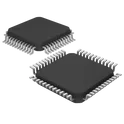
292 Uses0 StarsSTM32F103C8T6
ARM® Cortex® M3 STM32F1 Microcontroller IC 32-Bit Single-Core 72MHz 64KB (64K x 8) FLASH Medium-density performance line Arm®-based 32-bit MCU with 64 or 128 KB Flash, USB, CAN, 7 timers, 2 ADCs, 9 com. interfaces Arm® 32-bit Cortex®-M3 CPU core – 72 MHz maximum frequency, 1.25 DMIPS/MHz (Dhrystone 2.1) performance at 0 wait state memory access – Single-cycle multiplication and hardware division • Memories – 64 or 128 Kbytes of Flash memory – 20 Kbytes of SRAM • Clock, reset and supply management – 2.0 to 3.6 V application supply and I/Os – POR, PDR, and programmable voltage detector (PVD) – 4 to 16 MHz crystal oscillator – Internal 8 MHz factory-trimmed RC – Internal 40 kHz RC – PLL for CPU clock – 32 kHz oscillator for RTC with calibration • Low-power – Sleep, Stop and Standby modes – VBAT supply for RTC and backup registers • 2x 12-bit, 1 µs A/D converters (up to 16 channels) – Conversion range: 0 to 3.6 V – Dual-sample and hold capability – Temperature sensor • DMA – 7-channel DMA controller – Peripherals supported: timers, ADC, SPIs, I 2Cs and USARTs • Up to 80 fast I/O ports – 26/37/51/80 I/Os, all mappable on 16 external interrupt vectors and almost all 5 V-tolerant Debug mode: – Serial wire debug (SWD) and JTAG interfaces • Seven timers – Three 16-bit timers, each with up to 4 IC/OC/PWM or pulse counter and quadrature (incremental) encoder input – 16-bit, motor control PWM timer with dead-time generation and emergency stop – Two watchdog timers (independent and window) – SysTick timer 24-bit downcounter • Up to nine communication interfaces – Up to two I2C interfaces (SMBus/PMBus®) – Up to three USARTs (ISO 7816 interface, LIN, IrDA capability, modem control) – Up to two SPIs (18 Mbit/s) – CAN interface (2.0B Active) – USB 2.0 full-speed interface • CRC calculation unit, 96-bit unique ID • Packages are ECOPACK #commonpartslibrary #integratedcircuit #microcontroller #stm32f1
31 Uses0 Stars