Memory
A memory IC, or integrated circuit, is a type of electronic device that stores and retrieves data. It is used in a wide range of electronic devices, including computers, smartphones, and other electronic devices. Memory ICs come in a variety of types, including DRAM, SRAM, and Flash memory, and are used for different purposes depending on the device and application. One of the primary use cases for memory ICs is in computer systems, where they are used to store data and instructions that are accessed by the processor. Memory ICs are also used in a variety of other electronic devices, such as digital cameras, MP3 players, and mobile phones, to store data and enable various functions. Flux.ai has the world's largest community-driven public library of memory ICs, with a wide variety of footprints, symbols, datasheets, and simulation models available. This extensive library allows users to easily access and use memory ICs in their projects, making it an invaluable resource for engineers and developers.
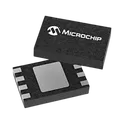
ATECC608B-MAHDA-S
Authentication Chip 8-UDFN (2x3) The ATECC608B-MAHDA-S is a secure authentication and cryptographic co-processor designed for hardware-based security, device authentication, encrypted communication, and secure key storage in embedded systems and IoT applications. The device integrates advanced cryptographic functionality with protected non-volatile memory to provide a secure root of trust for connected devices. The integrated security engine supports public key cryptography, secure boot validation, message authentication, key generation, digital signatures, and encrypted data exchange. The device is optimized for low-power embedded applications requiring protection against counterfeiting, unauthorized access, firmware tampering, and network-based attacks. The ATECC608B-MAHDA-S supports industry-standard cryptographic algorithms and secure provisioning workflows, enabling secure authentication in cloud-connected systems, industrial automation, consumer electronics, and automotive embedded platforms. The compact surface-mount package and low-power operation make the device suitable for highly integrated embedded designs where hardware security and identity protection are critical requirements. Key Features Hardware-based cryptographic security device Secure key storage and management Integrated authentication engine Public key cryptography support Secure boot and firmware validation capability Digital signature generation and verification Hardware random number generator Encrypted communication support Tamper-resistant key protection Secure provisioning and device identity management Low-power operation for embedded systems I2C serial communication interface Compact surface-mount package IoT and cloud authentication support Electrical Characteristics Secure non-volatile key storage architecture Low operating power consumption Hardware cryptographic acceleration Secure internal key isolation Fast authentication processing capability Wide operating voltage support Industrial temperature operation compatibility High-reliability embedded security implementation Applications IoT device authentication Secure embedded systems Cloud-connected devices Secure boot implementations Firmware integrity verification Industrial automation systems Smart home products Medical electronics Automotive embedded security Asset tracking and identification Anti-counterfeiting systems Encrypted communication platforms Package Information Package Type: SOIC Mounting Type: Surface Mount Compact embedded security package RoHS compliant configuration available #commonpartslibrary #integratedcircuit #securityic #cryptography #iotsecurity #embeddedhardware #authentication #secureboot #hardwaresecurity #encryptedcommunication
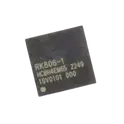
94 Uses0 StarsRK806-1
QFN-68(7x7) Power Management - Specialized ROHS The RK806-1 is a multi-channel PMIC designed to deliver and manage power for modern embedded platforms. It integrates multiple high-efficiency DC-DC buck converters, LDO regulators, and a configurable power sequencing controller in a compact QFN-68 package. It is tightly coupled with Rockchip SoCs and is responsible for generating stable voltage rails for CPU cores, GPU, DDR memory, and peripheral blocks. ⭐ Key Features ⚡ 1. High-Integration Power Architecture Multiple synchronous buck converters (high-current rails for CPU/GPU) Several LDO regulators for low-noise analog and IO domains Supports dynamic voltage scaling (DVS) for performance optimization 🔌 2. Wide Output Capability Output voltage range: ~0.5 V to 3.4 V per channel Designed for modern low-voltage SoC power domains Supports both high-current and low-noise power rails 🧠 3. Programmable Power Sequencing OTP / register-configurable power-up & power-down sequence Ensures safe startup for multi-rail SoCs Supports synchronized sequencing with multiple PMICs 📡 4. Digital Control Interface I²C and SPI interface for configuration and control Real-time voltage adjustment per processor demand Register-based control for power modes and telemetry 🛡️ 5. Protection & Reliability Features Over-voltage protection (OVP) Over-current protection (OCP) Thermal shutdown protection Soft-start for inrush current control ⚙️ 6. Efficiency & Performance Optimizations High-frequency switching (~MHz range) for smaller external components Fast transient response for CPU load changes Low standby current for power-sensitive designs 📦 7. Package & Integration QFN-68 (7×7 mm) compact package High thermal efficiency for dense PCB layouts Minimal external components required 📌 Typical Applications Single-board computers (SBCs) AI edge computing devices Tablets and industrial embedded systems Consumer electronics using Rockchip SoCs (e.g., RK3588 platforms) #commonpartslibrary #integratedcircuit #powermanagement
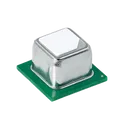
35 Uses0 StarsSCD41-D-R1
Air Quality Sensor CO2 Sensor 2.5V/3.3V/5V 20-Pin SMD EP T/R The SCD41-D-R1 is a miniature photoacoustic carbon dioxide sensor module developed by Sensirion for high-accuracy environmental sensing applications. The device integrates a CO₂ sensing element, temperature sensor, humidity sensor, optical components, calibration memory, and digital signal processing into a compact surface-mount package suitable for embedded systems and portable electronics. The sensor utilizes photoacoustic sensing technology to provide precise carbon dioxide concentration measurements while maintaining low power consumption and long-term stability. Integrated humidity and temperature sensing capabilities enable environmental compensation and simplify system integration by reducing the need for external sensors. The SCD41 communicates through a standard I²C digital interface and supports automatic self-calibration functions for reliable long-term operation. Its compact footprint and low energy requirements make it suitable for battery-powered devices, smart building systems, HVAC equipment, indoor air quality monitoring systems, and IoT applications. The module is factory calibrated and designed for continuous monitoring of indoor air quality conditions. The integrated architecture minimizes external component requirements while enabling accurate sensing performance across a wide operating range. Key Features Photoacoustic CO₂ sensing technology Integrated temperature and humidity sensing High accuracy carbon dioxide measurement I²C digital communication interface Low power consumption operation Automatic self-calibration support Compact surface-mount package Factory calibrated output Long-term measurement stability Optimized for indoor air quality applications Low-profile PCB mounting design RoHS and halogen-free compliant Electrical Characteristics Low-voltage supply operation Low average current consumption suitable for portable devices Integrated digital signal processing Non-volatile calibration memory Standard I²C communication compatibility Stable operation across industrial environmental conditions Mechanical Characteristics Compact SMD package for space-constrained applications Surface-mount assembly compatible Low-profile package structure Integrated optical cavity and sensing chamber Moisture-sensitive device requiring controlled handling during assembly Functional Characteristics Real-time carbon dioxide concentration monitoring Simultaneous temperature and humidity measurement Automatic environmental compensation Continuous and periodic measurement modes Fast startup and measurement response Long operational lifetime with stable calibration Optimized airflow design for accurate sensing Suitable for continuous indoor environmental monitoring Typical Applications Indoor air quality monitoring systems Smart thermostats and HVAC controllers Building automation equipment Demand-controlled ventilation systems Portable environmental monitoring devices Smart home and IoT products Air purification systems Occupancy and ventilation monitoring Battery-powered sensing devices Consumer and industrial environmental monitoring equipment #commonpartslibrary #sensor #airquality
259 Uses0 StarsBQ27220YZFR
Battery Battery Monitor IC Lithium Ion 9-DSBGA The BQ27220YZFR is a highly integrated single-cell battery fuel gauge IC developed for rechargeable lithium-ion and lithium-polymer battery applications. The device utilizes Texas Instruments’ Impedance Track™ algorithm to provide highly accurate battery capacity measurement, state-of-charge estimation, runtime prediction, and battery health monitoring across varying load and temperature conditions. The device is designed for compact portable electronics, wearable devices, IoT products, handheld instruments, and low-power embedded systems requiring precise battery monitoring and extended operating life. The BQ27220YZFR supports system-side fuel gauging without requiring battery pack-side electronics, simplifying battery integration and reducing overall system cost. The fuel gauge continuously monitors battery voltage, current, and temperature to estimate available capacity, remaining runtime, full charge capacity, and state-of-health information. Integrated low-power operation enables ultra-low standby current consumption suitable for always-on battery-powered products. Communication with the host processor is implemented through a standard I²C interface, allowing configuration access, telemetry reporting, and battery parameter monitoring. The device also integrates protection and alert functionality through programmable interrupt outputs and battery condition monitoring features. The BQ27220YZFR is optimized for use with single-cell lithium-based chemistries and supports learning cycles for adaptive battery characterization over product lifetime. Internal data flash memory stores battery profile information and calibration parameters to improve long-term gauging accuracy. The device is supplied in a compact lead-free wafer chip-scale package suitable for space-constrained PCB designs and portable electronics requiring minimal footprint and low-profile assembly. Electrical Characteristics Device Type Single-cell battery fuel gauge and battery monitor IC Battery Chemistry Support Lithium-ion and lithium-polymer rechargeable batteries Input Voltage Range Supports single-cell battery operation Fuel Gauging Method Impedance Track™ algorithm Communication Interface I²C serial interface Measurement Functions Battery voltage monitoring Battery current monitoring Battery temperature monitoring State-of-charge estimation Remaining capacity calculation Full charge capacity estimation State-of-health reporting Runtime prediction Power Consumption Ultra-low operating current for portable applications Temperature Monitoring External thermistor support Host Alert Features Interrupt and alert reporting capability Data Storage Integrated nonvolatile configuration memory Calibration Features Automatic learning and battery characterization support Protection Monitoring Battery condition and system monitoring functions Package Type DSBGA wafer chip-scale package Mounting Style Surface mount Operating Temperature Range Industrial temperature operation suitable for portable electronics Functional Features High-accuracy fuel gauging over battery lifetime Adaptive battery modeling and aging compensation Low-power operation for battery-powered systems Integrated battery profiling capability Real-time remaining runtime estimation Automatic battery learning cycles Compact PCB footprint for portable devices System-side implementation without smart battery pack requirement Programmable battery alert functionality Support for low-power embedded processors and mobile systems Optimized for wearable and IoT applications RoHS compliant and lead-free package construction #commonpartslibrary #integratedcircuit #powermanagement #batterymanagement
18 Uses0 Stars