LEDs
A LED (light-emitting diode) is a small, energy-efficient light source that is commonly used in a variety of applications. LED technology has advanced significantly in recent years, making it a popular choice for a wide range of lighting needs. LEDs are known for their low power consumption, long lifespan, and ability to produce a bright, directional light. One of the primary use cases for LEDs is in general lighting, where they are used in everything from residential and commercial lighting to automotive and aviation lighting. LEDs are also commonly used in electronic displays, such as TVs, computer monitors, and smartphones, as well as in signaling and indication applications, such as traffic lights and exit signs. If you are looking for high-quality LED resources, flux.ai has the world's largest community-driven public library of LED footprints, symbols, datasheets, and simulation models. Whether you are a designer, engineer, or manufacturer, you can find the resources you need to work with LEDs in your projects.
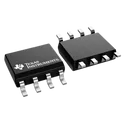
TLC555IDR
555 Type, Timer/Oscillator (Single) IC 2.1MHz 8-SOIC The TLC555IDR is a low-power CMOS timer device designed as a functional replacement for the standard bipolar 555 timer while providing significantly reduced supply current and improved operating efficiency. The device supports both astable and monostable operating modes and is commonly used for timing generation, pulse shaping, oscillation, PWM generation, delay circuits, and frequency generation applications. The CMOS architecture enables low power consumption, rail-to-rail output capability, and stable timing performance over a wide operating voltage range. The device is suitable for battery-powered systems, portable electronics, industrial controls, instrumentation, consumer products, and embedded electronic designs. The TLC555IDR is supplied in a compact SOIC surface-mount package intended for automated PCB assembly and space-constrained applications. Electrical Characteristics CMOS low-power timer architecture Functional equivalent to standard 555 timer devices Wide operating supply voltage range Low quiescent supply current High input impedance Rail-to-rail output swing capability Stable threshold and trigger levels Compatible with TTL and CMOS logic levels Capable of astable and monostable operation Adjustable duty cycle and frequency operation High output drive capability for direct interfacing Low noise and improved switching performance compared to bipolar 555 timers Functional Features Precision timing generation Oscillator and clock generation Pulse-width modulation support One-shot pulse generation Delay timer implementation Missing pulse detection Frequency divider implementation Sequential timing control LED flashing and tone generation PWM motor and power control applications Package Information Surface-mount SOIC package Standard tape-and-reel packaging format Compact footprint for automated assembly RoHS compliant device construction Environmental and Operating Conditions Industrial operating temperature range ESD protection handling required Suitable for commercial and industrial embedded systems Designed for low-power electronic applications Typical Applications Timer circuits Pulse generators Oscillators PWM controllers LED flashers Alarm and tone generators Frequency generators Power management timing Embedded control systems Portable battery-powered electronics #commonpartslibrary #integratedcircuit #timer #oscillator
69 Uses0 StarsSE03-EMC3838A-B60
Infrared (IR) Emitter 840nm~870nm 1.4V~1.8V 700mA 60° Surface Mount,3.9x3.9mm The SE03-EMC3838A-B60 is a high-power surface-mount infrared (IR) LED emitter designed for applications requiring efficient 850 nm infrared illumination. It uses a compact black EMC package for improved thermal performance and reliability, making it suitable for SMT assembly and high-current operation. This component is commonly used in surveillance camera IR illumination, infrared sensing, and IR data transmission systems. Key Features 850 nm peak infrared wavelength (840–870 nm range) High-efficiency IR emission Surface-mount 2-SMD no-lead package Wide 60° viewing angle Typical forward voltage: 1.6 V Supports up to 700 mA forward current Black EMC package for enhanced heat dissipation Operating temperature range: -30°C to +85°C Suitable for automated SMT reflow assembly Compact approximately 3.9 mm × 3.9 mm footprint #commonpartslibrary #led #Infrared
56 Uses0 StarsHi5000Q
The Hi5000Q is a high-precision, flicker-free LED constant-current driver IC designed for buck, boost, and buck-boost LED lighting applications. It supports external MOSFET operation, making it suitable for high-power LED systems such as automotive lighting, medical lighting, photography lamps, desk lamps, and educational lighting. Key Features Wide input voltage range: 6.5V to 75V Supports buck, boost, and buck-boost topologies External MOSFET architecture for high current capability Up to 10A continuous output current High efficiency operation exceeding 95% Flicker-free LED dimming control Supports: 100:1 PWM-to-analog dimming 10,000:1 hybrid dimming 10:1 analog dimming Fixed switching frequency of 130kHz Very low standby power consumption Excellent load regulation accuracy (less than ±0.5%) Built-in soft-start function Undervoltage protection (UVLO) Output overvoltage protection (OVP) Cycle-by-cycle current limiting protection Available in QFN16 4x4mm package
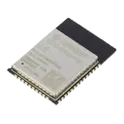
1 Uses0 StarsESP32-WROOM-32E (16MB)
The ESP32-WROOM-32E (16MB) is a highly integrated Wi-Fi + Bluetooth + Bluetooth Low Energy (BLE) module developed by Espressif. It is based on the ESP32-D0WD-V3 chip and features a dual-core processor, rich peripherals, and large flash memory—making it ideal for IoT, embedded systems, and wireless applications. This module is part of the upgraded WROOM-32E series, offering improved RF performance, better stability, and enhanced reliability compared to earlier versions like the 32D. Key Features (16MB Variant) Processor & Memory Dual-core Xtensa® 32-bit LX6 CPU, up to 240 MHz 520 KB SRAM + 448 KB ROM 16 MB SPI Flash (large storage for firmware/data) Optional variants with PSRAM for memory-intensive tasks Connectivity 2.4 GHz Wi-Fi (802.11 b/g/n) Bluetooth v4.2 (BR/EDR + BLE) Integrated PCB antenna (no external antenna needed) Peripherals & Interfaces Up to 26–38 GPIOs (depending on usage) Supports: UART, SPI, I2C, I2S PWM (LED & motor control) ADC, DAC Capacitive touch sensors SD/SDIO/MMC, CAN (TWAI) Electrical & Physical Operating voltage: 3.0V – 3.6V Operating temperature: –40°C to +85°C (industrial range) Compact size: 18 × 25.5 × 3.1 mm Typical Applications Smart home devices (lighting, appliances) IoT sensors and gateways Industrial automation systems Wearables and smart gadgets Audio/voice processing (thanks to dual-core + large flash) #module #ESP32 #16MB
69 Uses0 StarsWP483GDT
Green 568nm LED Indication - Discrete 2.2V Radial The WP483GDT is a through-hole green light-emitting diode designed for general-purpose visual indication and low-power lighting applications. It emits a visible green wavelength when forward biased and is commonly used in status indicators, signal displays, and basic illumination circuits. The device is built with a durable epoxy lens package that provides mechanical protection and enhances light output visibility. It is suitable for use in a wide range of electronic systems, including consumer electronics, control panels, and embedded designs. Device Overview The component is a standard discrete LED with a two-lead configuration consisting of an anode and a cathode. It operates by converting electrical energy into light through electroluminescence. The emitted color falls within the green spectrum, making it appropriate for applications requiring clear visual signaling without excessive brightness or power consumption. Electrical Characteristics The LED operates under forward bias conditions, with a typical forward voltage in the range expected for green LEDs. It supports low current operation while maintaining consistent luminous output. Reverse voltage tolerance is limited, and proper polarity must be observed to prevent damage. Current-limiting resistors are required in circuit integration to ensure safe operation. Optical Characteristics The device produces a green light output with a defined luminous intensity and viewing angle based on its lens shape and internal structure. The epoxy lens may be diffused or clear, affecting the spread and focus of the emitted light. Brightness is dependent on the forward current applied. Mechanical Characteristics The LED is housed in a standard round through-hole package, compatible with typical PCB mounting. Leads are spaced to fit common board layouts and can be soldered directly. The epoxy body provides insulation and environmental protection while maintaining optical clarity. Thermal Considerations The device is designed for low power dissipation but should be operated within recommended limits to avoid overheating. Adequate spacing and proper current control help maintain thermal stability and prolong device lifespan. Applications The WP483GDT is suitable for indicator lights in electronic devices, status displays in control systems, educational and hobby electronics, and general-purpose signaling applications where green illumination is required. Compliance and Handling The component should be handled using standard ESD precautions. Storage and soldering conditions should follow typical LED handling practices to maintain performance and reliability. #commonpartslibrary #led #green
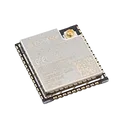
85 Uses0 StarsESP32-WROOM-32UE-N16
2.4GHz -98dBm SMD,19.2x18mm RF Transceiver Modules and Modems RoHS The ESP32-WROOM-32UE-N16 is a 2.4 GHz wireless MCU module built around the ESP32 SoC. It combines a dual-core processor, integrated Wi-Fi (802.11 b/g/n) and Bluetooth 4.2 (Classic + BLE), along with rich peripherals. The “UE” variant specifically uses a U.FL / IPEX connector for an external antenna, making it ideal for applications that require better RF performance or flexible antenna placement (e.g., enclosed products or long-range communication). The “N16” indicates 16 MB external flash memory, suitable for large firmware, OTA updates, and data-heavy applications. Processing Dual-core Xtensa LX6 32-bit CPU Clock speed up to 240 MHz Memory 16 MB Flash (N16 variant) ~520 KB SRAM + 448 KB ROM Connectivity Wi-Fi: 802.11 b/g/n (up to 150 Mbps) Bluetooth: v4.2 (BR/EDR + BLE) Frequency: 2.4 GHz band Antenna External antenna via U.FL connector Better range and flexibility vs PCB antenna Interfaces / Peripherals GPIO (≈26 usable pins) UART, SPI, I2C, I2S, SDIO ADC, DAC PWM (LED & motor control) Capacitive touch sensing Security Hardware encryption: AES, SHA, RSA Secure boot & flash encryption support Power Operating voltage: 3.0V – 3.6V (typ. 3.3V) Multiple low-power modes for battery applications Environmental Operating temperature: -40°C to +85°C Physical Surface-mount module (~38 pins / 52 pads depending on reference) Compact and RF-shielded design Typical Applications Smart home devices (IoT) Industrial automation Wireless sensors and data loggers Wearables and consumer electronics Remote monitoring systems #Module #ESP32
48 Uses0 Stars