Interface ICs
An interface IC is a type of integrated circuit that is designed to facilitate communication between two devices or systems. These devices are commonly used in electronic systems to enable the transfer of data and control signals between different components or subsystems. Some common use cases for interface ICs include connecting microcontrollers to peripherals such as sensors or displays, linking multiple processors together in a network, and enabling communication between devices using different communication protocols. Flux.ai has the world's largest community-driven public library of interface ICs, with footprints, symbols, datasheets, and simulation models. This library is a valuable resource for engineers and designers who need access to accurate and up-to-date information on these important components. Whether you are working on a new design project or simply looking to learn more about interface ICs, Flux.ai is an excellent resource to help you find the information you need.
TSW-106-07-G-S
Connector Header Through Hole 6 position 0.100" Pin Header 1x06 2.54mm PinHeader 1x6 2.54mm The TSW-106-07-G-S is a through-hole vertical header designed for board-to-board and board-to-wire interconnection in electronic systems. It is part of a precision connector series known for high reliability, consistent mechanical alignment, and excellent electrical performance. The component is commonly used in applications requiring modular connectivity, prototyping flexibility, and secure signal routing between printed circuit boards or peripheral interfaces. Its design supports repeated mating cycles while maintaining stable contact integrity, making it suitable for both development and production environments. Functional Description This component functions as a single-row header that provides a direct electrical interface between a printed circuit board and a mating connector or cable assembly. It enables straightforward signal or power routing through plated pins that are soldered into the PCB. The vertical orientation allows perpendicular mating, supporting compact and efficient board layouts. The connector is designed to ensure proper alignment and retention during mating, reducing the risk of intermittent connections. Electrical Characteristics The header supports low-voltage signal transmission and moderate current levels typical of board-level interconnects. It offers low contact resistance to maintain signal integrity and efficient current flow. The contact system is designed to provide consistent electrical performance across repeated insertions, ensuring reliability in both signal and power applications. Mechanical Characteristics The component features a robust insulating housing that maintains pin alignment and structural integrity during handling and operation. The contact pins are fabricated from conductive material and plated to enhance durability, conductivity, and مقاومت to corrosion. The through-hole mounting style provides strong mechanical anchoring to the printed circuit board, improving resistance to mechanical stress and vibration. The design supports reliable mating with compatible connectors and ensures long service life. Environmental Characteristics The TSW-106-07-G-S is constructed using materials that provide stable performance under typical environmental conditions encountered in electronic assemblies. It is designed to withstand standard temperature ranges and environmental stresses such as humidity and mechanical handling, maintaining electrical and mechanical reliability over time. Applications This header is widely used in embedded systems, industrial electronics, development platforms, communication equipment, and general-purpose PCB interconnect applications. It is especially suited for designs requiring modular connectivity, easy assembly, and dependable signal transfer. Summary The TSW-106-07-G-S from Samtec is a reliable through-hole header solution that combines mechanical durability with stable electrical performance. Its straightforward design, compatibility with standard interconnect systems, and suitability for a wide range of applications make it a common choice for board-level connectivity in modern electronic designs. #CommonPartsLibrary #Connector #Header #TSW
782 Uses0 StarsTPS259530DSGR
Electronic Fuse Regulator 4A 8-WSON (2x2) The TPS259530DSGR is a compact, integrated eFuse protection device designed to provide robust power-path management for low-voltage DC systems, particularly nominal five-volt rails. It combines multiple protection and control features into a single solution, enabling safe distribution of power to downstream circuitry while minimizing the need for external components. The device supports controlled inrush current during startup, continuous current monitoring, and rapid fault response to protect both the power source and the load. Integrated protection mechanisms include overvoltage protection, undervoltage lockout, overcurrent limiting, thermal shutdown, and reverse current blocking. This makes the device well suited for applications requiring high reliability, such as embedded systems, industrial electronics, consumer devices, and communication equipment. Functional Description The device operates as a high-side protection switch using an internal MOSFET to control current flow from the input supply to the load. It monitors input voltage, output current, and internal temperature to ensure operation within safe limits. When a fault condition such as overcurrent or overvoltage is detected, the device limits or interrupts current flow to prevent damage. The integrated control loop provides smooth startup by limiting inrush current and preventing supply droop. Reverse current blocking prevents unwanted current flow from the output back to the input when the input supply is removed or drops below the output level. Electrical Characteristics The device supports operation across a wide input voltage range suitable for low-voltage DC systems, including typical five-volt rails. It features an adjustable overvoltage protection threshold aligned with five-volt system requirements, along with configurable undervoltage lockout to ensure proper system startup and shutdown behavior. The current limit is externally programmable, allowing flexibility for different load conditions. The device exhibits low on-resistance to minimize power dissipation and voltage drop during normal operation. Protection Features The TPS259530DSGR integrates multiple protection functions to enhance system robustness. Overvoltage protection prevents excessive input voltage from reaching the load. Undervoltage lockout ensures the device only operates when the input supply is within a valid range. Overcurrent protection actively limits current during fault conditions and can respond rapidly to short circuits. Thermal shutdown protects the device from overheating by disabling operation when internal temperature exceeds safe limits. Reverse current blocking prevents backflow of current, safeguarding both the source and load. Control and Interface The device includes an enable control input that allows external control of the power path. It supports configurable behavior for fault response and recovery, depending on system design. External components can be used to set thresholds such as current limit and undervoltage lockout, providing design flexibility. Status signaling allows system-level monitoring of fault conditions. Mechanical and Package Information The TPS259530DSGR is provided in a compact surface-mount package suitable for space-constrained applications. The package is optimized for thermal performance and efficient PCB layout, enabling reliable operation under varying load conditions. It is supplied in tape-and-reel format for automated assembly processes. Applications This device is intended for use in systems requiring reliable power distribution and protection. Typical applications include five-volt power rails in embedded systems, industrial control modules, consumer electronics, communication devices, and peripheral power management circuits. Summary The TPS259530DSGR offers an integrated, high-reliability solution for power path protection and management in low-voltage systems. Its combination of protection features, configurability, and compact form factor makes it a widely used choice for safeguarding five-volt supply rails in modern electronic designs. #commonpartslibrary #integratedcircuit #powermanagement
1.0k Uses0 StarsSN65HVD230DR
1/1 Transceiver Half CANbus 8-SOIC The SN65HVD230DR is a high-speed Controller Area Network (CAN) transceiver designed to interface a CAN protocol controller with the physical two-wire CAN bus. It operates as a differential line driver and receiver, translating logic-level signals into robust bus-level signals suitable for automotive, industrial, and distributed control applications. The device is optimized for reliable communication in electrically noisy environments and supports low-power operation, making it suitable for systems requiring energy efficiency and extended operational stability. This transceiver conforms to widely adopted CAN physical layer standards and is intended for use in systems requiring high data integrity, fault tolerance, and electromagnetic compatibility. It integrates protection features and supports standby functionality to reduce system power consumption when communication is inactive. Functional Overview The device provides bidirectional signal conversion between a CAN controller and the differential CAN bus lines. It features a transmit data input and a receive data output, enabling full-duplex communication at the protocol level. The driver stage generates differential output signals on the bus, while the receiver stage detects and translates bus signals back into logic-level data. An internal control mechanism allows the device to enter a low-power standby mode, reducing current consumption when active communication is not required. The transceiver includes slope control capability to manage signal edge rates, which helps minimize electromagnetic interference and improves signal integrity across the network. Electrical Characteristics The transceiver operates from a single low-voltage supply and is designed for compatibility with modern microcontrollers and digital logic systems. It provides differential output drive capability with controlled rise and fall characteristics. The receiver is designed with high input sensitivity and noise immunity to ensure accurate signal detection under varying bus conditions. The device includes thermal protection and safeguards against bus faults, including short-circuit conditions. Its internal circuitry is designed to maintain stable operation across a wide range of environmental conditions and supply variations. Interface Requirements The logic interface is compatible with standard digital input and output levels, allowing direct connection to a CAN controller. The bus interface consists of two differential lines that connect to the CAN network. Proper termination and layout practices are required to ensure optimal communication performance and compliance with CAN network design guidelines. Operating Conditions The device is intended for operation across a broad temperature range suitable for industrial and automotive environments. It maintains functional integrity under typical voltage fluctuations and environmental stresses encountered in embedded systems. Protection and Reliability Features The transceiver incorporates protection mechanisms to guard against overcurrent, thermal overload, and electrostatic discharge. It is designed to maintain communication reliability even in the presence of transient disturbances and electrical noise. Packaging and Integration The SN65HVD230DR is provided in a compact surface-mount package suitable for automated assembly. Its pin configuration supports straightforward integration into printed circuit board designs with minimal external components. #CommonPartsLibrary #IntegratedCircuits #Interface #Drivers #Receivers #Transceivers #65HVD230
95 Uses0 Stars1729128
2 Position Wire to Board Terminal Block Horizontal with Board 0.200" speaker terminal block 2 pin 5.08mm AK300/3 KF301-2P 5.08mm The 277-1247-ND connector is an electronic interconnect component intended for establishing reliable electrical connections between conductors or between a conductor and a printed circuit assembly. It is designed for ease of installation, secure retention, and consistent electrical performance in low- to moderate-power applications. The connector supports efficient wiring configurations while maintaining mechanical stability and minimizing contact resistance. It is suitable for use in prototyping, industrial assemblies, and general-purpose electronic systems where dependable connectivity and repeatable termination are required. Engineering Specification The connector shall provide a stable electrical interface capable of maintaining low contact resistance under specified operating conditions. It shall be constructed from materials that ensure adequate conductivity, corrosion resistance, and mechanical durability over its intended service life. The housing shall be fabricated from an insulating material with sufficient ताप resistance and dielectric strength to prevent electrical leakage or shorting during normal operation. The contact mechanism shall support secure wire or terminal engagement, preventing accidental disconnection due to vibration or handling. The connector shall accommodate compatible wire gauges within its rated range and ensure proper clamping or retention without causing conductor damage. Electrical ratings shall align with standard low-voltage applications, including defined limits for current and voltage handling. Mechanical dimensions shall conform to manufacturer-defined tolerances to ensure compatibility with mating components or mounting interfaces. The connector shall be designed for straightforward installation using common tools or manual insertion methods, depending on its termination style. Environmental performance shall include resistance to typical ambient conditions such as humidity and moderate temperature variation, without degradation of electrical or mechanical properties. The connector shall meet applicable industry standards for safety and performance where relevant. #CommonPartsLibrary #Connector #COMBICON MKDSN
460 Uses0 Stars691137710002
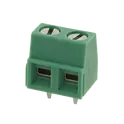
2 Position Wire to Board Terminal Block Horizontal with Board 0.197" (5.00mm) Through Hole screw terminal 2 pin 3.5mm This component is a printed circuit board mounted screw terminal block designed to provide a secure and serviceable wire-to-board connection. It accommodates two conductors and uses a screw clamp mechanism to ensure reliable electrical and mechanical contact. The compact 3.5 mm pitch makes it suitable for space-constrained designs while maintaining adequate creepage and clearance distances for low-voltage applications. The terminal is intended for through-hole mounting and supports field wiring without the need for specialized tools, making it appropriate for industrial control systems, power distribution modules, and general-purpose electronic assemblies. Mechanical Characteristics: The terminal block is constructed with a high-temperature thermoplastic housing that provides mechanical strength and electrical insulation. The housing is typically green in color and designed for side-entry wire insertion. The clamping system uses metal screws and pressure plates to secure stripped wire ends. The component is designed for through-hole PCB mounting with soldered pins providing structural stability. The form factor supports modular placement along the PCB edge for accessible wiring. Electrical Characteristics: The device is designed for low to moderate voltage and current applications typical of signal and power connections in control electronics. Conductive elements are made from metal alloys with appropriate plating to ensure good conductivity and resistance to corrosion. The screw clamp connection provides stable contact resistance under vibration and thermal cycling conditions. Material and Environmental Characteristics: The insulating body is made from flame-retardant thermoplastic material compliant with relevant safety standards. The component is suitable for standard operating temperature ranges encountered in industrial and commercial electronics. Materials are selected to meet common environmental and regulatory requirements such as RoHS compliance. Application Considerations: This terminal block is intended for applications requiring reliable field wiring connections, ease of maintenance, and secure termination. It is commonly used in power supplies, control panels, interface modules, and embedded systems. Proper PCB footprint design and adherence to recommended soldering practices are required to ensure optimal performance and reliability. #CommonPartsLibrary #Connector #Terminal-Block #WR-TBL Series 1377
1.3k Uses0 StarsTPD1E05U06DPYR
14V Clamp 2.5A (8/20µs) Ipp Tvs Diode Surface Mount 2-X1SON (1x.60) TVS diode USB VBUS 5V TVS diode USB VBUS 5V ESD protection General Description The TPD1E05U06DPYR is a single-channel transient voltage suppression device designed to protect sensitive electronic components from electrostatic discharge (ESD) and other transient voltage events. It is engineered for high-speed signal applications, offering low capacitance to preserve signal integrity while providing robust protection. The device is suitable for integration into compact and portable electronic systems where space, reliability, and performance are critical. Device Identification Part number: TPD1E05U06DPYR Device classification: ESD protection diode / transient voltage suppressor Manufacturer: Commonly associated with Texas Instruments Mounting type: Surface-mount Package style: Ultra-small leadless package (e.g., X2SON/DFN) Functional Description Protects circuits from high-voltage transients caused by ESD events Limits voltage spikes by clamping them to safe levels Maintains signal quality by minimizing added capacitance Operates transparently under normal signal conditions Provides fast response to transient disturbances Performance Characteristics Low capacitance suitable for high-speed data lines High ESD protection capability compliant with standard test models Low leakage current during normal operation Fast transient response time Stable performance across specified operating conditions Electrical Characteristics Designed for low-voltage applications (approximately 5 V working range) Low clamping voltage to protect downstream components Minimal dynamic resistance Very low input/output capacitance High reliability under repeated ESD stress Application Scope High-speed communication interfaces such as USB, HDMI, and display ports Mobile phones, tablets, and wearable electronics Embedded systems and microcontroller interfaces Consumer and industrial electronic equipment Data and signal line protection in compact devices Mechanical and Physical Properties Compact footprint for high-density PCB layouts Leadless package for improved mechanical robustness Compatible with standard surface-mount assembly processes Designed for automated manufacturing environments Integration Guidelines Install as close as possible to the external connector or entry point Ensure a low-impedance path to ground for optimal protection Minimize trace length between the device and the protected line Consider layout practices to preserve high-speed signal integrity Verify compatibility with system voltage and interface requirements #commonpartslibrary #circuitprotection #tvsdiode
656 Uses0 StarsBH9VPC
Battery Holder (Open) 9V 1 Cell PC Pin 9V battery holder through hole The BH9VPC is a through-hole, printed circuit board–mount battery holder designed to accommodate a single standard 9 V (PP3) battery. It provides a secure mechanical enclosure and reliable electrical interface for powering electronic assemblies directly from a PCB. The holder is constructed from durable insulating material with integrated metal contacts to ensure stable retention and consistent electrical connection during operation. Its form factor supports straightforward integration into compact designs while maintaining ease of battery replacement. Engineering Specification: The component is intended for through-hole mounting using PC pins that provide both mechanical stability and electrical connection to the circuit board. It supports one 9 V battery with standard snap terminal interface internally routed to PCB pins. The housing material is typically molded plastic with good mechanical strength and electrical insulation properties suitable for general electronic applications. Contact terminals are metal, commonly nickel-plated or equivalent, to ensure low contact resistance and corrosion resistance over repeated battery insertions. The holder is designed for vertical mounting orientation relative to the PCB, with a compact footprint suitable for space-constrained layouts. It provides sufficient retention force to secure the battery under normal handling and vibration conditions encountered in consumer and light industrial electronics. The operating characteristics are aligned with typical 9 V battery usage, supporting low to moderate current applications depending on battery capability. The part is compatible with standard wave soldering processes used in through-hole assembly. It is intended for use in ambient environmental conditions typical of indoor electronic equipment and is not inherently sealed against moisture or contaminants. The design allows easy manual insertion and removal of the battery without specialized tools, supporting maintenance and replacement in field applications. #commonpartslibrary #batteryholder
1.5k Uses0 Stars