Interface ICs
An interface IC is a type of integrated circuit that is designed to facilitate communication between two devices or systems. These devices are commonly used in electronic systems to enable the transfer of data and control signals between different components or subsystems. Some common use cases for interface ICs include connecting microcontrollers to peripherals such as sensors or displays, linking multiple processors together in a network, and enabling communication between devices using different communication protocols. Flux.ai has the world's largest community-driven public library of interface ICs, with footprints, symbols, datasheets, and simulation models. This library is a valuable resource for engineers and designers who need access to accurate and up-to-date information on these important components. Whether you are working on a new design project or simply looking to learn more about interface ICs, Flux.ai is an excellent resource to help you find the information you need.
TPS16850VMAR
Hot Swap Controller 1 Channel General Purpose 23-LQFN-CLIP (6x5) The TPS16850VMAR is an automotive-grade integrated hot-swap and protection controller designed for robust power-path management in low-voltage DC systems. The device provides comprehensive protection features including overvoltage protection, undervoltage protection, reverse current blocking, inrush current control, overcurrent protection, and short-circuit protection. It is intended for applications requiring controlled power delivery and fault isolation in harsh electrical environments. The device integrates dual back-to-back MOSFET control to support bidirectional current blocking and safe power switching. Adjustable protection thresholds and timing parameters allow flexible system configuration for various power rail requirements. The TPS16850VMAR supports operation across a wide supply voltage range and is optimized for automotive and industrial systems requiring high reliability and transient immunity. The controller includes fault reporting and system status monitoring functions to support intelligent power management architectures. Soft-start capability minimizes inrush current during startup, reducing stress on connectors, power supplies, and downstream circuitry. Integrated thermal protection enhances system safety during abnormal operating conditions. The TPS16850VMAR is qualified for automotive applications and complies with AEC-Q100 requirements. The device is provided in a compact VQFN package suitable for space-constrained designs and high-density PCB layouts. Key Features Automotive-qualified hot-swap and eFuse controller Wide operating input voltage range Adjustable overvoltage and undervoltage protection Reverse current and reverse polarity protection Inrush current control with programmable soft-start Adjustable overcurrent and short-circuit protection Fault monitoring and reporting outputs Integrated thermal shutdown protection Back-to-back MOSFET control architecture Fast fault response and isolation Support for controlled power sequencing Designed for harsh automotive electrical environments AEC-Q100 qualified for automotive applications Compact VQFN surface-mount package Applications Automotive electronic control units Infotainment and telematics systems ADAS and camera modules Industrial power distribution Hot-swappable system power rails Battery-powered embedded systems Power-path management systems Protection for sensitive downstream electronics Electrical Characteristics Operates from low-voltage DC power rails Supports programmable protection thresholds Integrated current sensing and fault detection High transient immunity for automotive environments Low standby current operation Fast response to overload and fault conditions Mechanical Characteristics Surface-mount VQFN package Compact footprint for dense PCB layouts RoHS-compliant package construction Suitable for automated assembly processes Environmental and Reliability Specifications Automotive AEC-Q100 qualified Extended operating temperature range ESD protection on interface pins Designed for high-reliability applications Supports operation in electrically noisy environments #commonpartslibrary #integratedcircuit #powermanagement #hotswapcontrollers
51 Uses0 StarsADXL367BCCZ-RL7
Accelerometer X, Y, Z Axis ±2g, 4g, 8g 6.25Hz ~ 200Hz 12-LGA (2.2x2.3) The ADXL367BCCZ-RL7 is an ultra-low power, three-axis MEMS accelerometer developed by Analog Devices for motion sensing applications requiring extremely low energy consumption and high measurement stability. The device integrates precision acceleration sensing, embedded motion detection capabilities, and intelligent power management features within a compact surface-mount package suitable for portable and battery-operated systems. The accelerometer supports both I²C and SPI digital communication interfaces, enabling flexible integration with embedded processors, microcontrollers, and sensor hubs. Its architecture is optimized for continuous motion monitoring while maintaining exceptionally low current consumption, making it ideal for wearable electronics, asset tracking devices, medical monitoring equipment, industrial sensing systems, and Internet of Things platforms. The device incorporates embedded activity, inactivity, and wake-up detection functions that allow host processors to remain in low-power states until significant motion events occur. Integrated FIFO buffering and programmable interrupt functionality reduce processor overhead and improve overall system efficiency. The ADXL367BCCZ-RL7 is designed for robust operation across a wide operating temperature range and maintains high measurement accuracy with low noise and excellent long-term stability. The compact LGA package enables dense PCB layouts for space-constrained designs. Key Features Motion Sensing Three-axis digital accelerometer Selectable acceleration measurement ranges High-resolution motion detection Low noise sensing architecture Integrated temperature sensor Power Management Ultra-low power operation optimized for battery-powered systems Multiple operating and standby modes Autonomous motion-triggered wake-up capability Efficient duty-cycling support Digital Interfaces Supports SPI communication Supports I²C communication Programmable interrupt outputs Embedded FIFO data buffering Embedded Detection Functions Activity detection Inactivity detection Motion-triggered interrupt generation Autonomous wake-up monitoring Mechanical and Environmental Compact LGA surface-mount package High shock tolerance Wide operating temperature capability Suitable for portable and industrial environments Electrical Characteristics Supply Requirements Low-voltage digital supply operation Optimized for low-current embedded systems Stable operation across supported voltage range Sensor Performance High sensitivity stability Low offset drift Low output noise density Configurable output data rates Communication and Control Supported Interfaces SPI serial interface I²C serial interface Programmability Configurable measurement ranges Adjustable output data rates Programmable interrupt mapping FIFO configuration support Package Information Package Type LGA surface-mount package Mounting PCB surface mount compatible Suitable for automated assembly processes Typical Applications Wearable electronics Health and fitness monitoring Portable instrumentation Asset and condition monitoring Industrial sensing systems IoT sensor nodes Motion-activated devices Battery-powered embedded systems #commonpartslibrary #integratedcircuit #accelerometer #sensor
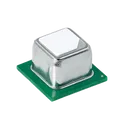
23 Uses0 StarsSCD41-D-R1
Air Quality Sensor CO2 Sensor 2.5V/3.3V/5V 20-Pin SMD EP T/R The SCD41-D-R1 is a miniature photoacoustic carbon dioxide sensor module developed by Sensirion for high-accuracy environmental sensing applications. The device integrates a CO₂ sensing element, temperature sensor, humidity sensor, optical components, calibration memory, and digital signal processing into a compact surface-mount package suitable for embedded systems and portable electronics. The sensor utilizes photoacoustic sensing technology to provide precise carbon dioxide concentration measurements while maintaining low power consumption and long-term stability. Integrated humidity and temperature sensing capabilities enable environmental compensation and simplify system integration by reducing the need for external sensors. The SCD41 communicates through a standard I²C digital interface and supports automatic self-calibration functions for reliable long-term operation. Its compact footprint and low energy requirements make it suitable for battery-powered devices, smart building systems, HVAC equipment, indoor air quality monitoring systems, and IoT applications. The module is factory calibrated and designed for continuous monitoring of indoor air quality conditions. The integrated architecture minimizes external component requirements while enabling accurate sensing performance across a wide operating range. Key Features Photoacoustic CO₂ sensing technology Integrated temperature and humidity sensing High accuracy carbon dioxide measurement I²C digital communication interface Low power consumption operation Automatic self-calibration support Compact surface-mount package Factory calibrated output Long-term measurement stability Optimized for indoor air quality applications Low-profile PCB mounting design RoHS and halogen-free compliant Electrical Characteristics Low-voltage supply operation Low average current consumption suitable for portable devices Integrated digital signal processing Non-volatile calibration memory Standard I²C communication compatibility Stable operation across industrial environmental conditions Mechanical Characteristics Compact SMD package for space-constrained applications Surface-mount assembly compatible Low-profile package structure Integrated optical cavity and sensing chamber Moisture-sensitive device requiring controlled handling during assembly Functional Characteristics Real-time carbon dioxide concentration monitoring Simultaneous temperature and humidity measurement Automatic environmental compensation Continuous and periodic measurement modes Fast startup and measurement response Long operational lifetime with stable calibration Optimized airflow design for accurate sensing Suitable for continuous indoor environmental monitoring Typical Applications Indoor air quality monitoring systems Smart thermostats and HVAC controllers Building automation equipment Demand-controlled ventilation systems Portable environmental monitoring devices Smart home and IoT products Air purification systems Occupancy and ventilation monitoring Battery-powered sensing devices Consumer and industrial environmental monitoring equipment #commonpartslibrary #sensor #airquality
296 Uses0 StarsBMP581
Pressure Sensor 4.35PSI ~ 18.13PSI (30kPa ~ 125kPa) Absolute 10-WFLGA The BMP581 is a high-precision digital barometric pressure sensor designed for altitude tracking, environmental monitoring, navigation, weather sensing, and industrial measurement applications. It integrates a MEMS pressure sensing element with a low-noise analog front end and digital signal processing to deliver highly accurate pressure and temperature measurements over a wide operating range. The device supports low-power operation, making it suitable for portable, battery-powered, and always-on sensing systems. The sensor communicates through standard digital interfaces and includes configurable sampling, filtering, and interrupt features for flexible system integration. Its compact package enables use in space-constrained embedded designs such as wearables, mobile devices, drones, smart home systems, IoT devices, and industrial instrumentation. Engineering Specification Device Type Digital barometric pressure and temperature sensor Manufacturer Bosch Sensortec Pressure Measurement High-resolution absolute pressure measurement with integrated temperature compensation Temperature Measurement Integrated digital temperature sensing for environmental monitoring and pressure compensation Pressure Range Wide atmospheric pressure sensing range suitable for altitude and environmental applications Interface Support I²C and SPI digital communication interfaces Supply Voltage Low-voltage operation optimized for embedded and portable systems Power Consumption Ultra-low power modes with configurable performance and sampling settings Measurement Features Oversampling support with programmable output data rate and internal filtering Accuracy High absolute and relative pressure accuracy for precise altitude estimation and environmental sensing Noise Performance Low-noise sensor architecture for stable pressure readings and improved altitude resolution Interrupt Features Configurable interrupt generation for data-ready and threshold-based events FIFO Support Integrated FIFO buffering for efficient sensor data management Operating Temperature Industrial temperature operating capability for consumer and industrial environments Package Type Compact surface-mount package optimized for small PCB footprint designs Applications Altitude tracking, indoor navigation, weather stations, drones, wearable electronics, IoT sensing, HVAC systems, industrial monitoring, and portable devices #CommonPartsLibrary #Sensor #Transducer #PressureSensor
17 Uses0 Stars