Inductors
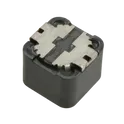
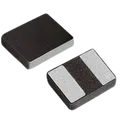
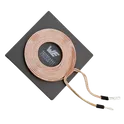
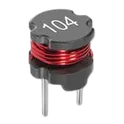
An inductor is an electronic component that stores energy in the form of a magnetic field when an electric current flows through it. It is used in a variety of applications, including filters, oscillators, and power supply circuits. One of the main use cases for inductors is to block the flow of direct current (DC) while allowing alternating current (AC) to pass through. This makes them useful for filtering out unwanted frequencies or for blocking DC signals in AC circuits. Inductors are also used in oscillator circuits to create a sustained AC signal and in power supply circuits to smooth out voltage fluctuations. Flux.ai is home to the world's largest community-driven public library of inductors, featuring footprints, symbols, datasheets, and simulation models. Whether you are a professional engineer or a hobbyist, Flux.ai has the resources you need to design and build electronic circuits that include inductors.
Generic Inductor
A generic fixed inductor suitable for rapid circuit topology development. The footprint automatically adapts based on the selected package, supporting standard SMD sizes (e.g., 0402, 0603, 0805) as well as well-known inductor packages such as SDR1806, PA4320, SRN6028, and SRR1260. Standard inductor values: 1.0 nH, 10 nH, 100 nH, 1.0 µH, 10 µH, 100 µH, 1.0 mH 1.2 nH, 12 nH, 120 nH, 1.2 µH, 12 µH, 120 µH, 1.2 mH 1.5 nH, 15 nH, 150 nH, 1.5 µH, 15 µH, 150 µH, 1.5 mH 1.8 nH, 18 nH, 180 nH, 1.8 µH, 18 µH, 180 µH, 1.8 mH 2.2 nH, 22 nH, 220 nH, 2.2 µH, 22 µH, 220 µH, 2.2 mH 2.7 nH, 27 nH, 270 nH, 2.7 µH, 27 µH, 270 µH, 2.7 mH 3.3 nH, 33 nH, 330 nH, 3.3 µH, 33 µH, 330 µH, 3.3 mH 3.9 nH, 39 nH, 390 nH, 3.9 µH, 39 µH, 390 µH, 3.9 mH 4.7 nH, 47 nH, 470 nH, 4.7 µH, 47 µH, 470 µH, 4.7 mH 5.6 nH, 56 nH, 560 nH, 5.6 µH, 56 µH, 560 µH, 5.6 mH 6.8 nH, 68 nH, 680 nH, 6.8 µH, 68 µH, 680 µH, 6.8 mH 8.2 nH, 82 nH, 820 nH, 8.2 µH, 82 µH, 820 µH, 8.2 mH #generics #CommonPartsLibrary
17.3k Uses77 Stars
Page 1 of 16
Next