Voltage Regulators
A voltage regulator is an electronic device that maintains a constant output voltage level, regardless of changes in the input voltage or load conditions. These devices are commonly used to provide a stable power supply to electronic circuits, as well as to protect them from voltage spikes and surges. There are several types of voltage regulators, including linear, switching, and pulse width modulation (PWM) regulators, each with its own set of characteristics and applications. Linear regulators, for example, are simple and efficient, but have a relatively low switching speed and can only provide a limited output current. Switching regulators, on the other hand, have higher switching speeds and can provide a higher output current, but are more complex and require additional components. In addition to their use in power supplies and voltage protection, voltage regulators are also used in a wide range of other applications, including motor control, battery charging, and instrumentation. Flux.ai has the world's largest community-driven public library of voltage regulators, with footprints, symbols, datasheets, and simulation models for a wide range of devices. Whether you're a designer, engineer, or hobbyist, you can find the resources you need to get your project up and running quickly and efficiently.
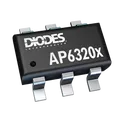
AP63203WU-7
Buck Switching Regulator IC Positive Fixed 3.3V 1 Output 2A SOT-23-6 Thin, TSOT-23-6 The AP63200/AP63201/AP63203/AP63205 is a 2A, synchronous buck converter with a wide input voltage range of 3.8V to 32V and fully integrates a 125mΩ high-side power MOSFET and a 68mΩ low-side power MOSFET to provide high-efficiency step-down DC/DC conversion. The AP63200/AP63201/AP63203/AP63205 device is easily used by minimizing the external component count due to its adoption of peak current mode control along with its integrated compensation network. The AP63200/AP63201/AP63203/AP63205 has optimized designs for Electromagnetic Interference (EMI) reduction. The converter features Frequency Spread Spectrum (FSS) with a switching frequency jitter of ±6%, which reduces EMI by not allowing emitted energy to stay in any one frequency for a significant period of time. It also has a proprietary gate driver scheme to resist switching node ringing without sacrificing MOSFET turn-on and turn-off times, which further erases highfrequency radiated EMI noise caused by MOSFET switching. The device is available in a low-profile, TSOT26 package. • VIN 3.8V to 32V • 2A Continuous Output Current • 0.8V ±1% Reference Voltage • 22µA Ultralow Quiescent Current • Switching Frequency o 500kHz: AP63200 and AP63201 o 1.1MHz: AP63203 and AP63205 • Pulse Width Modulation (PWM) Regardless of Output Load o AP63201 • Supports Pulse Frequency Modulation (PFM) o AP63200, AP63203, and AP63205 o Up to 80% Efficiency at 1mA Light Load o Up to 88% Efficiency at 5mA Light Load • Fixed Output Voltage o 3.3V: AP63203 o 5.0V: AP63205 • Proprietary Gate Driver Design for Best EMI Reduction • Frequency Spread Spectrum (FSS) to Reduce EMI • Precision Enable Threshold to Adjust UVLO • Protection Circuitry o Overvoltage Protection o Cycle-by-Cycle Peak Current Limit o Thermal Shutdown • 12V and 24V distributed power bus supplies • Flat screen TV sets and monitors • Power tools and laser printers • White goods and small home appliances • FPGA, DSP, and ASIC supplies • Home audios • Network systems • Set top boxes • Gaming consoles • Consumer electronics #commonpartslibrary #integratedcircuit #AP63203WU7 #BuckConverter #DCDCConverter #PowerManagement #VoltageRegulator #SynchronousBuck #EmbeddedSystems #IndustrialElectronics #PowerSupply #DiodesInc #3V3Power #ElectronicsDesign
1.1k Uses1 Stars