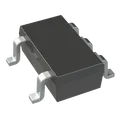
Voltage Regulators
A voltage regulator is an electronic device that maintains a constant output voltage level, regardless of changes in the input voltage or load conditions. These devices are commonly used to provide a stable power supply to electronic circuits, as well as to protect them from voltage spikes and surges. There are several types of voltage regulators, including linear, switching, and pulse width modulation (PWM) regulators, each with its own set of characteristics and applications. Linear regulators, for example, are simple and efficient, but have a relatively low switching speed and can only provide a limited output current. Switching regulators, on the other hand, have higher switching speeds and can provide a higher output current, but are more complex and require additional components. In addition to their use in power supplies and voltage protection, voltage regulators are also used in a wide range of other applications, including motor control, battery charging, and instrumentation. Flux.ai has the world's largest community-driven public library of voltage regulators, with footprints, symbols, datasheets, and simulation models for a wide range of devices. Whether you're a designer, engineer, or hobbyist, you can find the resources you need to get your project up and running quickly and efficiently.
TPS259530DSGR
Electronic Fuse Regulator 4A 8-WSON (2x2) The TPS259530DSGR is a compact, integrated eFuse protection device designed to provide robust power-path management for low-voltage DC systems, particularly nominal five-volt rails. It combines multiple protection and control features into a single solution, enabling safe distribution of power to downstream circuitry while minimizing the need for external components. The device supports controlled inrush current during startup, continuous current monitoring, and rapid fault response to protect both the power source and the load. Integrated protection mechanisms include overvoltage protection, undervoltage lockout, overcurrent limiting, thermal shutdown, and reverse current blocking. This makes the device well suited for applications requiring high reliability, such as embedded systems, industrial electronics, consumer devices, and communication equipment. Functional Description The device operates as a high-side protection switch using an internal MOSFET to control current flow from the input supply to the load. It monitors input voltage, output current, and internal temperature to ensure operation within safe limits. When a fault condition such as overcurrent or overvoltage is detected, the device limits or interrupts current flow to prevent damage. The integrated control loop provides smooth startup by limiting inrush current and preventing supply droop. Reverse current blocking prevents unwanted current flow from the output back to the input when the input supply is removed or drops below the output level. Electrical Characteristics The device supports operation across a wide input voltage range suitable for low-voltage DC systems, including typical five-volt rails. It features an adjustable overvoltage protection threshold aligned with five-volt system requirements, along with configurable undervoltage lockout to ensure proper system startup and shutdown behavior. The current limit is externally programmable, allowing flexibility for different load conditions. The device exhibits low on-resistance to minimize power dissipation and voltage drop during normal operation. Protection Features The TPS259530DSGR integrates multiple protection functions to enhance system robustness. Overvoltage protection prevents excessive input voltage from reaching the load. Undervoltage lockout ensures the device only operates when the input supply is within a valid range. Overcurrent protection actively limits current during fault conditions and can respond rapidly to short circuits. Thermal shutdown protects the device from overheating by disabling operation when internal temperature exceeds safe limits. Reverse current blocking prevents backflow of current, safeguarding both the source and load. Control and Interface The device includes an enable control input that allows external control of the power path. It supports configurable behavior for fault response and recovery, depending on system design. External components can be used to set thresholds such as current limit and undervoltage lockout, providing design flexibility. Status signaling allows system-level monitoring of fault conditions. Mechanical and Package Information The TPS259530DSGR is provided in a compact surface-mount package suitable for space-constrained applications. The package is optimized for thermal performance and efficient PCB layout, enabling reliable operation under varying load conditions. It is supplied in tape-and-reel format for automated assembly processes. Applications This device is intended for use in systems requiring reliable power distribution and protection. Typical applications include five-volt power rails in embedded systems, industrial control modules, consumer electronics, communication devices, and peripheral power management circuits. Summary The TPS259530DSGR offers an integrated, high-reliability solution for power path protection and management in low-voltage systems. Its combination of protection features, configurability, and compact form factor makes it a widely used choice for safeguarding five-volt supply rails in modern electronic designs. #commonpartslibrary #integratedcircuit #powermanagement
1.0k Uses0 Stars691137710002
2 Position Wire to Board Terminal Block Horizontal with Board 0.197" (5.00mm) Through Hole screw terminal 2 pin 3.5mm This component is a printed circuit board mounted screw terminal block designed to provide a secure and serviceable wire-to-board connection. It accommodates two conductors and uses a screw clamp mechanism to ensure reliable electrical and mechanical contact. The compact 3.5 mm pitch makes it suitable for space-constrained designs while maintaining adequate creepage and clearance distances for low-voltage applications. The terminal is intended for through-hole mounting and supports field wiring without the need for specialized tools, making it appropriate for industrial control systems, power distribution modules, and general-purpose electronic assemblies. Mechanical Characteristics: The terminal block is constructed with a high-temperature thermoplastic housing that provides mechanical strength and electrical insulation. The housing is typically green in color and designed for side-entry wire insertion. The clamping system uses metal screws and pressure plates to secure stripped wire ends. The component is designed for through-hole PCB mounting with soldered pins providing structural stability. The form factor supports modular placement along the PCB edge for accessible wiring. Electrical Characteristics: The device is designed for low to moderate voltage and current applications typical of signal and power connections in control electronics. Conductive elements are made from metal alloys with appropriate plating to ensure good conductivity and resistance to corrosion. The screw clamp connection provides stable contact resistance under vibration and thermal cycling conditions. Material and Environmental Characteristics: The insulating body is made from flame-retardant thermoplastic material compliant with relevant safety standards. The component is suitable for standard operating temperature ranges encountered in industrial and commercial electronics. Materials are selected to meet common environmental and regulatory requirements such as RoHS compliance. Application Considerations: This terminal block is intended for applications requiring reliable field wiring connections, ease of maintenance, and secure termination. It is commonly used in power supplies, control panels, interface modules, and embedded systems. Proper PCB footprint design and adherence to recommended soldering practices are required to ensure optimal performance and reliability. #CommonPartsLibrary #Connector #Terminal-Block #WR-TBL Series 1377
1.3k Uses0 StarsTLV75533PDBVR
Linear Voltage Regulator IC Positive Fixed 1 Output 500mA SOT-23-5 The TLV75533PDBVR is a low-dropout (LDO) linear voltage regulator designed to provide a stable 3.3 V output from a higher input voltage source. It features ultra-low quiescent current and high power-supply rejection ratio (PSRR), making it ideal for battery-powered and noise-sensitive applications such as IoT devices, portable electronics, and RF circuits. The device is optimized for fast transient response and stable operation with small ceramic output capacitors. Key Features Fixed output voltage: 3.3 V Low dropout voltage (typ. ~200 mV at full load) Ultra-low quiescent current (typ. 25 µA) High PSRR for noise-sensitive applications Stable with small ceramic capacitors (≥1 µF) Thermal shutdown and overcurrent protection Available in compact SOT-23-5 package (DBV) Absolute Maximum Ratings Input voltage: –0.3 V to 6.5 V Output voltage: –0.3 V to (VIN + 0.3 V) Operating junction temperature: –40°C to +125°C Storage temperature range: –65°C to +150°C Recommended Operating Conditions Input voltage range: 1.45 V to 5.5 V Output voltage: 3.3 V (fixed) Output current: up to 500 mA Operating temperature range: –40°C to +125°C Electrical Characteristics (Typical unless otherwise noted) Output voltage accuracy: ±1% Dropout voltage: ~200 mV @ 500 mA Quiescent current: ~25 µA PSRR: up to 70 dB (at 1 kHz) Line regulation: <0.05%/V Load regulation: <0.5% Pin Configuration (SOT-23-5) Pin 1: IN – Input voltage Pin 2: GND – Ground Pin 3: EN – Enable (active high) Pin 4: NC – No connect Pin 5: OUT – Regulated output Typical Application Power management for microcontrollers and sensors Battery-powered portable devices RF and analog circuits requiring low noise supply IoT and wearable electronics Protection Features Thermal shutdown protection Overcurrent protection Undervoltage lockout (UVLO) #commonpartsLibrary #integratedcircuit #powermanagement #voltageregulator
458 Uses0 Stars