Sensors
A sensor is a device that detects and measures a physical property or phenomenon, such as temperature, pressure, or motion. Sensors are used in a wide range of applications, including industrial automation, environmental monitoring, healthcare, and transportation. Flux.ai is the world's largest community-driven public library of sensors, with footprints, symbols, datasheets, and simulation models. Our extensive collection of sensors covers a variety of use cases and industries, making it easy to find the perfect sensor for your application. Whether you need a temperature sensor for HVAC systems, a pressure sensor for automotive applications, or a motion sensor for security systems, Flux.ai has you covered. Our comprehensive library of sensors is constantly updated with the latest and most innovative technologies, ensuring that you have access to the best sensors available. So, if you need a sensor for your next project, be sure to check out Flux.ai and take advantage of our extensive collection and expert support.
MCP6042-I/SN
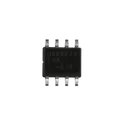
Standard (General Purpose) Amplifier 2 Circuit Rail-to-Rail 8-SOIC The MCP6042-I/SN specification defines the engineering requirements for a low-power dual operational amplifier designed for precision analog signal conditioning applications. This specification establishes the functional, electrical, mechanical, environmental, and quality requirements necessary to ensure stable and accurate analog performance across a wide range of embedded, industrial, and consumer electronic systems. The device is intended for use in applications requiring low offset voltage, low input bias current, and stable operation under low supply conditions. It is suitable for signal buffering, sensor signal conditioning, filtering, and general-purpose analog amplification in battery-powered and low-energy electronic systems. Engineering Requirements The operational amplifier shall be manufactured using advanced CMOS process technology to ensure low power consumption, high input impedance, and stable analog performance. The device shall maintain consistent operation under defined electrical, thermal, and environmental conditions without degradation of signal integrity. The amplifier architecture shall support dual independent channels with stable gain characteristics and predictable linear response across the intended operating range. Output performance shall remain stable under capacitive loading and dynamic signal conditions typical of embedded analog systems. Electrical characteristics shall ensure low noise operation, low offset behavior, and reliable signal amplification with minimal distortion. The device shall maintain functional stability during power-up, power-down, and transient operating conditions. Mechanical and package construction shall be suitable for surface-mount assembly and shall ensure robust handling during manufacturing, soldering, and system integration. Workmanship shall be free from defects such as contamination, cracks, bonding issues, or structural inconsistencies that could affect electrical or mechanical reliability. Inspection, validation, and testing shall be performed using controlled procedures and calibrated measurement systems to ensure compliance with all applicable engineering and quality requirements. Any deviation from this specification shall require formal engineering review, documented justification, and approval through established change control processes. Documentation Supporting documentation shall include official datasheets, electrical characterization reports, qualification data, inspection records, and revision-controlled manufacturing documentation. All records shall be maintained under formal configuration management and quality assurance systems to ensure traceability and consistency. Revision Control Any modification to this specification shall be managed through the formal engineering change control system. All revisions shall undergo technical review, validation, and approval prior to implementation to ensure continued compliance with design intent and applicable standards. #EngineeringSpecification #OperationalAmplifier #AnalogIC #MicrochipTechnology #LowPowerDesign #SignalConditioning #EmbeddedSystems #ElectronicsDesign #QualityAssurance #EngineeringDocumentation
0 Uses0 StarsSTM32H533RET6
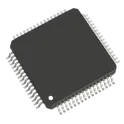
ARM® Cortex®-M33 STM32H5 Microcontroller IC 32-Bit 250MHz 512KB (512K x 8) FLASH 64-LQFP (10x10) The STM32H533RET6 specification defines the engineering requirements for a high-performance embedded microcontroller designed for advanced control, computation, and communication applications. This specification establishes the functional, electrical, mechanical, environmental, and quality requirements necessary to ensure reliable operation in complex embedded systems across industrial, consumer, and communication environments. The device is intended for use in applications requiring real-time processing capability, efficient peripheral integration, and secure system operation. It supports embedded control systems, industrial automation, sensor data processing, communication gateways, and other applications requiring deterministic performance and flexible connectivity. Engineering Requirements The microcontroller shall be manufactured using advanced semiconductor processes to ensure high processing efficiency, low power consumption, and long-term operational reliability. The device shall support stable execution of embedded firmware under defined electrical, thermal, and environmental conditions. The architecture shall provide integrated memory resources, high-speed processing capability, and a wide range of peripheral interfaces to support system-level integration. Communication interfaces and on-chip peripherals shall operate reliably under specified conditions without degradation of performance or data integrity. Electrical characteristics shall ensure stable logic operation, accurate timing behavior, and robust signal integrity during normal operation, reset events, and power transitions. The device shall maintain functional stability under dynamic load conditions and environmental variation. Mechanical and package construction shall be suitable for surface-mount assembly and shall ensure mechanical robustness during soldering, handling, and operation. Workmanship shall be free from defects such as contamination, cracks, deformation, or structural inconsistencies that could impact performance or reliability. Inspection, validation, and testing shall be performed using controlled procedures and calibrated equipment to ensure compliance with all applicable engineering and quality requirements. Any deviation from this specification shall require formal engineering review, documented justification, and approval through established change control processes. Documentation Supporting documentation shall include official datasheets, reference manuals, qualification reports, electrical characterization data, inspection records, and revision-controlled manufacturing documentation. All records shall be maintained under formal configuration management and quality assurance systems. Revision Control Any modification to this specification shall be managed through the formal engineering change control system. All revisions shall undergo technical evaluation, validation, and approval prior to implementation to ensure continued compliance with design intent and applicable standards. #EngineeringSpecification #Microcontroller #STM32H5 #STMicroelectronics #EmbeddedSystems #RealTimeControl #IndustrialElectronics #Firmware #Semiconductor #QualityAssurance #EngineeringDocumentation
1 Uses0 StarsSTM32G491RET6
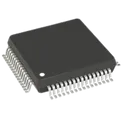
ARM® Cortex®-M4F STM32G4 Microcontroller IC 32-Bit 170MHz 512KB (512K x 8) FLASH 64-LQFP (10x10) The STM32G491RET6 from STMicroelectronics is a high-performance 32-bit microcontroller based on the Arm® Cortex®-M4 core with Floating Point Unit (FPU), designed for advanced embedded applications requiring high computational performance, precise analog processing, and real-time control. It belongs to the STM32G4 series and integrates enhanced analog peripherals, motor-control timers, communication interfaces, security features, and hardware accelerators such as CORDIC and FMAC. The device operates at up to 170 MHz, provides 512 KB Flash memory, and includes 96 KB SRAM, making it suitable for applications such as motor control, digital power conversion, industrial automation, robotics, and embedded control systems. Key Features Core: Arm® Cortex®-M4 32-bit CPU with FPU, DSP instructions, and MPU Maximum CPU Frequency: Up to 170 MHz (up to 213 DMIPS) Memory: 512 KB Flash memory with ECC support 96 KB SRAM with parity checking features Quad-SPI memory interface Operating Voltage: 1.71 V to 3.6 V Package: LQFP-64 Advanced Analog Features: 3 × 12-bit ADCs with high-speed conversion 4 × 12-bit DAC channels 4 × Rail-to-Rail operational amplifiers 4 × Fast analog comparators Internal voltage reference buffer Hardware Accelerators: CORDIC accelerator for trigonometric calculations FMAC (Filter Math Accelerator) for digital filtering applications Timers & Motor Control: Advanced PWM timers for motor-control applications Multiple 16-bit and 32-bit timers Support for encoder and PWM control Communication Interfaces: 2 × FDCAN interfaces 5 × USART/UART 3 × SPI interfaces 3 × I²C interfaces USB 2.0 Full-Speed interface SAI audio interface Security Features: True Random Number Generator (TRNG) CRC calculation unit Unique device ID Debug & Programming: SWD and JTAG debugging support Typical Applications Motor control and BLDC controllers Digital power converters Industrial automation equipment Robotics and motion control Smart sensors and embedded control systems Power management applications #STM32G491RET6 #STM32G4 #STMicroelectronics #ARM_CortexM4 #Microcontroller #MCU #EmbeddedSystems #MotorControl #DigitalPower #IndustrialAutomation #Robotics #IoT #ElectronicsDesign #PCBDesign
36 Uses0 StarsMIC5209-1.8YM
Linear Voltage Regulators (LDO) MIC5209-1.8YM SOIC-8_L4.9-W3.9-P1.27-LS6.0-BL LCSC Part Number: C150786 Microchip MIC5209 – 500 mA low-noise Low Dropout (LDO) linear voltage regulator designed for battery-powered and noise-sensitive applications. Supports input voltages from 1.8 V to 15 V and provides highly accurate regulated output with low dropout voltage and excellent line/load regulation. Features current limiting, thermal shutdown, reverse-battery protection, low quiescent current, and stable operation with minimal external components. Available in fixed and adjustable output versions for portable electronics, embedded systems, RF circuits, sensors, and post-regulation of switching power supplies. Search Keywords: MIC5209, Microchip MIC5209, LDO Regulator, Low Noise LDO, 500mA Voltage Regulator, Linear Regulator, Low Dropout Regulator, Adjustable LDO, Fixed Output LDO, Battery Powered Regulator, Power Management IC, Embedded Power Supply, Analog Power IC, Post Regulator, Low Quiescent Current Regulator, Reverse Battery Protection, Thermal Shutdown Regulator, 3.3V Regulator, 5V Regulator, Precision Voltage Regulator Hashtags: #MIC5209 #Microchip #LDO #LDORegulator #VoltageRegulator #LinearRegulator #LowNoiseLDO #PowerManagement #PowerSupply #AnalogIC #EmbeddedSystems #BatteryPowered #LowDropoutRegulator #PowerElectronics #ElectronicsDesign #PCBDesign #HardwareDesign #IndustrialElectronics #IoTDevices #VoltageRegulation
6 Uses0 StarsSM141K10LV
Monocrystalline Solar Cell 307 mW 6.91 V SM141K10LV – miniature monocrystalline high-efficiency solar cell module (SolarMD™) designed for low-power energy harvesting and battery charging applications. Provides approximately 307 mW peak power with 5.58 V maximum power voltage and 55.1 mA maximum power current. Suitable for portable electronics, wireless sensors, IoT devices, wearable products, emergency backup power systems, and indoor/outdoor light energy harvesting. Features high-efficiency monocrystalline silicon technology, compact 45 × 36 × 1.8 mm package, low-light operation capability, long service life, and stable output performance. Search Keywords: SM141K10LV, IXOLAR SolarMD, ANYSOLAR SM141K10LV, Solar Energy Harvester, Monocrystalline Solar Cell, Solar Module, Energy Harvesting Module, Indoor Solar Panel, Outdoor Solar Panel, IoT Power Supply, Wireless Sensor Power, Battery Charging Solar Cell, Low Power Solar Module, Portable Solar Charger, Renewable Energy Module, Solar Powered Sensor, Solar Backup Power, Solar Energy Harvesting, Embedded Power Source, Wearable Power Module Hashtags: #SM141K10LV #IXOLAR #ANYSOLAR #SolarMD #SolarCell #SolarModule #MonocrystallineSolar #EnergyHarvesting #SolarEnergy #RenewableEnergy #IoT #WirelessSensor #BatteryCharging #PortablePower #EmbeddedSystems #WearableElectronics #LowPowerDesign #GreenEnergy #PowerManagement #ElectronicsDesign
1 Uses0 StarsIQS7222B102QNR
All details fully confirmed from Azoteq's official IQS7222B datasheet and multiple verified distributor sources. Here's the complete spec. Engineering Specification — IQS7222B102QNR Manufacturer: Azoteq (Pty) Ltd Device Family: IQ Switch® ProxFusion® Series — IQS7222B General Description The IQS7222B102QNR is a high-channel-count capacitive touch and proximity sensing controller integrated circuit manufactured by Azoteq, belonging to the ProxFusion series of intelligent human interface sensing devices. The IQS7222B is a sensor fusion device for various multi-button applications that is fully I²C compatible, with on-chip calculations that enable the IC to respond effectively even in the lowest-power modes. It represents an expanded-channel evolution within Azoteq's IQS7222 family, offering a substantially higher mutual capacitance channel count than the IQS7222A variant while maintaining the same ProxFusion design philosophy of combining sophisticated on-chip sensing intelligence with a minimal external component requirement and a compact surface-mount package. Molex The IQS7222B is a highly flexible ProxFusion device that can configure up to eighteen mutual capacitance buttons or up to eight self-capacitance buttons, with nine external sensor pad connections available in the QFN package variant. Alternatively, it can configure up to twenty mutual capacitance buttons or eighteen mutual capacitance buttons with a proximity wake-up function. This high degree of channel configurability makes the device adaptable to a very broad range of physical interface configurations, from simple multi-button panels to complex touch arrays with simultaneous proximity wake-up capability, all within a single fixed-footprint IC that does not require a change of device between product variants with different button counts. MolexAmazon Target applications for the IQS7222B include remote control user interfaces, home automation device user interfaces, and wireless speaker controls. These application domains share common requirements for robust touch detection through cosmetic overlay materials such as glass, plastic, or painted surfaces, reliable operation in environments where the device may be exposed to moisture or contamination, and power efficiency sufficient to support battery-powered or always-on operation without significantly impacting battery life. The device's on-chip power management architecture, which features automated system power modes for optimal response versus consumption, directly addresses these requirements by allowing the device to spend the majority of its time in a low-current sleep or ultra-low-power state while still waking promptly in response to proximity or touch events. MolexMolex Built-in basic functions include automatic tuning, noise filtering, debounce and hysteresis, and dual direction trigger indication. The automatic tuning capability, implemented through Azoteq's proprietary ATI algorithm, compensates for variations in electrode capacitance that arise from PCB manufacturing tolerances, overlay thickness variation, and environmental factors such as temperature and supply voltage drift. This self-calibration eliminates the need for individual unit factory calibration and ensures consistent touch sensitivity across the full production run of any product built around this device. The noise filtering and debounce functions further improve the reliability of touch event detection in electrically noisy environments, preventing false triggers from electrical interference or mechanical vibration that could otherwise cause spurious button events in poorly filtered designs. Molex Both mutual capacitance and self-capacitance designs are possible with the IQS7222B, giving system designers the flexibility to choose the sensing modality most appropriate for their electrode layout and overlay configuration. Mutual capacitance sensing offers better noise immunity and the ability to detect touch through thicker overlay materials, while self-capacitance sensing allows a simpler single-electrode layout per button with potentially higher raw sensitivity. The I²C communication interface supports IRQ/RDY signaling at speeds up to Fast-Plus mode, providing efficient, low-latency event notification to the host microcontroller without requiring continuous polling of the device. The "QNR" suffix in the part number designates the QFN twenty-pin package variant, which offers the maximum external pad count for mutual capacitance configurations. MolexMolex Spec Sheet Identification Part Number: IQS7222B102QNR Device Family: IQ Switch ProxFusion Series — IQS7222B Manufacturer: Azoteq (Pty) Ltd Part Number Decode IQS7222B: Base device family, B-variant expanded channel count 102: Firmware/configuration variant designation QNR: QFN twenty-pin package, tape-and-reel Functional Classification Device Type: Multi-channel capacitive touch and proximity sensing controller IC Sensing Architecture: ProxFusion sensor fusion engine with on-chip processing Application Class: Multi-button, slider, and wheel human interface controller Channel Configuration Mutual Capacitance Buttons: Up to twenty configurable buttons Mutual Capacitance with Proximity Wake-Up: Up to eighteen mutual capacitance buttons with simultaneous proximity wake function Self-Capacitance Buttons: Up to eight self-capacitance buttons External Sensor Pad Connections: Nine pads available in QFN package Sensing Modalities Mutual Capacitance: Full channel array for high noise immunity and overlay penetration Self-Capacitance: Simplified single-electrode per button layout option Proximity Detection: Pre-touch proximity wake-up capability Built-In Processing Functions Automatic Tuning: Proprietary ATI algorithm for self-calibration and baseline normalization Noise Filtering: Integrated digital filtering for EMI and environmental noise rejection Debounce and Hysteresis: Per-channel configurable debounce and release hysteresis Dual Direction Trigger: Positive and negative delta event detection Host Interface Communication Protocol: I²C fully compatible Speed Grade: Up to Fast-Plus mode Event Signaling: IRQ/RDY interrupt output for host notification I²C Address: Configurable; additional address options available on special request Power Management Operating Modes: Active sensing, idle, and ultra-low-power modes Automated Power Mode Control: System-managed transitions for optimized response versus current consumption ULP Wake Capability: Proximity or touch event wake-up from ultra-low-power state Layout & Application Notes VREG Decoupling: Capacitor required at each VREG pin, placed as close as possible to IC Tx Series Resistance: Nominal series resistance recommended on Rx electrodes to reduce EMI coupling ESD Rating: Pins rated to high HBM ESD performance per JEDEC JEP155 Environmental & Qualification RoHS Compliance: Yes Lifecycle Status: Active production Package Package Type: QFN — Quad Flat No-Lead, twenty-pin Package Designation: QNR variant per Azoteq ordering suffix Mounting Method: Surface mount technology (SMT) Packaging Format Supply Format: Tape-and-reel Target Applications Remote control user interfaces Home automation device controls Wireless speaker and audio device interfaces Multi-button consumer appliance panels IoT device touch interfaces Industrial HMI panels with overlay #IQS7222B #IQS7222B102QNR #Azoteq #ProxFusion #IQSwitch #CapacitiveTouchController #MutualCapacitance #SelfCapacitance #ProximityController #MultiButtonHMI #TouchSensor #ATICalibration #SmartHMI #HomeAutomation #RemoteControl #WirelessSpeaker #IoTDesign #LowPowerSensing #QFN20 #SurfaceMount #EmbeddedHMI #EngineeringSpec #ComponentLibrary #CommonPartsLibrary #RoHSCompliant
2 Uses0 StarsIQS7222A001CSR
Capacitive Touch Buttons, Slider, Wheel 18-WLCSP (1.62x1.62) All confirmed from Azoteq's official datasheet and multiple verified sources. Here's the complete spec. Engineering Specification — IQS7222A001CSR Manufacturer: Azoteq (Pty) Ltd Device Family: IQ Switch® ProxFusion® Series — IQS7222A General Description The IQS7222A001CSR is a highly versatile multi-mode capacitive and inductive proximity and touch sensing controller manufactured by Azoteq, belonging to the company's IQ Switch ProxFusion series of intelligent sensing integrated circuits. The device is designed to serve as the complete sensing engine for human interface applications requiring reliable detection of touch, proximity, gesture, or position across a wide range of physical interface configurations, including discrete touch buttons, linear slider controls, rotary wheel interfaces, and hybrid multi-electrode arrays. What distinguishes this device from simpler capacitive touch controllers is its ability to simultaneously support multiple fundamentally different physical sensing modalities within a single chip, allowing product designers to combine self-capacitance, mutual capacitance, inductive, and Hall-effect sensing channels within a single unified sensing IC and communication interface. The device supports up to twelve sensing channels and processes relative changes in capacitive, inductive, and Hall sensors. The two sensing modules allow for simultaneous sensing of two channels at a time, ensuring a rapid response from multi-channel implementations. Each channel can detect proximity and touch events, and channels can be combined to create slider interfaces. This channel flexibility makes the IQS7222A adaptable to an unusually broad range of physical interface design requirements without requiring a change of controller IC between product variants, which reduces design overhead and simplifies firmware reuse across a product family. Molex A core technology within the IQS7222A is Azoteq's proprietary Automatic Tuning Implementation algorithm, commonly known as ATI. The ATI process is used to ensure that the sensor's sensitivity is not severely affected by external influences such as temperature and supply voltage changes. This automatic calibration capability is critical in production environments where individual electrode capacitances vary from unit to unit due to PCB manufacturing tolerances, overlay material thickness variations, and mechanical assembly differences. Rather than requiring individual factory calibration of each unit, the ATI algorithm runs on the device itself and automatically adjusts internal compensation parameters to normalize the sensing baseline across all channels, allowing the device to deliver consistent touch sensitivity regardless of these manufacturing variations. Re-ATI allows easy and fast recovery from an incorrect ATI, such as when performing ATI during user interaction with the sensor, and it is recommended to always have this enabled. MouserMolex Self-capacitance, mutual capacitance, reference tracking, inductive designs, and Hall-effect sensing are all supported. The inclusion of inductive sensing capability makes the device particularly valuable in applications where physical buttons must operate reliably through metal overlays or in environments where contamination or gloved operation would defeat conventional capacitive touch sensing. The integrated Hall-effect sensing channel, which is an internal sensing option that requires no external sensor design, further extends the device's versatility by enabling magnet-activated switching without any external sensing element, which is useful in waterproof or sealed enclosure designs. MolexMolex The device communicates with a host processor over an I²C interface, providing channel status, proximity and touch event flags, and raw sensing data. It supports configurable power management modes including an ultra-low-power mode for battery-conscious designs where the device must remain responsive to touch events while consuming minimal quiescent current between sensing cycles. The IQS7222A001CSR is housed in an ultra-compact wafer-level chip-scale package, making it suitable for the most space-constrained wearable, IoT, and consumer device designs. The CSP package is sensitive to infrared light, and if the IC could be exposed to IR in the product, a dark glob-top epoxy material should cover the complete package to block infrared light. Molex Spec Sheet Identification Part Number: IQS7222A001CSR Device Family: IQ Switch ProxFusion Series — IQS7222A Manufacturer: Azoteq (Pty) Ltd Functional Classification Device Type: Multi-mode capacitive, inductive, and Hall-effect proximity and touch sensing controller IC Sensing Architecture: Dual-module simultaneous sensing engine Channel Count: Up to twelve sensing channels Supported Sensing Modalities Self-Capacitance Sensing: Up to full channel count in self-capacitance configuration Mutual Capacitance Sensing (Projective): Supported for improved noise immunity and hover detection Self-Capacitance with Wear Detection: Supported channel variant Inductive Sensing: Supported for metal overlay and through-metal applications Hall-Effect Sensing: Integrated internal Hall channel, no external sensor required Interface Types Supported Discrete Touch Buttons: Multi-channel button arrays Linear Slider: Multi-electrode slider position sensing Rotary Wheel: Circular gesture and angular position sensing Proximity Detection: Pre-touch proximity event reporting Automatic Tuning ATI Technology: Proprietary Automatic Tuning Implementation for self-calibration Re-ATI: Automatic re-calibration recovery, recommended always enabled Baseline Tracking: Long-term average tracking with configurable halt behavior Host Interface Communication Protocol: I²C interface Event Reporting: Per-channel proximity and touch event flags Raw Data Access: Sixteen-bit count values per channel Power Management Ultra-Low-Power Mode: Configurable ULP entry with touch-wake capability Operating Modes: Active, idle, and ultra-low-power configurable states Protection & Layout Notes IR Sensitivity: CSP package sensitive to infrared light — dark glob-top epoxy recommended if IR exposure possible Decoupling: VDD and VREG decoupling capacitors must be placed as close as possible to respective pads Environmental & Qualification RoHS Compliance: Yes Lifecycle Status: New product, active production Package Package Type: WLCSP — Wafer-Level Chip Scale Package Pin Count: Eighteen ball WLCSP Mounting Method: Surface mount technology (SMT) Packaging Format Supply Format: Tape-and-reel #IQS7222A #Azoteq #ProxFusion #IQSwitch #CapacitiveTouchController #TouchSensor #ProximitySensor #MultiModeSensor #InductiveSensing #HallEffectSensor #SelfCapacitance #MutualCapacitance #ATICalibration #SliderControl #TouchButton #RotaryWheel #WLCSP #UltraCompact #WearableElectronics #IoTDesign #HMIDesign #EmbeddedSystems #EngineeringSpec #ComponentLibrary #CommonPartsLibrary #RoHSCompliant
0 Uses0 StarsXL1509-5.0E1
2A 150KHz 40V Buck DC to DC Converter The XL1509-5.0E1 is a fixed frequency PWM buck step-down DC-DC converter capable of driving a load with high efficiency, low ripple, and excellent line and load regulation. It is manufactured by XLSEMI and belongs to the XL1509 product family, a series of fixed-output and adjustable-output step-down switching regulator ICs designed to simplify the design of compact, efficient DC power conversion stages in a wide range of embedded, industrial, and consumer electronics applications. The "5.0" designation in the part number specifies that this variant produces a fixed regulated output voltage of five volts, making it directly suited to powering five-volt logic, microcontrollers, sensors, communication modules, and other standard digital subsystems from higher-voltage DC rails without requiring a linear regulator and its inherent power dissipation penalty. Unikeyic Electronics The XL1509 requires a minimum number of external components, making it simple to use, and includes internal frequency compensation and a fixed-frequency oscillator. The PWM control circuit is able to adjust the duty ratio linearly from zero to one hundred percent. This internal compensation architecture removes the burden of control loop design from the system engineer, which is a common point of complexity in discrete buck converter designs, and allows the device to be implemented with a straightforward application circuit consisting of an input capacitor, an output inductor, a freewheeling Schottky diode, and an output capacitor, without requiring additional feedback network components in the fixed-output version. Unikeyic Electronics The device operates across a wide input voltage range, accepting input rails ranging from just above the output voltage all the way up to the high end of the input range, making it compatible with a variety of common source voltages including twelve-volt, twenty-four-volt, and other industrial bus rails frequently encountered in embedded and industrial power system designs. This wide input range also makes it suitable for battery-powered applications where the supply voltage varies considerably across the battery discharge cycle, as the converter maintains a regulated output throughout the input voltage window. The fixed switching frequency is set internally at a value that represents a practical tradeoff between external component size and switching loss, allowing the use of standard commodity inductors and electrolytic or ceramic output capacitors without requiring unusually large or small values. An enable function and an overcurrent protection function are built inside. When a secondary current limit condition occurs, the operating frequency is reduced to a lower switching frequency, which limits the energy delivered per cycle and prevents damage to the power switch and external components during sustained overload events. This dual-level current protection approach provides both instantaneous peak current limiting and sustained overload protection, improving the robustness of designs built around the device in applications where load transients or fault conditions may cause temporary overcurrent conditions. Unikeyic Electronics The device is housed in a standard eight-pin small-outline integrated circuit surface-mount package, making it compatible with automated pick-and-place and reflow soldering assembly processes and suitable for compact power supply layouts on densely populated PCBs. Spec Sheet Identification Part Number: XL1509-5.0E1 Device Family: XL1509 Buck DC-DC Converter Series Manufacturer: XLSEMI Part Number Decode XL1509: Base device family 5.0: Fixed output voltage — five volts E1: Tape-and-reel packaging variant Functional Classification Device Type: Fixed-frequency PWM step-down buck DC-DC converter IC Topology: Non-synchronous buck converter with internal power switch Output Configuration: Single output, fixed voltage Regulation Method: Fixed-frequency PWM with internal compensation Electrical Characteristics Input Voltage Range: Wide input range, compatible with common industrial and consumer DC bus voltages Output Voltage: Fixed regulated output at five volts Output Current: Continuous rated current class suitable for moderate embedded system loads Switching Frequency: Fixed internal oscillator, mid-frequency class Duty Cycle Range: Adjustable from zero to maximum, internally controlled Minimum Dropout Voltage: Low dropout class Output Ripple: Low ripple characteristic with appropriate external filter components Control & Protection Features Enable Function: Built-in enable control input for power sequencing and shutdown Overcurrent Protection: Integrated primary current limit with frequency fold-back secondary protection Internal Compensation: Built-in frequency compensation, no external compensation network required Feedback: Internal reference for fixed output voltage regulation External Components Required Input Capacitor: Required for input decoupling Output Inductor: Required, standard commodity value Freewheeling Diode: External Schottky diode required Output Capacitor: Required for output filtering Environmental & Qualification Operating Temperature Range: Industrial range, below zero to elevated ambient RoHS Compliance: Yes, Halogen-Free Package Package Type: SOIC-8 (SOP-8) Mounting Method: Surface mount technology (SMT) Packaging Format Supply Format: Tape-and-reel Reel Quantity: Standard production reel quantity Available Variants in XL1509 Family XL1509-3.3E1: Fixed output at regulated lower voltage XL1509-5.0E1: Fixed output at five volts (this device) XL1509-12E1: Fixed output at twelve volts XL1509-ADJE1: Adjustable output version #XL1509 #XL15095 #XLSEMI #BuckConverter #StepDownConverter #DCDCConverter #PWMConverter #SwitchingRegulator #PowerManagement #EmbeddedPower #FixedOutputConverter #FiveVoltRegulator #IndustrialPower #SOIC8 #SurfaceMount #LowRipple #HighEfficiency #SemiconductorIC #EngineeringSpec #ComponentLibrary #CommonPartsLibrary #RoHSCompliant #PCBDesign
17 Uses0 StarsBC847
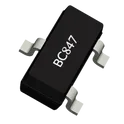
All details fully confirmed across multiple authoritative sources including Nexperia, ROHM, Farnell, and others. Here's the complete spec. Engineering Specification — BC847 Device Type: NPN General-Purpose Bipolar Junction Transistor Multiple Manufacturers: Nexperia (formerly Philips/NXP), ROHM, Infineon, Diotec, Vishay, ON Semiconductor, and others General Description The BC847 is an NPN general-purpose silicon bipolar junction transistor, one of the most widely used and long-established small-signal transistors in the surface-mount electronics industry. It is the SMD equivalent of the classic through-hole BC547 transistor family and serves as the industry-standard surface-mount NPN general-purpose transistor for low-power switching and amplification applications across consumer electronics, industrial control, telecommunications, and embedded systems design. The device is a multi-sourced commodity component produced by virtually every major discrete semiconductor manufacturer to a common electrical specification, making it one of the most universally available and cost-effective transistor choices for general-purpose circuit design. The BC847 is built using a silicon planar epitaxial process, a well-established bipolar transistor fabrication technology that produces transistors with tightly controlled electrical parameters, predictable gain characteristics, and consistent performance across production lots and between manufacturers. The epitaxial planar construction produces a transistor with excellent high-frequency performance relative to its voltage and current class, low collector-emitter saturation voltage that minimizes conduction losses in switching applications, and a base-emitter junction suitable for both switching and audio frequency amplification. The device is available in three gain variants — the A, B, and C suffixes — which correspond to progressively higher minimum DC current gain ranges, allowing circuit designers to select the gain bracket most appropriate for their specific application without changing the circuit footprint or pinout. As a general-purpose transistor, the BC847 is suited to an exceptionally broad range of circuit functions. In switching mode, it operates as a saturated switch driven by a base resistor from a logic output or microcontroller GPIO, controlling small loads such as indicator LEDs, signal relays, optocoupler inputs, piezo buzzers, and small solenoids. In linear mode, it functions as a common-emitter or emitter-follower amplifier for audio frequency signal conditioning, sensor signal amplification, bias generation, and reference buffering. Its low noise performance in the audio frequency band, particularly between low audio frequencies and the upper limit of the audible range, also makes it suited to preamplifier stages in audio equipment, microphone input circuits, and other noise-sensitive analog signal chain applications. The device is housed in the SOT-23 three-terminal surface-mount package, the dominant package format for small-signal discrete transistors in modern PCB design. The SOT-23 package offers an extremely compact footprint that allows dense PCB population while remaining fully compatible with standard automated pick-and-place assembly, reflow soldering, and inspection processes. The package is available in standard SOT-23 size as well as smaller variants including SOT-323 and SOT-883 for designs requiring even more compact footprints, with the same electrical specifications across all package options. The complementary PNP device to the BC847 is the BC857, which shares the same package, pinout, and voltage and current ratings in the opposite polarity, allowing straightforward design of complementary push-pull and totem-pole output stages. Spec Sheet Identification Part Number: BC847 (suffixes A, B, C denote gain groups) Device Family: BC847 series, NPN general-purpose transistor Manufacturer: Multi-sourced commodity part — Nexperia, ROHM, Infineon, Diotec, Vishay, ON Semiconductor, and others PNP Complement: BC857 Functional Classification Device Type: NPN bipolar junction transistor (BJT) Construction: Silicon planar epitaxial Application Class: General-purpose switching and amplification Gain Variants BC847A: Lowest gain range group BC847B: Mid gain range group BC847C: Highest gain range group Absolute Maximum Ratings Collector-Emitter Voltage: Standard low-voltage small-signal transistor class Collector-Base Voltage: Slightly higher than collector-emitter rating Emitter-Base Voltage: Standard emitter-base reverse voltage class Collector Current: Low continuous current class, suitable for signal and small load switching Peak Collector Current: Higher pulsed current capability Total Power Dissipation: Low power dissipation class, standard for SOT-23 package Operating Junction Temperature: Extended range, standard silicon transistor class Electrical Characteristics DC Current Gain: Variant-dependent, high gain class for general-purpose applications Collector-Emitter Saturation Voltage: Low saturation voltage for efficient switching Base-Emitter Saturation Voltage: Standard silicon junction voltage class Collector Cutoff Current: Low leakage class Transition Frequency: High-frequency capable for audio and signal switching applications Noise Figure: Low noise in audio frequency band Package & Mechanical Primary Package: SOT-23 (TO-236AB) Alternate Packages: SOT-323 (SC-70), SOT-883 (DFN1006-3) — same electrical specs Mounting Method: Surface mount technology (SMT) Pin Configuration: Base — Pin 1, Emitter — Pin 2, Collector — Pin 3 Target Applications Logic-level switching of LEDs, relays, and small loads Audio frequency signal amplification and preamplification Sensor signal conditioning and buffering Emitter follower and bias circuits Optocoupler and interface drive circuits General-purpose analog and digital circuit design Environmental & Qualification RoHS Compliance: Yes, lead-free across all manufacturer sources Flammability Rating: UL94 V-0 package material Packaging Supply Format: Tape-and-reel, per manufacturer standard packaging #BC847 #BC847B #BC847C #NPNTransistor #BipolarTransistor #BJT #SmallSignalTransistor #GeneralPurposeTransistor #SOT23 #SurfaceMountTransistor #SwitchingTransistor #AmplifierTransistor #LowPowerTransistor #SiliconEpitaxial #BC857Complement #DiscreteComponent #AnalogCircuit #EmbeddedSystems #EngineeringSpec #ComponentLibrary #CommonPartsLibrary #RoHSCompliant #CommodityPart
14 Uses0 StarsHSCDRRN001ND2A5
Pressure Sensor ±0.04PSI (±0.25kPa) Differential Male - 0.08" (1.93mm) Tube, Dual 12 b 8-DIP (0.524", 13.30mm), Dual Ports, Same Side Excellent — full picture confirmed from multiple sources. The HSCDRRN001ND2A5 is a TruStability HSC Series high accuracy digital I²C sensor with address 0x28, DIP package, dual radial barbed ports on the same side, differential pressure type, rated for ±1 inH₂O, operating on a 5.0 Vdc supply. Here's the complete spec. HIROSE Electric Engineering Specification — HSCDRRN001ND2A5 Manufacturer: Honeywell Sensing and Productivity Solutions Device Family: TruStability HSC Series General Description The HSCDRRN001ND2A5 is a high-accuracy, fully compensated and amplified differential pressure sensor manufactured by Honeywell, belonging to the TruStability HSC Series of board-mount pressure sensing devices. The device is built around a piezoresistive silicon sensing element housed within a ceramic package, combining a mature and proven sensing principle with advanced on-chip signal conditioning that makes the device ready for direct interfacing with a host microcontroller or processor without requiring extensive external analog signal processing circuitry. The defining characteristic of the TruStability HSC series, and of this device in particular, is its fully calibrated and temperature-compensated output, achieved through an integrated application-specific integrated circuit that corrects for sensor offset, sensitivity drift, temperature effects, and pressure nonlinearity across the device's rated operating range. This level of factory compensation allows the device to maintain its specified accuracy across the full compensated temperature range without requiring individual board-level calibration, significantly simplifying the design and production process for equipment that relies on precise low-pressure measurement. This particular configuration uses a digital I²C output interface, communicating pressure readings as high-resolution digital data words over a standard two-wire bus using a fixed I²C device address. This digital output makes it highly compatible with modern embedded system architectures where analog-to-digital conversion resources may be limited or where noise immunity and data integrity over longer trace runs are priorities. The device offers both high resolution and high accuracy within a tight total error band, making it suitable for applications where small differential pressure differences must be resolved reliably over time and temperature variation. The sensor is configured as a differential pressure measurement device, meaning it produces an output proportional to the difference in pressure between its two pneumatic ports rather than to absolute or gauge pressure relative to atmosphere. This makes it particularly well suited to airflow measurement, filter condition monitoring, liquid level detection, spirometry and respiratory measurement, HVAC duct pressure sensing, and other applications where the pressure difference across two points in a system is the relevant physical quantity. The device is housed in a through-hole dual in-line package with two radial barbed pneumatic port fittings located on the same side of the package body, allowing small-bore flexible tubing to be connected directly to each port without requiring additional adapter fittings. The barbed port design provides a secure, friction-held tube connection that resists accidental disconnection during normal handling and operation. The package is designed for standard through-hole PCB mounting, and the device is intended for use with non-corrosive, non-ionic dry gases only, consistent with the silicon and ceramic wetted materials used in its construction. Spec Sheet Identification Part Number: HSCDRRN001ND2A5 Series: TruStability HSC Series Manufacturer: Honeywell Sensing and Productivity Solutions Functional Classification Device Type: Board-mount piezoresistive silicon pressure sensor Sensing Type: Differential pressure Compensation: Fully calibrated and temperature compensated via integrated ASIC Accuracy Class: High accuracy, tight total error band class Output Interface Output Type: Digital I²C I²C Device Address: Fixed address 0x28 Output Resolution: High-resolution digital pressure word Applicable Interface Standards: I²C-compatible digital output Pressure Port Configuration Port Style: Dual radial barbed ports Port Orientation: Same side, both ports on the same face of the package Tubing Connection: Direct small-bore flexible tube connection via barbed fittings Media Compatibility: Non-corrosive, non-ionic dry gases only Pressure Characteristics Pressure Type: Differential Pressure Range: Very low differential pressure class, sub-inch water column range Overpressure Capability: Rated overpressure withstand above operating range Power Supply Supply Voltage: Standard logic-level supply rail class Environmental & Mechanical Operating Temperature Range: Commercial/industrial extended temperature range Compensated Temperature Range: Subset of the full operating temperature range, within which calibrated accuracy is maintained Mount Type: Through-hole Package: DIP (Dual In-line Package), standard pin pitch Application Suitability Target Applications: Airflow measurement, HVAC duct pressure sensing, filter monitoring, respiratory and spirometry equipment, liquid level detection, low-pressure process monitoring Environmental & Qualification RoHS Compliance: Yes Media Restriction: Dry, non-corrosive, non-ionic gases only; no liquid media on Port #HSCDRRN001ND2A5 #Honeywell #TruStability #HSCSeries #PressureSensor #DifferentialPressure #PiezoresistiveSensor #I2CSensor #BoardMountSensor #LowPressureSensor #AirflowSensor #HVACSensor #RespiratoryMedical #ThroughHole #DIPPackage #CompensatedSensor #TemperatureCompensated #SensorDatasheet #EngineeringSpec #ComponentLibrary #CommonPartsLibrary #RoHSCompliant
0 Uses0 Stars