Interface ICs
An interface IC is a type of integrated circuit that is designed to facilitate communication between two devices or systems. These devices are commonly used in electronic systems to enable the transfer of data and control signals between different components or subsystems. Some common use cases for interface ICs include connecting microcontrollers to peripherals such as sensors or displays, linking multiple processors together in a network, and enabling communication between devices using different communication protocols. Flux.ai has the world's largest community-driven public library of interface ICs, with footprints, symbols, datasheets, and simulation models. This library is a valuable resource for engineers and designers who need access to accurate and up-to-date information on these important components. Whether you are working on a new design project or simply looking to learn more about interface ICs, Flux.ai is an excellent resource to help you find the information you need.
RFFM6901
The RFFM6901 is a single-chip RF front-end module (FEM) designed for 868 MHz to 928 MHz ISM-band wireless communication applications. It integrates a high-power power amplifier (PA), low-noise amplifier (LNA), antenna diversity switch, and matching circuitry into a compact package, helping reduce external components, PCB space, and overall system cost. It is commonly used in smart energy systems, wireless metering, industrial monitoring, alarm systems, and other Sub-1 GHz wireless devices. Key Features Operating frequency range: 868 MHz to 928 MHz Integrated 1 W power amplifier Up to +30 dBm transmit output power Integrated low-noise amplifier with bypass mode Dual-port antenna diversity switch Separate 50 Ω transmit and receive interfaces Compact 32-pin LGA package (6 mm × 6 mm) Supply voltage range: 2.8 V to 4.2 V Typical LNA gain: 17 dB Low receiver noise figure: 1.5 dB Designed for portable and battery-powered wireless systems RoHS compliant Typical Applications Smart energy and smart metering Wireless alarm and security systems ISM-band communication devices Industrial wireless sensors Portable RF equipment IoT Sub-1 GHz wireless systems Search across more sources
2 Uses0 StarsPEC11J-9015F-S0024
Rotary Encoder Incremental 24 Quadrature (Incremental) User Selectable 10 mA @ 5 VDC,-10 C to +70 C The PEC11J-9015F-S0024 is a compact surface-mount incremental rotary encoder from the Bourns PEC11J series, designed for user interface applications requiring precise rotational input and long operational life. It features a quadrature output with 24 pulses per revolution and includes an integrated momentary push-button switch, making it suitable for menu navigation, volume control, tuning systems, and industrial control panels. Its rugged metal shaft construction and high durability make it reliable for both consumer and professional electronic equipment. Key Features Incremental rotary encoder with 2-bit quadrature output 24 pulses per revolution (24 PPR) resolution Integrated momentary push-button switch Surface-mount gull-wing terminals Compact 12 mm encoder body Durable metal shaft and bushing Long rotational life of up to 100,000 cycles No detents for smooth continuous rotation Supports up to 60 RPM operating speed Operating temperature range: -10 °C to +70 °C IP40 rated enclosure Flatted shaft design for secure knob attachment Suitable for: Audio equipment Lighting consoles Consumer appliances Communication devices Test and measurement equipment Component Category #Sensor #Encoder #Transducer #PEC11J
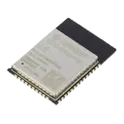
69 Uses0 StarsESP32-WROOM-32E (16MB)
The ESP32-WROOM-32E (16MB) is a highly integrated Wi-Fi + Bluetooth + Bluetooth Low Energy (BLE) module developed by Espressif. It is based on the ESP32-D0WD-V3 chip and features a dual-core processor, rich peripherals, and large flash memory—making it ideal for IoT, embedded systems, and wireless applications. This module is part of the upgraded WROOM-32E series, offering improved RF performance, better stability, and enhanced reliability compared to earlier versions like the 32D. Key Features (16MB Variant) Processor & Memory Dual-core Xtensa® 32-bit LX6 CPU, up to 240 MHz 520 KB SRAM + 448 KB ROM 16 MB SPI Flash (large storage for firmware/data) Optional variants with PSRAM for memory-intensive tasks Connectivity 2.4 GHz Wi-Fi (802.11 b/g/n) Bluetooth v4.2 (BR/EDR + BLE) Integrated PCB antenna (no external antenna needed) Peripherals & Interfaces Up to 26–38 GPIOs (depending on usage) Supports: UART, SPI, I2C, I2S PWM (LED & motor control) ADC, DAC Capacitive touch sensors SD/SDIO/MMC, CAN (TWAI) Electrical & Physical Operating voltage: 3.0V – 3.6V Operating temperature: –40°C to +85°C (industrial range) Compact size: 18 × 25.5 × 3.1 mm Typical Applications Smart home devices (lighting, appliances) IoT sensors and gateways Industrial automation systems Wearables and smart gadgets Audio/voice processing (thanks to dual-core + large flash) #module #ESP32 #16MB
68 Uses0 StarsTPD4E05U06DQAR
14VC Clamp 2.5A@8/20us Ipp TVS DIODE USON-10(1x2.5) The TPDxE05U06 is a family of unidirectional Transient Voltage Suppressor (TVS) based Electrostatic Discharge (ESD) protection diodes with ultra-low capacitance. Each device can dissipate ESD strikes above the maximum level specified by the IEC 61000-4-2 international standard. The TPDxE05U06s ultra-low loading capacitance makes it ideal for protecting any high-speed signal pins. Typical applications for TPDxE05U06 includes high speed signal lines in HDMI 1.4b, HDMI 2.0, USB 3.0, MHL, LVDS, DisplayPort, PCI-Express® , eSata, and V-by-One® HS. Features • IEC 61000-4-2 Level 4 ESD Protection – ±12-kV Contact Discharge – ±15-kV Air Gap Discharge • IEC 61000-4-4 EFT Protection – 80 A (5/50 ns) • IEC 61000-4-5 Surge Protection – 2.5 A (8/20 µs) • IO Capacitance 0.42 pF to 0.5 pF (Typical) • DC Breakdown Voltage 6.5 V (Minimum) • Ultra low Leakage Current 10 nA (Maximum) • Low ESD Clamping Voltage • Industrial Temperature Range: –40°C to +125°C • Easy Straight-Through Routing Packages Application • HDMI 1.4b • HDMI 2.0 • USB 3.0 • MHL • LVDS Interfaces • DisplayPort • PCI-Express® • eSata Interfaces • V-by-One® HS #Commonpartlibrary #TVS diode #Circuit Protection
236 Uses0 StarsTPS259530DSGR
Electronic Fuse Regulator 4A 8-WSON (2x2) The TPS259530DSGR is a compact, integrated eFuse protection device designed to provide robust power-path management for low-voltage DC systems, particularly nominal five-volt rails. It combines multiple protection and control features into a single solution, enabling safe distribution of power to downstream circuitry while minimizing the need for external components. The device supports controlled inrush current during startup, continuous current monitoring, and rapid fault response to protect both the power source and the load. Integrated protection mechanisms include overvoltage protection, undervoltage lockout, overcurrent limiting, thermal shutdown, and reverse current blocking. This makes the device well suited for applications requiring high reliability, such as embedded systems, industrial electronics, consumer devices, and communication equipment. Functional Description The device operates as a high-side protection switch using an internal MOSFET to control current flow from the input supply to the load. It monitors input voltage, output current, and internal temperature to ensure operation within safe limits. When a fault condition such as overcurrent or overvoltage is detected, the device limits or interrupts current flow to prevent damage. The integrated control loop provides smooth startup by limiting inrush current and preventing supply droop. Reverse current blocking prevents unwanted current flow from the output back to the input when the input supply is removed or drops below the output level. Electrical Characteristics The device supports operation across a wide input voltage range suitable for low-voltage DC systems, including typical five-volt rails. It features an adjustable overvoltage protection threshold aligned with five-volt system requirements, along with configurable undervoltage lockout to ensure proper system startup and shutdown behavior. The current limit is externally programmable, allowing flexibility for different load conditions. The device exhibits low on-resistance to minimize power dissipation and voltage drop during normal operation. Protection Features The TPS259530DSGR integrates multiple protection functions to enhance system robustness. Overvoltage protection prevents excessive input voltage from reaching the load. Undervoltage lockout ensures the device only operates when the input supply is within a valid range. Overcurrent protection actively limits current during fault conditions and can respond rapidly to short circuits. Thermal shutdown protects the device from overheating by disabling operation when internal temperature exceeds safe limits. Reverse current blocking prevents backflow of current, safeguarding both the source and load. Control and Interface The device includes an enable control input that allows external control of the power path. It supports configurable behavior for fault response and recovery, depending on system design. External components can be used to set thresholds such as current limit and undervoltage lockout, providing design flexibility. Status signaling allows system-level monitoring of fault conditions. Mechanical and Package Information The TPS259530DSGR is provided in a compact surface-mount package suitable for space-constrained applications. The package is optimized for thermal performance and efficient PCB layout, enabling reliable operation under varying load conditions. It is supplied in tape-and-reel format for automated assembly processes. Applications This device is intended for use in systems requiring reliable power distribution and protection. Typical applications include five-volt power rails in embedded systems, industrial control modules, consumer electronics, communication devices, and peripheral power management circuits. Summary The TPS259530DSGR offers an integrated, high-reliability solution for power path protection and management in low-voltage systems. Its combination of protection features, configurability, and compact form factor makes it a widely used choice for safeguarding five-volt supply rails in modern electronic designs. #commonpartslibrary #integratedcircuit #powermanagement
1.0k Uses0 StarsIHDM1008BCEV4R7M30
4.7 µH Unshielded Drum Core, Wirewound Inductor 62 A 0.95mOhm Max Vertical, 2 PC Pin The IHDM1008BCEV4R7M30 is a surface-mount power inductor designed for energy storage and filtering in switching power supplies and DC-DC converter circuits. It provides stable inductance characteristics under varying current conditions, making it suitable for applications requiring efficient power conversion and noise suppression. The device is constructed using a magnetically shielded structure to minimize electromagnetic interference and ensure reliable operation in densely populated circuit environments. Its design supports high current handling capability while maintaining low core losses, contributing to overall system efficiency. Functional Overview The inductor stores energy in its magnetic field when current flows through it and releases that energy when the current changes. This behavior is essential for smoothing current in switching regulators and maintaining stable voltage levels in power circuits. Its low resistance winding helps reduce power loss, while the magnetic shielding limits flux leakage, improving performance in sensitive electronic systems. The component is optimized for high-frequency operation typically found in modern power management designs. Electrical Characteristics The device provides a fixed inductance value with stable performance across a range of operating currents. It supports relatively high saturation current levels, allowing it to function effectively in power circuits without significant degradation of inductance. Low direct current resistance contributes to improved efficiency and reduced heat generation. The inductor is designed to maintain consistent electrical behavior across typical operating temperatures and frequencies used in switching applications. Interface Requirements The component features standard surface-mount terminals for direct placement onto printed circuit boards. Proper soldering and pad design are required to ensure mechanical stability and optimal electrical performance. Placement considerations should include minimizing loop area and proximity to switching elements to reduce noise and maximize efficiency. Operating Conditions The inductor is intended for operation across a wide temperature range suitable for consumer and industrial electronics. It is capable of maintaining performance under continuous load conditions and varying thermal environments. Adequate thermal management and airflow may be necessary in high-current applications to prevent excessive temperature rise. Protection and Reliability Features The device is constructed with durable materials to ensure long-term reliability under electrical and thermal stress. Its magnetically shielded design reduces susceptibility to external interference and limits emissions that could affect nearby components. It is designed to withstand standard handling and soldering processes associated with surface-mount assembly. Packaging and Integration The IHDM1008BCEV4R7M30 is provided in a compact surface-mount package optimized for automated assembly processes. Its form factor allows efficient use of board space while supporting high-performance power designs. The package design ensures secure mounting and consistent electrical contact in high-density circuit layouts. Applications Typical applications include DC-DC converters, voltage regulator modules, power management circuits, filtering stages, and energy storage elements in portable devices, industrial equipment, and communication systems. #commonpartslibrary #inductors
0 Uses0 StarsSN65HVD230DR
1/1 Transceiver Half CANbus 8-SOIC The SN65HVD230DR is a high-speed Controller Area Network (CAN) transceiver designed to interface a CAN protocol controller with the physical two-wire CAN bus. It operates as a differential line driver and receiver, translating logic-level signals into robust bus-level signals suitable for automotive, industrial, and distributed control applications. The device is optimized for reliable communication in electrically noisy environments and supports low-power operation, making it suitable for systems requiring energy efficiency and extended operational stability. This transceiver conforms to widely adopted CAN physical layer standards and is intended for use in systems requiring high data integrity, fault tolerance, and electromagnetic compatibility. It integrates protection features and supports standby functionality to reduce system power consumption when communication is inactive. Functional Overview The device provides bidirectional signal conversion between a CAN controller and the differential CAN bus lines. It features a transmit data input and a receive data output, enabling full-duplex communication at the protocol level. The driver stage generates differential output signals on the bus, while the receiver stage detects and translates bus signals back into logic-level data. An internal control mechanism allows the device to enter a low-power standby mode, reducing current consumption when active communication is not required. The transceiver includes slope control capability to manage signal edge rates, which helps minimize electromagnetic interference and improves signal integrity across the network. Electrical Characteristics The transceiver operates from a single low-voltage supply and is designed for compatibility with modern microcontrollers and digital logic systems. It provides differential output drive capability with controlled rise and fall characteristics. The receiver is designed with high input sensitivity and noise immunity to ensure accurate signal detection under varying bus conditions. The device includes thermal protection and safeguards against bus faults, including short-circuit conditions. Its internal circuitry is designed to maintain stable operation across a wide range of environmental conditions and supply variations. Interface Requirements The logic interface is compatible with standard digital input and output levels, allowing direct connection to a CAN controller. The bus interface consists of two differential lines that connect to the CAN network. Proper termination and layout practices are required to ensure optimal communication performance and compliance with CAN network design guidelines. Operating Conditions The device is intended for operation across a broad temperature range suitable for industrial and automotive environments. It maintains functional integrity under typical voltage fluctuations and environmental stresses encountered in embedded systems. Protection and Reliability Features The transceiver incorporates protection mechanisms to guard against overcurrent, thermal overload, and electrostatic discharge. It is designed to maintain communication reliability even in the presence of transient disturbances and electrical noise. Packaging and Integration The SN65HVD230DR is provided in a compact surface-mount package suitable for automated assembly. Its pin configuration supports straightforward integration into printed circuit board designs with minimal external components. #CommonPartsLibrary #IntegratedCircuits #Interface #Drivers #Receivers #Transceivers #65HVD230
98 Uses0 StarsSSW-122-02-G-S
22 Position Receptacle Connector 0.100" (2.54mm) Through Hole Gold The SSW-122-02-G-S is a surface-mount, single-row socket strip designed for reliable board-to-board or component interconnection in electronic assemblies. It is part of a standardized connector series intended for applications requiring compact form factor, consistent electrical performance, and ease of automated placement. The component features a low-profile design suitable for dense PCB layouts and is commonly used in prototyping, embedded systems, and production-level electronics. Design and Construction The connector is manufactured with precision-aligned contacts housed in a high-temperature thermoplastic body, enabling compatibility with standard reflow soldering processes. The contact system is engineered to ensure stable mechanical retention and consistent electrical conductivity, supporting repeated mating cycles without significant degradation. The materials used provide durability, resistance to thermal stress, and compliance with common industry standards for electronic components. Electrical Characteristics The device is intended to provide reliable signal transmission with minimal contact resistance. It supports low to moderate current applications typical of signal-level interconnections. The contact plating is designed to reduce oxidation and maintain stable electrical performance over time. Mechanical Features The connector is configured as a single-row socket with a defined pitch spacing suitable for standard header interfaces. Its surface-mount termination allows for secure attachment to printed circuit boards while minimizing required board space. The structure supports proper alignment during assembly and ensures consistent engagement with corresponding mating connectors. Applications This component is widely used in applications such as microcontroller boards, communication modules, sensor interfaces, and general-purpose electronic systems. It is suitable for both development environments and final product integration where dependable and space-efficient connectivity is required. Compliance and Reliability The SSW-122-02-G-S is designed to meet common industry requirements for environmental and mechanical reliability. It is typically compliant with RoHS standards and suitable for use in a variety of operating conditions encountered in commercial and industrial electronics. #commonpartslibrary #connector #header
18 Uses0 Stars