Interface ICs
An interface IC is a type of integrated circuit that is designed to facilitate communication between two devices or systems. These devices are commonly used in electronic systems to enable the transfer of data and control signals between different components or subsystems. Some common use cases for interface ICs include connecting microcontrollers to peripherals such as sensors or displays, linking multiple processors together in a network, and enabling communication between devices using different communication protocols. Flux.ai has the world's largest community-driven public library of interface ICs, with footprints, symbols, datasheets, and simulation models. This library is a valuable resource for engineers and designers who need access to accurate and up-to-date information on these important components. Whether you are working on a new design project or simply looking to learn more about interface ICs, Flux.ai is an excellent resource to help you find the information you need.
SK6812RGBW-WS
5.5x5.0x1.6mm Top SMD Type 0.25 Watt Power integrated light source Intelligent control LED SK6812RGBW-WS is an intelligent RGBW (Red, Green, Blue, Warm White) addressable LED that integrates both the LED package and control IC into a single 5050 SMD package. Each LED functions as an individually controllable pixel, supporting 32-bit color data transmission (8 bits per channel) through a single-wire serial interface. The WS variant features a warm white channel with a color temperature of approximately 2700–3000 K, making it ideal for decorative, ambient, architectural, and smart lighting applications where accurate warm white illumination is required. The device operates from a 5 V supply and supports cascading of numerous LEDs with built-in signal reshaping for reliable long-distance data transmission. Key Features Integrated RGBW LED and control IC in a single 5050 SMD package Dedicated warm white (WS) channel, 2700–3000 K color temperature Individually addressable pixel control 32-bit color data (8-bit Red, Green, Blue, and White channels) Single-wire serial communication interface Built-in constant-current driver and PWM control Signal reshaping and automatic forwarding for long LED chains Typical data transmission rate of 800 kbps Operating voltage: 3.5 V to 5.5 V (5 V nominal) Wide operating temperature range: -40°C to +85°C High brightness, excellent color consistency, and long operational life Suitable for LED strips, pixel displays, decorative lighting, signage, and smart lighting systems #SK6812RGBW #SK6812RGBWWS #AddressableLED #RGBWLED #SmartLED #5050LED #WarmWhiteLED #LEDStrip #PixelLED #DigitalLED #EmbeddedSystems #IoTLighting #LEDDisplay #LightingDesign #Electronics
382 Uses0 StarsW25Q128JVSIM
FLASH - NOR Memory IC 128Mb (16M x 8) SPI - Quad I/O, QPI, DTR 133 MHz 8-SOIC 128M-bit Serial Flash Memory with uniform 4KB sectors and Dual/Quad SPI Winbond W25Q128JV is a 128-Mbit (16 MB) serial NOR Flash memory device designed for code and data storage in embedded systems. It supports standard SPI, Dual SPI, Quad SPI (QSPI), and Dual/Quad Peripheral Interface (DPI/QPI) modes, enabling high-speed data transfer rates up to 133 MHz clock operation and up to 532 MB/s equivalent throughput in Quad I/O DTR mode. The device supports Execute-In-Place (XIP), allowing processors and microcontrollers to run code directly from external flash memory without copying it to RAM. Features include 4 KB sector erase, 32 KB and 64 KB block erase, page programming, hardware/software write protection, security registers, JEDEC identification, SFDP support, suspend/resume operations, and low-power standby modes. Suitable for microcontrollers, FPGA configuration storage, IoT devices, industrial controllers, networking equipment, consumer electronics, and embedded systems requiring reliable non-volatile memory. Search Keywords: W25Q128JV, Winbond flash memory, SPI NOR Flash, QSPI Flash, Quad SPI memory, Serial Flash memory, 128Mbit Flash, 16MB Flash memory, Execute In Place XIP, external MCU flash, ESP32 flash memory, FPGA configuration memory, NOR flash storage, W25Q128, Dual SPI Flash, Quad I/O Flash, embedded nonvolatile memory, serial flash IC Hashtags: #W25Q128JV #Winbond #NORFlash #SPIMemory #QSPI #SerialFlash #FlashMemory #EmbeddedSystems #Microcontroller #ESP32 #FPGA #NonVolatileMemory #XIP #IoT #ElectronicsDesign #MemoryIC #FirmwareStorage #QuadSPI #EmbeddedHardware #ElectronicComponents
51 Uses0 StarsSTM32MP157CAC3
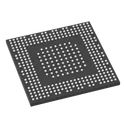
ARM® Cortex®-A7 Microprocessor IC STM32MP1 2 Core, 32-Bit 209MHz, 650MHz 361-TFBGA (12x12) # Engineering Specification ## Product Name STM32MP157CAC3 ## General Description STM32MP157CAC3 is a high-performance microprocessor unit that combines application processing and real-time control capabilities within a single integrated circuit. The device is designed to support advanced embedded systems requiring a balance of computing performance, deterministic control, multimedia processing, connectivity, and security functionality. The component integrates multi-core processing resources, memory interfaces, graphics capabilities, peripheral controllers, and communication subsystems to enable the development of sophisticated embedded platforms. Its heterogeneous architecture allows high-level operating systems and real-time firmware to operate simultaneously, supporting applications that require both user-interface functionality and low-latency control. The device is intended for industrial automation, human-machine interface systems, edge computing platforms, communication equipment, medical devices, smart infrastructure, and Internet of Things applications. Its architecture enables consolidation of system functions, reducing component count and simplifying overall hardware design. The design emphasizes processing efficiency, system scalability, power management, security, and long-term reliability. It supports advanced software ecosystems and facilitates the development of connected embedded products with graphical interfaces, networking capabilities, and real-time operational control. ## Functional Requirements ### Application Processing The device shall provide application-level processing capabilities suitable for operating systems, middleware, and user applications. ### Real-Time Processing The device shall support deterministic control functions for time-critical embedded operations. ### Multimedia Support The component shall support graphical and multimedia processing functions for display and user-interface applications. ### System Integration The device shall integrate processing, communication, and peripheral functions within a unified embedded computing platform. ## Electrical Requirements ### Power Management The device shall support efficient power operation and multiple power management modes to optimize energy consumption. ### Memory Interface Support The component shall support external memory devices for program execution, data storage, and system operation. ### Peripheral Connectivity The device shall provide interfaces for communication, control, monitoring, and external subsystem integration. ### Signal Integrity The design shall support reliable operation across supported interface standards and operating conditions. ## Processing Architecture Requirements ### Multi-Core Operation The device shall support concurrent execution of application and real-time workloads through integrated processing resources. ### Operating System Support The architecture shall support embedded operating systems and software frameworks suitable for advanced application development. ### Security Features The device shall support hardware-based mechanisms intended to protect system integrity, software assets, and sensitive data. ### Resource Management The component shall support efficient allocation of processing, memory, and peripheral resources. ## Mechanical Requirements ### Surface Mount Construction The device shall be supplied in a high-density surface mount package suitable for automated manufacturing processes. ### PCB Integration The package shall support integration into multilayer printed circuit boards designed for high-performance embedded systems. ### Structural Integrity The device shall maintain electrical and mechanical reliability during assembly and operational service life. ## Environmental Requirements ### Operating Conditions The component shall operate reliably within environmental conditions commonly encountered in industrial and embedded applications. ### Thermal Performance The device shall support stable operation under sustained processing workloads and associated thermal conditions. ### Storage and Handling The component shall maintain physical and electrical integrity during transportation, storage, and manufacturing processes. ## Quality Requirements ### Reliability The device shall provide dependable long-term operation in embedded and industrial computing environments. ### Verification Processing, peripheral, communication, and system functions shall be validated through applicable testing and qualification procedures. ### Compliance The product shall conform to relevant semiconductor, quality, and embedded computing standards applicable to its intended use. ## Documentation Requirements Technical documentation shall include processor architecture information, hardware integration guidelines, memory interface recommendations, power management considerations, software development support, security features, and application design guidance. ## Classification Tags #STM32MP157CAC3 #STM32MP1 #Microprocessor #MPU #EmbeddedProcessor #ARMProcessor #EmbeddedLinux #RealTimeControl #IndustrialAutomation #HumanMachineInterface #EdgeComputing #IoTGateway #EmbeddedSystems #SystemOnChip #SoC #ApplicationProcessor #GraphicsProcessor #ConnectivityPlatform #IndustrialElectronics #PCBDesign #HardwareDevelopment #ElectricalEngineering #CommonPartsLibrary #ComponentLibrary #EngineeringSpecification #TechnicalDocumentation #SystemIntegration #SecureEmbeddedSystems #MulticoreProcessing
4 Uses0 Stars