Top User Projects
Explore innovation and practical design in Flux.ai's top user projects. This collection highlights outstanding printed circuit board (PCB) projects crafted by our community members. Featuring a range of complexities and applications, these projects showcase the real-world potential and diversity of PCB design. The top user projects section is an invaluable resource for inspiration and learning. Whether you’re a veteran PCB designer seeking fresh ideas or a newcomer aiming to understand various design strategies, these projects offer a wealth of knowledge and insight into the dynamic world of PCB design. By highlighting the achievements of our community, the top user projects stand as a testament to the innovative spirit and collaborative nature of Flux.ai’s users, fostering a culture of knowledge sharing and continuous advancement in the field of electronics design.
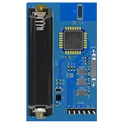
USB-C Wi-Fi BLE Env Sensor Node
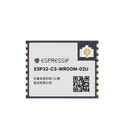
Low-power USB-C powered environmental sensor node with a protected 5 V USB-C sink input, TPS26630 front-end protection for reverse/OVP/UVLO/OCP, efficient 3.3 V buck regulation, ESP32-C3 Wi-Fi plus BLE connectivity, and an I2C SHT41 temperature/relative-humidity sensor. The design targets robust operation from USB-C sources advertising 0.5 A to 3 A and is being completed as a schematic ready for PCB layout.
0 Uses1 StarsTesla Vehicle Display System | AI Cost Optimization Tutorial [Example]
Learn how to optimize your project for cost with this Vehicle Display System project that was open sourced from the Tesla Roadster. Optimizing your BOM for cost can take forever to research component alternatives and understand the supply chain. Learn how to optimize for cost in seconds with Flux Copilot.
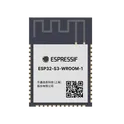
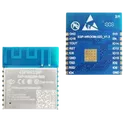
0 Uses1 StarsESP32-S3-WROOM-2-N32R16V
Bluetooth, WiFi 802.11b/g/n, Bluetooth v5.0 Transceiver Module 2.4GHz PCB Trace Surface Mount The ESP32-S3-WROOM-2-N32R16V is a powerful dual-core microcontroller module that integrates wireless connectivity, large memory, and hardware acceleration for AI and signal processing tasks. It is particularly suited for applications requiring edge AI, voice recognition, and high-speed data processing, while still maintaining low power consumption. Dual-core Xtensa LX7 CPU Up to 240 MHz Includes vector instructions for AI and DSP workloads Wi-Fi 2.4 GHz (802.11 b/g/n) Bluetooth 5 (LE) N32 → 32 MB external Flash R16 → 16 MB PSRAM Built for memory-intensive applications #commonpartslibrary #transceiver #wireless #rf
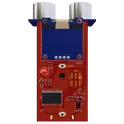
139 Uses1 StarsUltrasonic Distance Meter Reference Design
This circuit is an ultrasonic distance meter based on an ATTiny2313 microcontroller. It uses an HC-SR04 ultrasonic sensor to measure distance and displays the results on an OLED display. The power supply is constructed using a Boost converter (TPS613222A) and a 2-cell AA battery. Additionally, it also includes ISP for programming, RESET and START switches, and LED indicators. #project #Template #projectTemplate #ultrasonic #OLED #arduino #attiny2313 #TPS613222A #ISP #referenceDesign #simple-embedded #microchip #template #reference-design .
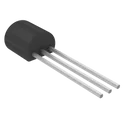
0 Uses1 Stars2N3904TFR
Bipolar (BJT) Transistor NPN 40V 200 mA 300MHz 625 mW Through Hole TO-92-3 The 2N3904TFR is a general-purpose NPN bipolar junction transistor (BJT) designed for low-power amplification and switching applications. It is widely used in signal processing, small-signal amplification, and digital switching circuits. This transistor offers fast switching speed, low saturation voltage, and reliable performance in a compact surface-mount package, making it suitable for consumer electronics, industrial controls, and embedded systems. Manufacturer Various (commonly ON Semiconductor / onsemi, Diodes Inc., Central Semiconductor) Part Number 2N3904TFR Transistor Type NPN Bipolar Junction Transistor (BJT) Configuration Single Package / Case SOT-23 (TO-236AB) Mounting Style Surface Mount (SMD/SMT) Collector-Emitter Voltage (VCEO) 40 V Collector-Base Voltage (VCBO) 60 V Emitter-Base Voltage (VEBO) 6 V Collector Current (IC) 200 mA (max) Power Dissipation (PD) ~200 mW to 350 mW (package dependent) DC Current Gain (hFE) 100 to 300 (typical, varies with operating conditions) Transition Frequency (fT) ~300 MHz Collector-Emitter Saturation Voltage (VCE(sat)) ~0.2 V (typical at IC = 10 mA, IB = 1 mA) Operating Temperature Range -55°C to +150°C Polarity NPN Packaging Tape & Reel (TFR suffix) RoHS Compliance Compliant #commonpartslibrary #transistor #bjt
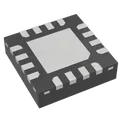
911 Uses1 StarsHUSB238A-BB001-QN16R
The HUSB238A is a highly integratedstand-aloneUSB Type-C® and Power Delivery (PD) Sinkcontroller.The HUSB238A integrates the CClogic, USBPDprotocol and the legacy protocols. The HUSB238A can run in I2C mode andGPIOmode.In I2C mode, an I2C master can access theHUSB238Ato configure settings, read back status andperformadvanced functions such as DRSwap, VDMmessages. The HUSB238A supports APDO, maximum48 V/5 A EPR FPDO and EPR AVSin I2Cmode. While in GPIO mode, the configuration is achievedviathe setting pins. The HUSB238A can beconfiguredtosupport maximum 28 V/3.25 A PDOviaVSETandISET pins, only two resistors are usedtoset thevoltage and current. The ultra-low operation current of theHUSB238Ahelps the system to reduce the total power dissipationand suitable for a battery application. The HUSB238A is available in QFN3 mmx3mm-16Lpackage. Fully Autonomous USB Type-C® and USB PD Sink Controller USB Type-C® Specification Reversion 2.1 and USB PD Specification Reversion 3.1 Supported Maximum 48 V/5 A PDO Supported – GPIO Mode: Maximum 28 V/3.25 A EPR FPDO and EPR AVS – I2C Mode: Maximum 48 V/5 A EPR FPDO, EPR AVS and SPR PPS Automatic Legacy Protocols Detection Including BC1.2, Divider 3, QC2.0 Support SOP’ Detection Typical Low Power Operation: IVDD< 75 μA Integrated VBUS Switch Driver Dead Battery Support VBUS Over-voltage Protection (OVP) and Under-voltage Protection (UVP) Over-temperature Protection (OTP) with Programmable Thresholds 2 kV HBM ESD Rating for USB IO Pins Small Package, 16 Lead QFN (3 mm x 3 mm) #CommonPartsLibrary #IntegratedCircuit #PowerManagement
125 Uses1 StarsLoRa Door and Window Sensor Module
This is a LoRa-based door and window sensor incorporating a microcontroller unit (MCU). It features a reed sensor, LED indicators, a AAA non-rechargeable battery, and a booster IC for constant voltage. The MCU is linked to peripherals through nets, ensuring optimal performance #LoRa #MCU #ReferenceDesign #Module #reusable #module #simple-embedded #seeed #seeed-studio #sublayout
9 Uses1 Stars




![Tesla Vehicle Display System | AI Cost Optimization Tutorial [Example]](https://img-cdn.flux.ai/eyJidWNrZXQiOiJncmF2aXRvbi1lbGVjdHJpYy1zeW1ib2xzIiwia2V5IjoiZG9jdW1lbnRfYXNzZXRzL1RodW1ibmFpbC1WRFMtYTAwYjE3ZDEtZWNkZi00MjhlLWFmODktNjdmM2UxYTJiOWM4LnBuZyIsImVkaXRzIjp7InJlc2l6ZSI6eyJ3aWR0aCI6MTI0LCJoZWlnaHQiOjEyNCwiZml0IjoiY29udGFpbiIsImJhY2tncm91bmQiOnsiciI6MCwiZyI6MCwiYiI6MCwiYWxwaGEiOjB9fX0sIm91dHB1dEZvcm1hdCI6IndlYnAifQ==)