Top User Projects
Explore innovation and practical design in Flux.ai's top user projects. This collection highlights outstanding printed circuit board (PCB) projects crafted by our community members. Featuring a range of complexities and applications, these projects showcase the real-world potential and diversity of PCB design. The top user projects section is an invaluable resource for inspiration and learning. Whether you’re a veteran PCB designer seeking fresh ideas or a newcomer aiming to understand various design strategies, these projects offer a wealth of knowledge and insight into the dynamic world of PCB design. By highlighting the achievements of our community, the top user projects stand as a testament to the innovative spirit and collaborative nature of Flux.ai’s users, fostering a culture of knowledge sharing and continuous advancement in the field of electronics design.
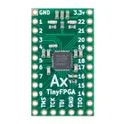
TinyFPGA-A-Schematic
The schematic for TinyFPGA A-Series boards are tiny bare-bones FPGA boards created by Luke Valenty https://github.com/tinyfpga - Tiny, just 1.2 by 0.7 inches - Low power 3.3 volt operation - 18 user IOs (21 with JTAGEN) - 1200 4-input look-up tables - 10 kilobits distributed RAM - 64 kilobits dedicated RAM - 64 kilobits user flash memory - 1 SPI Hard-IP - 2 I2C Hard-IPs - 1 PLL Hard-IP - Built-in flash configuration memory programmable via JTAG
0 Uses2 Stars
Pocket PCR thermocycler
The PocketPCR is a low-cost, small size thermocycler capable of activating biological reactions such as polymerase chain reaction (PCR). PCR is a method widely used in molecular biology to make copies of a specific DNA segment. Applications of the technique include DNA cloning for sequencing, analysis of genetic fingerprints, amplification of ancient DNA and gene cloning.
0 Uses2 StarsBreakout Board for microSD Card
5 Uses2 StarsStrymon Zuma
Zuma is the highest horsepower, most technologically advanced effects pedal power supply of its kind. Zuma offers nine high-current, individually isolated, ultra-low-noise outputs—each with its own dedicated regulator and custom transformer. Designed to meet the needs of today’s players, each output provides a staggering 500mA of current. Zuma’s dual-stage topology, pre-regulated outputs, optically isolated feedback, and advanced multistage filtering result in a power supply that allows your pedals to achieve their highest possible dynamic range.
3 Uses2 Stars
AC source generator
81 Uses2 StarsDunlop Crybaby GCB-95 Classic Wah Pedal
One of the classic guitar pedals that started it all. The Dunlop Original Cry Baby Wah Wah Pedal is arguably one the most famous of Dunlop pedals with wah being one of most famous effects of all time. This iteration of the legendary Cry Baby Wah remains true to the orginal Thomas Organ design from 1966. Let’s see how it holds up to the test of time in our Dunlop Original Cry Baby Wah Wah pedal review. Want to know what a Cry Baby wah pedal sounds like? Go check out Voodoo Child (Slight Return) by Jimi Hendrix and Eric Clapton’s solo at the end of White Room by Cream. These are just a couple of the famous performances that o we their existence to the sound of the Cry Baby.
2 Uses2 Stars
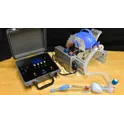
MIT Emergency Ventilator Project
An open source ventilator created by a team at MIT as an emergency response to the growing need for ventilators during the COVID-19 pandemic. Please read through all documentation and safety information linked in the properties before using any device in a clinical setting.
1 Uses2 Stars-59934b57-113a-1922-4834-67d18f6a5aae.svg)
Autonomous "Follow Me" Cooler
An Arduino Uno powers this autonomous “follow me” cooler that connects to a smartphone via Bluetooth and uses GPS to navigate. The robot cooler connects to a smartphone via Bluetooth and uses GPS to navigate. All the electronics will be contained in the base so that other objects can be carried as well. The electronics were installed in the box cutout under the platform. An Arduino Uno and a 5v battery to power the sensors, Bluetooth, and control logic. A 3s LiPo battery was used to power the motors. A HC-05 Bluetooth module was mounted at the front of the platform for better range. The rest of the components including a L298N motor driver, PAM-7Q GPS, and HMC6883L compass were mounted inside and connected to the Arduino through the breadboard. The compass works with I2C, so we connected the SLC and SDA pins to A5 and A4 respectively. The rest of the pins were connected through digital I/O.
0 Uses2 Stars